Supreme Court Addresses Protests: Livelihoods at Stake
The Supreme Court emphasizes the need for limited protest durations to protect the livelihoods of daily wage workers.

The Supreme Court ruled that protest sites cannot be occupied indefinitely.
CJI Surya Kant highlighted the impact of protests on daily wage workers and local businesses.
Traders reported losses of ₹2,000 crore due to prolonged protests in Delhi.
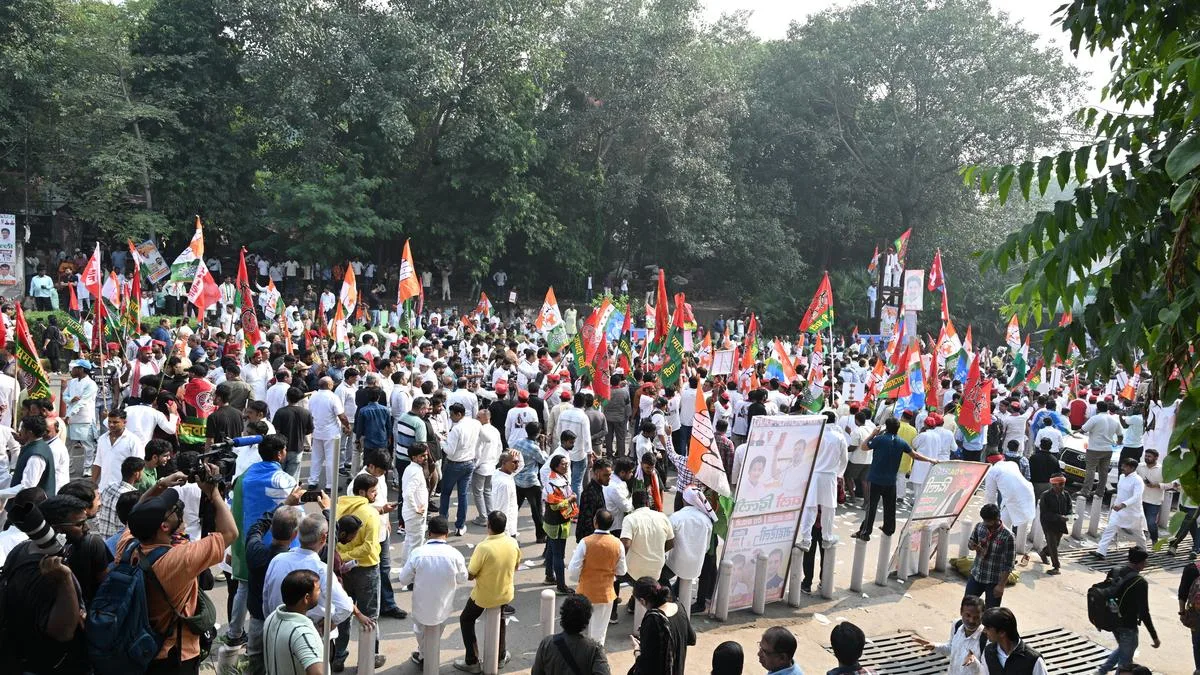
On Tuesday, the Supreme Court of India stated that protestors cannot occupy protest sites indefinitely, stressing that such areas should be available for use by various groups over time. The bench, led by Chief Justice Surya Kant, was reviewing petitions related to protests that occurred in October against Chief Election Commissioner Gyanesh Kumar in Delhi. CJI Kant pointed out the necessity of allowing other groups, including farmers and workers, to utilize these spaces, emphasizing that everyone has the constitutional right to protest.
The Court's remarks came amid concerns regarding the economic repercussions of the protests, particularly on daily wage earners. CJI Kant noted, "The right to protest is constitutionally recognized, but so is the right to earn a livelihood." He questioned the implications for workers who rely on daily earnings, asking, "Where does that person go for their daily bread?" This statement reflects the Court's recognition of the balance that must be struck between the right to protest and the economic realities faced by individuals in the vicinity.
Solicitor General Tushar Mehta provided context by referencing a previous protest by the Cockroach Janta Party, which was initially permitted for one day but extended to 17 days without authorization. He argued that such actions disrupt not only the political landscape but also the daily lives of citizens, stating, "You cannot be permitted to go to Parliament... without permission." The Court acknowledged the conflicting claims of various groups seeking to protest, indicating that the rights of one group should not infringe upon the rights of others.
The economic impact of the protests was further underscored by Senior Advocate Mukul Rohatgi, who claimed that the protests resulted in a staggering revenue loss of ₹2,000 crore for local traders. He highlighted that the designated protest site, Ramlila Maidan, is surrounded by densely populated areas and numerous markets, which amplifies the economic strain on local businesses. Rohatgi urged the government to devise a comprehensive plan to address these issues, stating, "This is no longer merely about Jantar Mantar."
Looking ahead, the Supreme Court's ruling may prompt discussions on the regulation of protest durations and the establishment of designated areas for such activities. As the Court continues to hear arguments regarding the balance between the right to protest and the need for public order, stakeholders from various sectors will be keenly observing the developments. Future hearings will likely explore the implications of these protests on local economies and the rights of individuals affected by them.