Rahul Gandhi Responds to Police Violence with Flute Performance
In a symbolic gesture, Rahul Gandhi uses music to counter police aggression during protests against the Chief Election Commissioner.
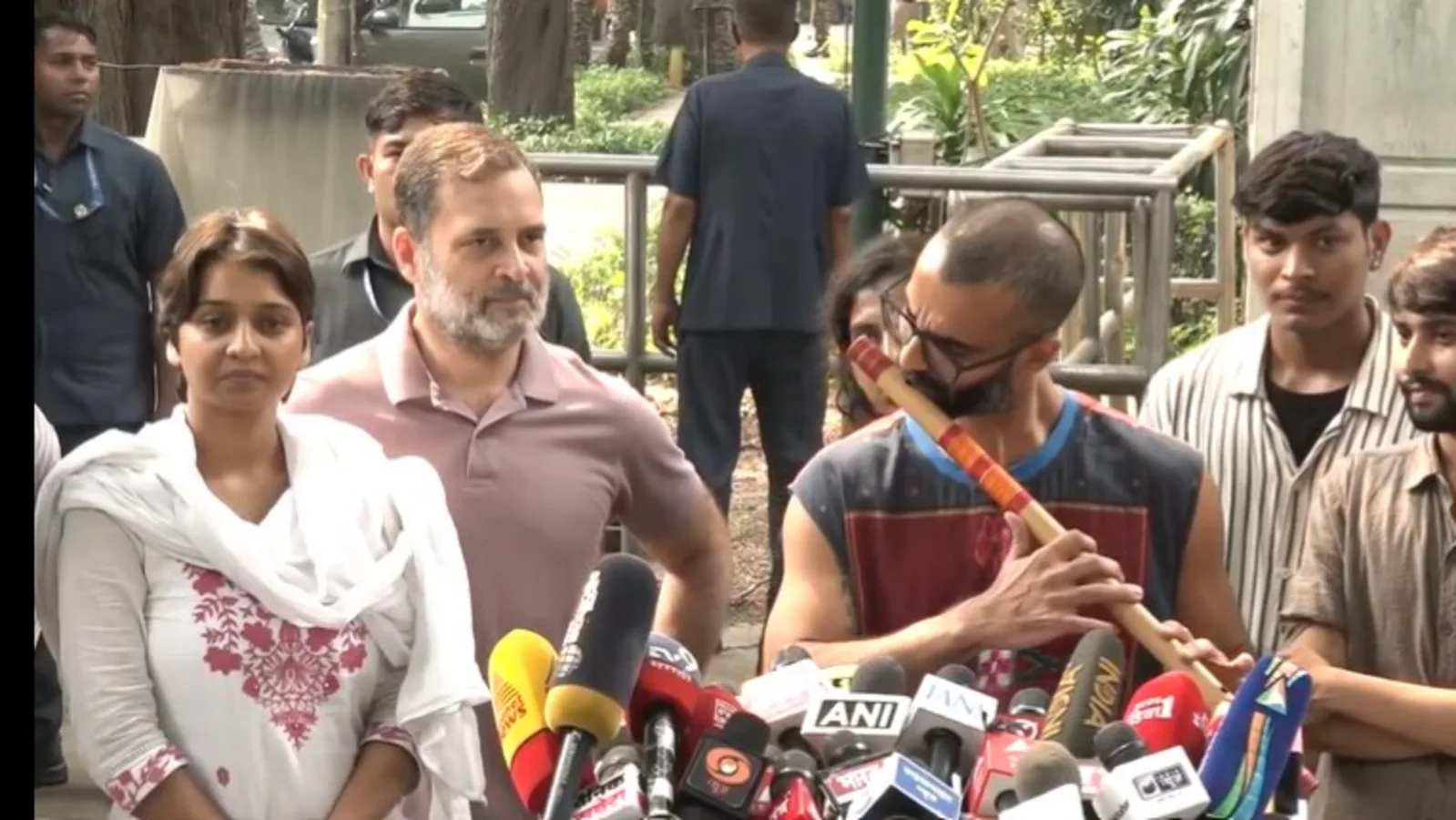
Rahul Gandhi held a press conference addressing police brutality against protesters.
A flute artist performed a song in response to allegations of police violence.
Protesters reported physical assaults by police during recent demonstrations.
In a striking response to allegations of police violence during protests, Congress leader Rahul Gandhi held a press conference on Wednesday, where he introduced a flute artist, Samar, who played the song 'Vaishnav jan to tene kahiye.' This performance was intended as a symbolic counter to the 'danda' or stick treatment that protesters have faced from law enforcement during demonstrations against Chief Election Commissioner Gyanesh Kumar.
The backdrop to this event includes rising tensions surrounding the protests, where demonstrators have accused police of excessive force. Samar, the flute artist, recounted his experience of being detained on October 11, claiming he was assaulted by officers in plain clothes. He alleged that police were influenced by members of the Bajrang Dal and RSS, who reportedly threatened peaceful protesters. His testimony included claims of intimidation and violence against demonstrators, particularly women.
During the press conference, another protester, affiliated with the National Students' Union of India (NSUI), shared her harrowing experience of being beaten during her detention. She described being physically assaulted by a female officer, Chanchal Yadav, and detailed injuries sustained during the confrontation. The protester claimed that she was subjected to threats and physical harm, including being dragged and hit, which she described as a systematic assault on protesters.
The implications of these events extend beyond individual accounts of violence. They highlight a growing concern about police conduct in handling protests, particularly those involving political dissent. The allegations of brutality have sparked discussions about the need for accountability and reform within law enforcement agencies in India. As public outrage mounts, the situation raises questions about the state’s response to dissent and the protection of citizens' rights to protest peacefully.
Looking ahead, the protests are expected to continue as demonstrators seek justice and accountability for the alleged police actions. Rahul Gandhi's symbolic gesture with the flute may resonate with supporters, but it also underscores the ongoing struggle between authorities and those advocating for political change. Future developments will likely focus on the responses from both the government and civil society regarding the treatment of protesters and the broader implications for democratic freedoms in India.