Rahul Gandhi Defends CJP Leaders After Arrest at Jantar Mantar
Rahul Gandhi asserts that peaceful protests, including waving the tricolor, should not be criminalized following the arrest of CJP leaders.
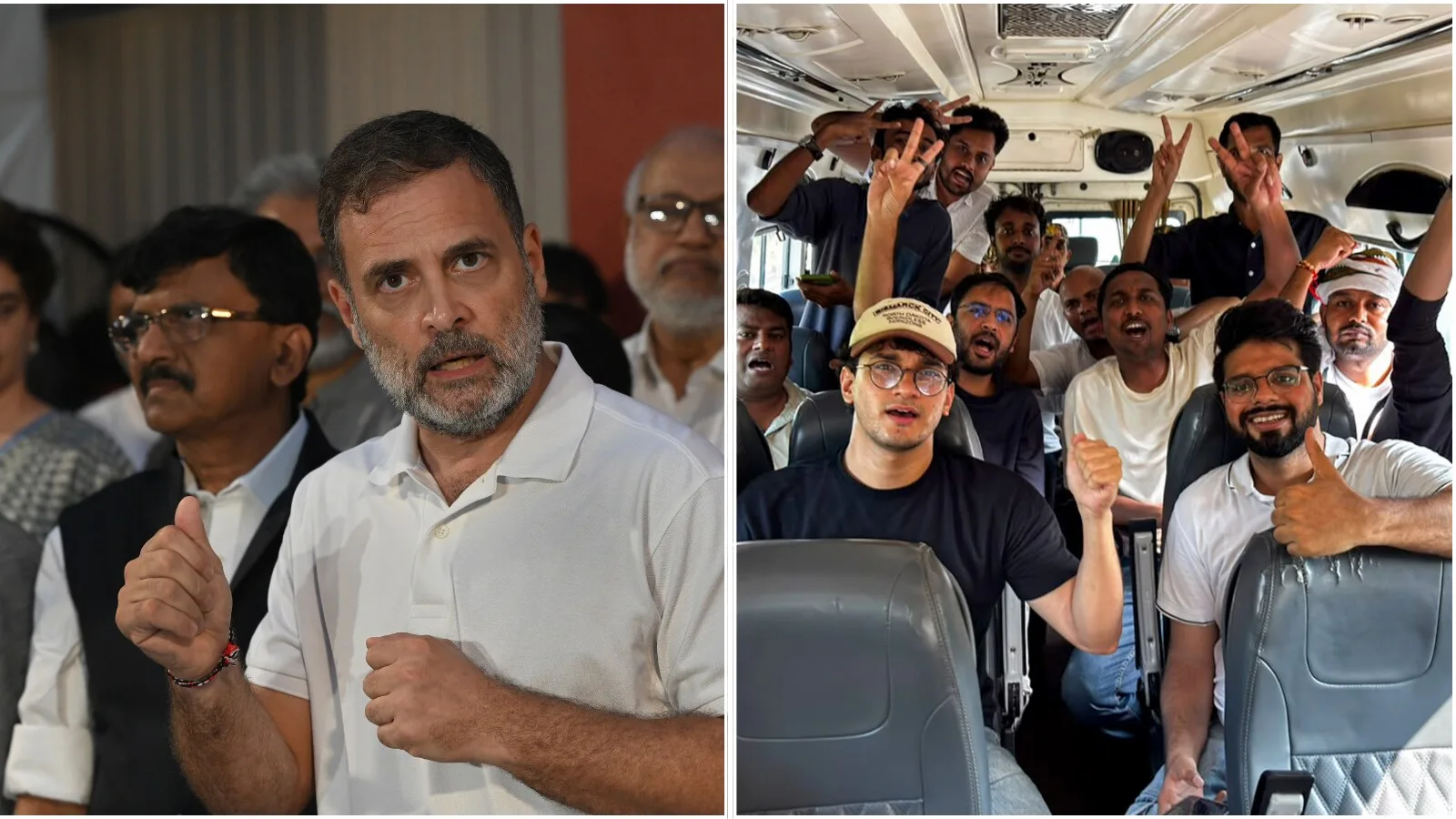
Rahul Gandhi condemned the arrest of CJP leaders Saurav Das and Ashutosh Ranka.
He emphasized that waving the tricolor in peaceful protests is not a crime.
The CJP leaders were detained for breaching protest regulations at Jantar Mantar.
In a significant statement, Rahul Gandhi, the leader of the Opposition in Lok Sabha, has expressed his support for the Cockroach Janta Party (CJP) following the arrest of its co-convenors, Saurav Das and Ashutosh Ranka. The arrests occurred after the duo participated in a protest at Jantar Mantar, where they waved the Indian tricolor. Gandhi took to social media platform X to declare that such actions in peaceful demonstrations should not be deemed criminal.
The arrests took place after the Delhi Police issued a circular that redefined the protest regulations at Jantar Mantar, a site historically used for public demonstrations. Das and Ranka, along with other CJP members, were taken into custody for allegedly breaching these new regulations. Gandhi's comments highlight a growing concern regarding the treatment of peaceful protesters in India, particularly among the youth and civil society.
In his remarks, Gandhi stated that jailing individuals for expressing their constitutional rights through peaceful protest is an act of cowardice. He further emphasized that protests across India share a common goal: the demand for citizens' constitutional rights. His statement resonates with a broader movement advocating for the protection of democratic freedoms in the country.
The implications of this incident extend beyond the immediate arrests. It raises questions about the state of civil liberties in India and the government's approach to dissent. The CJP's actions at Jantar Mantar reflect a growing frustration among various groups, including students and journalists, who feel their rights are being curtailed. Gandhi’s support for the CJP may galvanize further public discourse on these issues.
Looking ahead, the situation remains fluid as the CJP leaders are currently in judicial custody. Legal representatives for the detained leaders have raised concerns about their treatment and access to legal counsel. As the political landscape evolves, further developments are anticipated, particularly regarding the response from civil society and political parties to the ongoing restrictions on protests.