Qatar, Turkiye, Pakistan, and Indonesia Forge Defence Pact
A new memorandum signed in Doha aims to enhance military collaboration among four nations amid regional tensions.
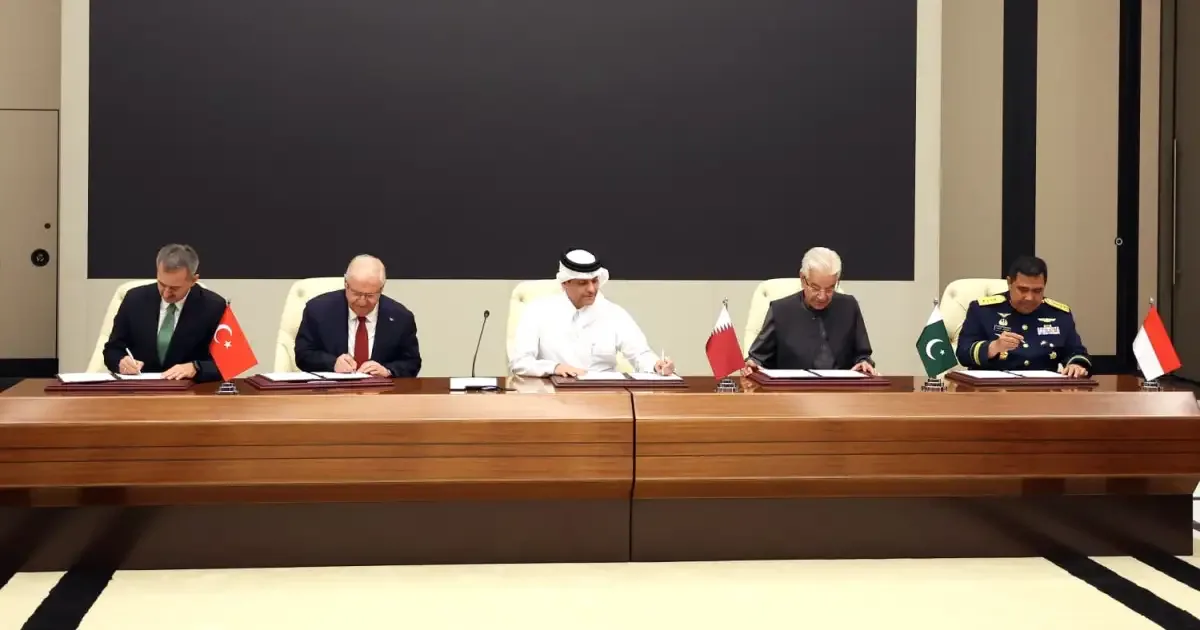
The four nations signed a memorandum to boost defence industry cooperation.
The agreement aims to create integrated supply chains and enhance military capabilities.
This initiative reflects a shift towards diversifying security partnerships beyond traditional alliances.
In a significant move to bolster military collaboration, Qatar, Turkiye, Pakistan, and Indonesia have signed a memorandum of understanding in Doha on October 21, 2026. This agreement aims to deepen defence industry cooperation among the four nations, reflecting a broader strategy to enhance regional security amid ongoing conflicts, particularly the US-Israel tensions with Iran.
The signing of the 'Badr' memorandum marks a pivotal moment in the defence landscape of the region, as these countries seek to diversify their military partnerships. Experts suggest that the failure of the US and Iran to reach a peace agreement has prompted nations to look beyond traditional alliances, aiming for greater self-reliance in security matters while still maintaining existing partnerships.
According to the Qatari Defence Ministry, the agreement focuses on fostering collaboration in defence manufacturing, enhancing capabilities, and promoting technical training and research. Each country will contribute its unique strengths: Turkiye will provide technological expertise, while Pakistan and Indonesia will leverage their manufacturing capacities and skilled workforces. Qatar will play a crucial role in investment and demand, creating a robust framework for integrated supply chains in defence production.
The implications of this agreement extend beyond the immediate participants. Analysts believe it could lead to a network of interconnected defence arrangements spanning from the Gulf to South and Southeast Asia. This collaboration is seen as a strategic response to regional security concerns, particularly in light of recent conflicts that have highlighted vulnerabilities in dependence on foreign military supplies.
Looking ahead, the focus will be on how these nations implement the agreement and further develop their defence capabilities. While the Doha memorandum emphasizes industrial cooperation, it is part of a larger trend of military collaboration in the region, as evidenced by the recent Mecca Joint Defence Agreement involving Saudi Arabia, Pakistan, and Turkiye. The coming months will reveal how these initiatives will shape the security dynamics in the region and the extent to which they will reduce reliance on traditional powers like the United States.