Pakistan's First Astronaut Recites Iqbal in Space
Muhammad Zeeshan Ali honors poet Iqbal aboard China's Tiangong space station, echoing historic connections between India and Pakistan.
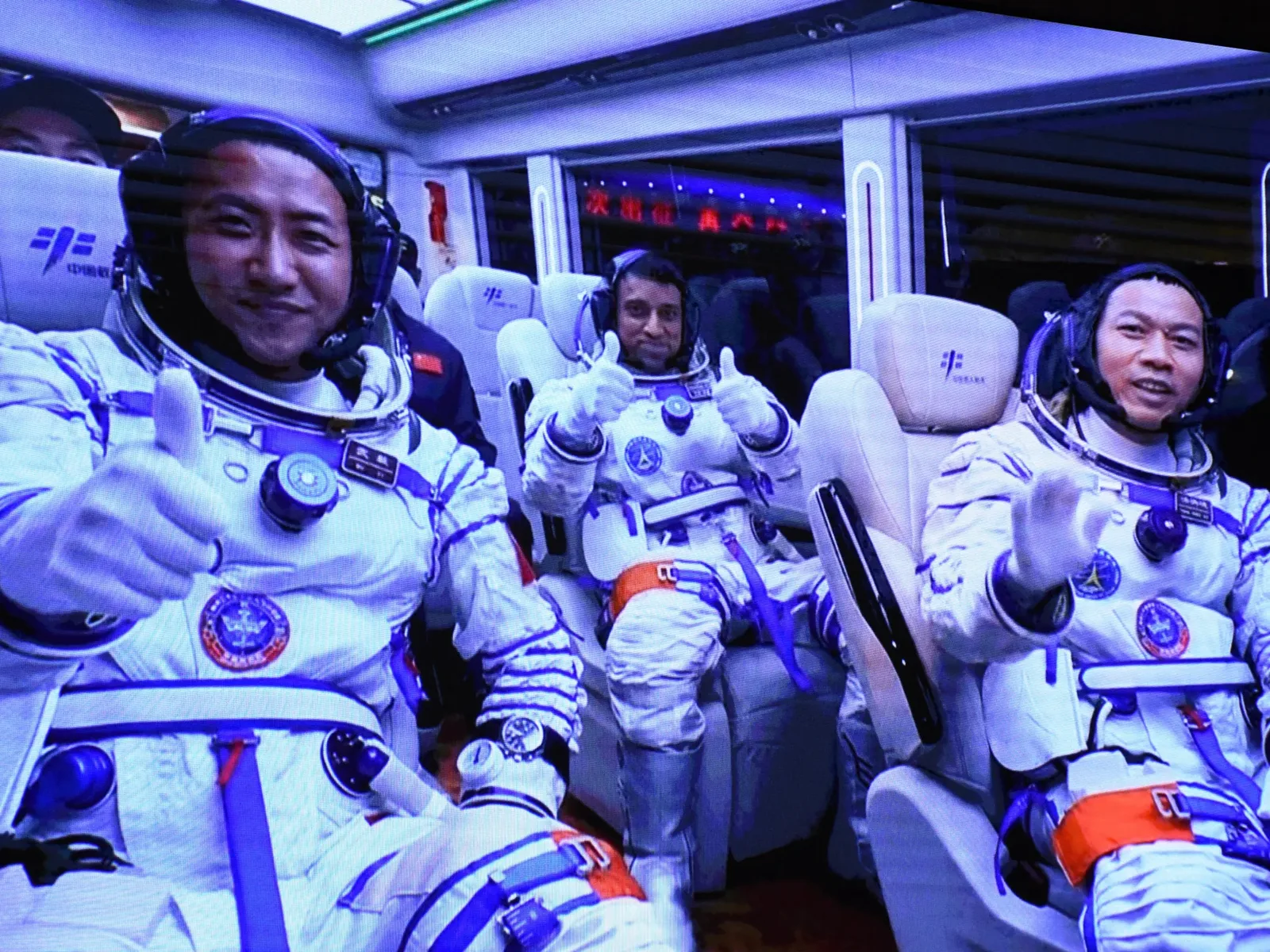
Muhammad Zeeshan Ali recited Iqbal's poetry in space, marking a significant cultural moment.
This event recalls previous instances where Iqbal's verses were quoted by astronauts from India.
Iqbal's influence on South Asian politics and culture remains profound, as he is celebrated as a national figure in Pakistan.
On November 29, 2023, Muhammad Zeeshan Ali, Pakistan's inaugural astronaut, made history by reciting a couplet from the revered poet Muhammad Iqbal while aboard China's Tiangong space station. Floating in the spacecraft alongside his Chinese colleagues, Ali donned a blue flight suit adorned with the Pakistani flag and shared the lines, 'Sitaron se aage jahan aur bhi hain / abhi ishq ke imtihan aur bhi hain.' This moment not only highlighted Ali's personal achievement but also symbolized a cultural bridge between India and Pakistan, transcending earthly borders.
The recitation of Iqbal's poetry in space is a continuation of a legacy that began decades earlier. In 1984, Rakesh Sharma, India's first astronaut, famously quoted Iqbal during a conversation with then-Prime Minister Indira Gandhi, responding to her inquiry about how India appeared from space. Similarly, in 1997, Kalpana Chawla, another notable astronaut of Indian origin, heard Iqbal's verses cited by Prime Minister Inder Kumar Gujral while she was in orbit. These instances reflect the enduring connection between the two nations through the lens of Iqbal's literary contributions.
Iqbal, born on November 9, 1877, in Sialkot, is celebrated as a philosopher, poet, and political thinker who played a pivotal role in shaping Muslim identity in South Asia. His works primarily in Persian and Urdu have left a lasting impact, earning him the title of Allama, or the learned one. His vision for a self-governing state for Muslims in the region laid the intellectual groundwork for the eventual creation of Pakistan in 1947. Iqbal's poetry continues to resonate, not only in Pakistan but also in India, where he is recognized for his contributions to literature and political thought.
The recent event in space has broader implications for cultural diplomacy between India and Pakistan. By invoking Iqbal's verses, Ali's recitation serves as a reminder of shared heritage and the potential for unity through art and literature. It highlights the importance of cultural exchanges in fostering understanding and cooperation between the two nations, which have often been marked by tension and conflict.
Looking ahead, the legacy of Iqbal and the recent recitation by Ali may inspire future collaborations in space exploration and cultural initiatives. As both countries continue to develop their space programs, there is an opportunity to build on this moment of unity, potentially leading to joint missions or projects that celebrate their shared history and cultural ties. The next steps for Ali and his crew involve further scientific research aboard the Tiangong station, while the impact of this cultural moment will likely resonate long after their return to Earth.