Opposition Marches Against ECI, Rahul Gandhi Calls Actions 'Treason'
On October 6, 2026, Rahul Gandhi and opposition leaders protested against the Election Commission of India, demanding accountability and reform.
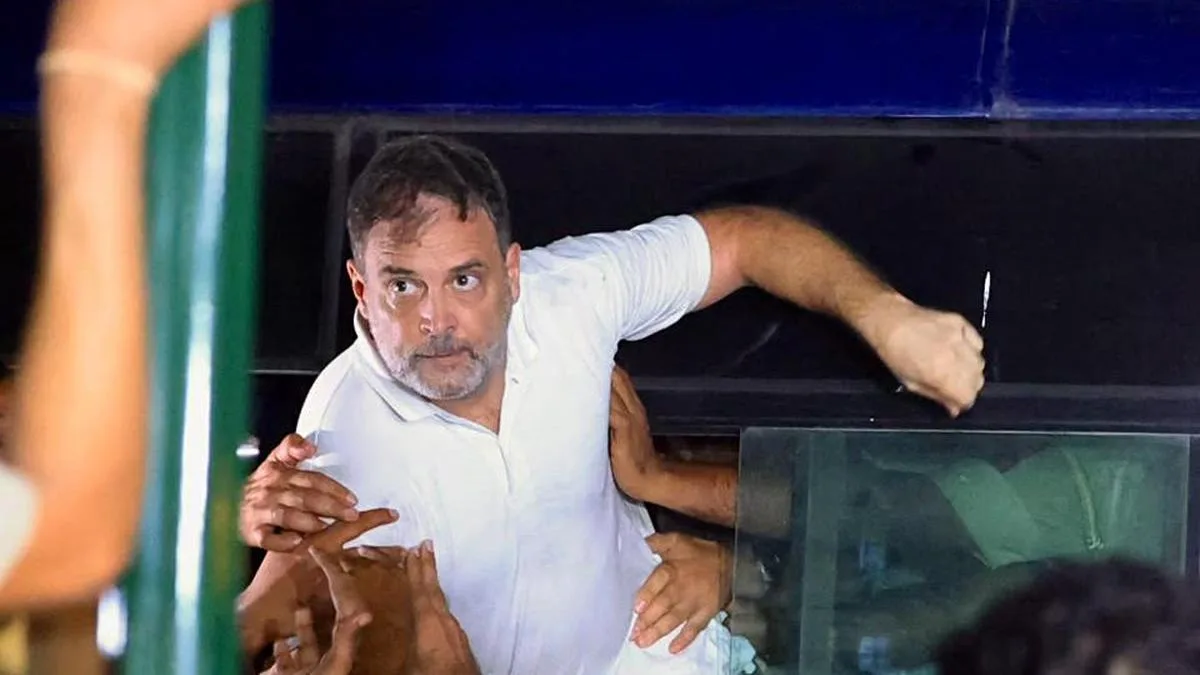
Rahul Gandhi labeled the actions of the Election Commission as treason during a protest march.
Opposition leaders were detained after a sit-in at Akashvani Bhawan following a march from Parliament.
The protest involved 19 opposition parties, highlighting unity against perceived electoral injustices.
On October 6, 2026, Leader of the Opposition Rahul Gandhi led a significant protest against the Election Commission of India (ECI), condemning its practices as treasonous. The demonstration commenced from Parliament, with Gandhi and other opposition members marching towards the ECI headquarters to demand the cancellation of the special intensive revision (SIR) of electoral rolls, reinstatement of deleted voter names, and the resignation of Chief Election Commissioner Gyanesh Kumar.
The protest gained momentum as opposition parties united, with Gandhi, his sister Priyanka Gandhi Vadra, and other leaders staging a sit-in at Akashvani Bhawan after being halted by Delhi Police. The police intervention occurred around 11 a.m., leading to the detention of several leaders, including prominent figures from various opposition parties. Despite the police presence, the protestors remained resolute, chanting slogans and displaying placards criticizing the ECI and the government.
Key figures in the opposition, including Akhilesh Yadav of the Samajwadi Party and Abhishek Banerjee of the Trinamool Congress, joined Gandhi in voicing their concerns. Yadav accused the ECI of bias towards the ruling BJP, claiming that the electoral body was undermining the democratic process by targeting marginalized groups. The protest highlighted the growing discontent among opposition parties regarding electoral integrity and governance.
The implications of this protest extend beyond the immediate demands, as it reflects a broader coalition among opposition parties against the ruling government. The unity displayed by 19 parties, including the previously distant Biju Janata Dal, signifies a potential shift in political dynamics in India. The opposition's collective stance aims to challenge the government's electoral strategies and advocate for a more transparent democratic process.
Looking ahead, the INDIA bloc has announced plans for further demonstrations, with another protest scheduled for the following day. The ongoing tensions between the opposition and the government suggest that the discourse around electoral reforms and accountability will remain a focal point in Indian politics in the coming weeks.