Japan to Conduct Historic Live-Fire Military Drills in India
For the first time, Japan's Self-Defence Forces will engage in live-fire exercises in India, enhancing bilateral defense cooperation.
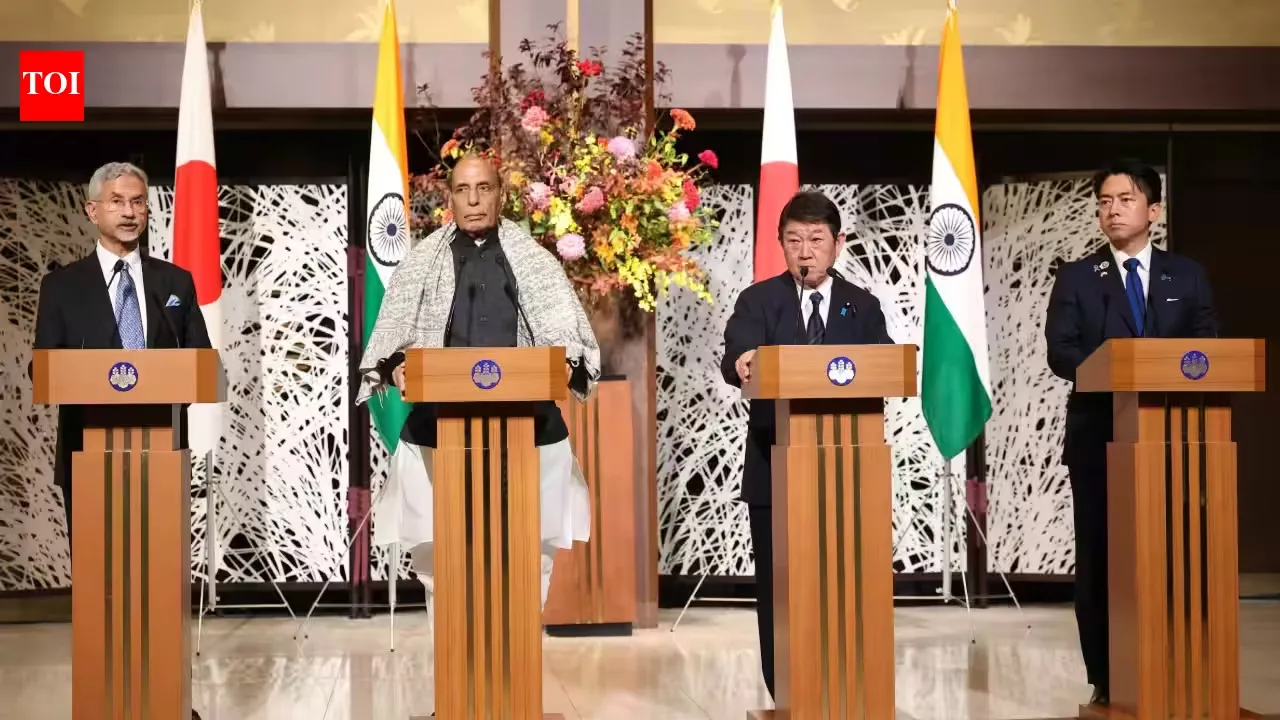
Japan and India agree on live-fire training, including missile exercises.
The nations aim to strengthen military ties and defense technology collaboration.
Economic security and emerging technologies are key focus areas in discussions.
In a landmark decision, India and Japan have agreed to allow the Japan Self-Defence Forces (JSDF) to conduct live-fire military drills in India, marking a significant milestone in their defense partnership. This agreement was reached during the fourth India-Japan 2+2 Foreign and Defence Ministerial Meeting held in Tokyo on November 19. The two nations signed a Letter of Intent (LoI) to utilize Indian firing ranges, aiming to enhance coordination between their defense authorities for effective implementation.
The agreement reflects a growing commitment to bolster defense cooperation amid a challenging global security landscape. Both countries have expressed intentions to expand military exercises and improve maritime security. Notably, the Japan Air Self-Defence Force participated for the first time in the India-Japan Air Force exercise, Veer Guardian 26, held in India, with plans for future exercises to incorporate more complex scenarios and unmanned systems.
During the meeting, Indian Defence Minister Rajnath Singh and External Affairs Minister S. Jaishankar, alongside their Japanese counterparts, emphasized the importance of advancing cooperation in areas such as naval shipbuilding, missile technologies, and joint defense manufacturing under the 'Design with Japan, Make in India' initiative. The ministers discussed the UNICORN project, which focuses on co-developing integrated antenna masts for Indian Navy vessels, with a target for India's Acceptance of Necessity (AoN) by February 2027.
Economic security emerged as a critical topic, with both nations expressing concerns over economic coercion and the need for reliable supply chains. Although specific countries were not mentioned, the ministers called for a fair global environment and collaboration in sectors like semiconductors and clean energy. They also highlighted the necessity of diversifying supply chains to mitigate strategic vulnerabilities.
Looking ahead, India and Japan plan to deepen their collaboration in emerging technologies, including artificial intelligence and cybersecurity. They aim to renew their Memorandum of Cooperation on Cybersecurity and enhance digital connectivity across the Indo-Pacific region. As both countries prepare to celebrate 75 years of diplomatic relations in 2027, the next 2+2 Ministerial Meeting is anticipated to take place in India, further solidifying their strategic partnership.