ISRO Successfully Launches NVS-03 Satellite
India's ISRO has launched the NVS-03 satellite, enhancing the country's navigation capabilities.
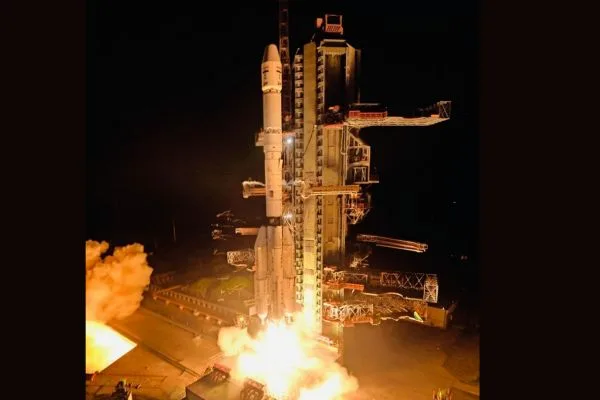
NVS-03 is the third satellite in ISRO's second-generation navigation series.
The launch took place from Sriharikota, marking the 20th flight of the GSLV.
The satellite introduces new frequency bands and strengthens India's navigation infrastructure.
The Indian Space Research Organisation (ISRO) has achieved a significant milestone with the successful launch of its next-generation navigation satellite, NVS-03. This event took place last night at the Satish Dhawan Space Centre in Sriharikota, Andhra Pradesh, utilizing the Geosynchronous Satellite Launch Vehicle (GSLV-F18). This launch marks the 20th flight of the GSLV and signifies a crucial advancement in India's indigenous satellite navigation capabilities.
NVS-03 is the third satellite in ISRO's second-generation navigation series, designed to enhance the continuity and availability of navigation services through the Navigation with Indian Constellation (NavIC). This indigenous regional navigation system aims to provide precise positioning and timing services across India and beyond. The satellite is equipped with an indigenous atomic clock, alongside procured atomic clocks, and introduces the L1 frequency band, complementing the existing L5 and S bands, thereby boosting the overall functionality of the navigation system.
Prominent figures have expressed their congratulations following the successful launch. Vice President C. P. Radhakrishnan commended the ISRO team, stating that this achievement would further enhance NavIC and solidify India's satellite navigation capabilities. Prime Minister Narendra Modi echoed these sentiments, highlighting that the mission marks a significant step towards self-reliance in advanced technologies and strengthens the country’s navigation infrastructure.
ISRO Chairman Dr. V. Narayanan acknowledged the contributions of scientists, engineers, and academic institutions involved in the mission. He noted that the satellite, weighing approximately 2,232 kilograms, was accurately placed into its designated transfer orbit. The launch was completed with a remarkable turnaround time of just 56 days between two GSLV missions, the shortest interval achieved to date.
Dr. Narayanan elaborated on the significance of the NVS-03 satellite, which is part of India's Regional Navigation Satellite System, designed to offer navigation services across the country and extend up to 1,500 kilometers beyond its borders. The program aims to establish a constellation of seven satellites, with NVS-03 being the fourth launched. The completion of this constellation is essential for integrating navigation services with mobile systems for broader public access.