ISRO Successfully Launches NVS-03 Navigation Satellite on October 30, 2026
India's NVS-03 satellite launch restores NavIC to operational status with enhanced capabilities.
NVS-03 is the third satellite in ISRO's next-gen navigation series, ensuring continuity of services.
The satellite features indigenous atomic clocks, moving India closer to self-reliance in space timing.
NavIC provides both civilian navigation and military applications, enhancing India's strategic capabilities.
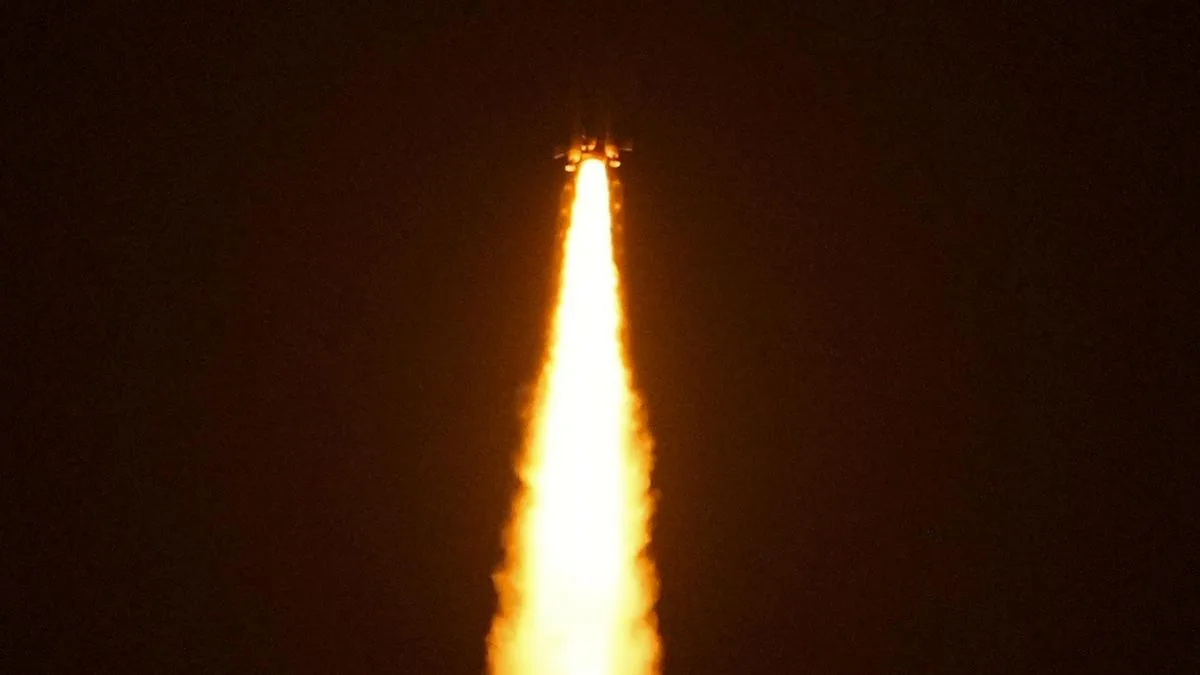
On October 30, 2026, the Indian Space Research Organisation (ISRO) successfully launched the NVS-03 navigation satellite from the Satish Dhawan Space Centre in Sriharikota. Weighing 2,250 kg, NVS-03 is the third satellite in the next-generation series designed to enhance the Indian Regional Navigation Satellite System (IRNSS). This launch marks a significant step in restoring NavIC to its minimum operational configuration of four satellites, crucial for providing reliable navigation services.
The need for NVS-03 arose after the operational fleet of NavIC was reduced to three satellites due to failures in older satellites and the unsuccessful deployment of the NVS-02. With the successful placement of NVS-03 into its intended Geosynchronous Transfer Orbit (GTO), ISRO has reinstated the necessary satellite count to ensure uninterrupted positioning, navigation, and timing (PNT) services across India and its surrounding regions.
A key feature of NVS-03 is its use of indigenous Rubidium atomic clocks, developed by ISRO's Space Applications Centre. This advancement marks a shift from reliance on imported Swiss clocks, which had faced repeated failures. The integration of these domestic clocks not only enhances the satellite's reliability but also signifies India's progress towards self-sufficiency in high-precision space timing technologies.
NVS-03 operates on multiple frequency bands, including the L1 band, which is compatible with commercial GPS receivers. This compatibility is expected to facilitate access to Indian Standard Time and NavIC positioning signals for everyday mobile devices. The satellite's coverage extends over India's landmass and an additional 1,500 kilometers beyond its borders, enhancing both civilian and defense applications. The open signal supports public navigation and logistics, while the encrypted service caters to military needs, providing critical data for defense operations.
Looking ahead, ISRO aims to expand the tracking capabilities of NavIC, with plans to monitor 100,000 fishing vessels under the Pradhan Mantri Matsya Sampada Yojana within six months. The completion of the full seven-satellite constellation is essential for integrating NavIC services with civilian mobile systems. As India continues to develop its independent navigation capabilities, the successful launch of NVS-03 represents a significant milestone in ensuring secure and reliable navigation services during geopolitical challenges.