India and Switzerland Forge Five New Agreements on Trade and Mobility
In a significant diplomatic move, India and Switzerland have signed five agreements aimed at enhancing cooperation in various sectors, including trade and defense.
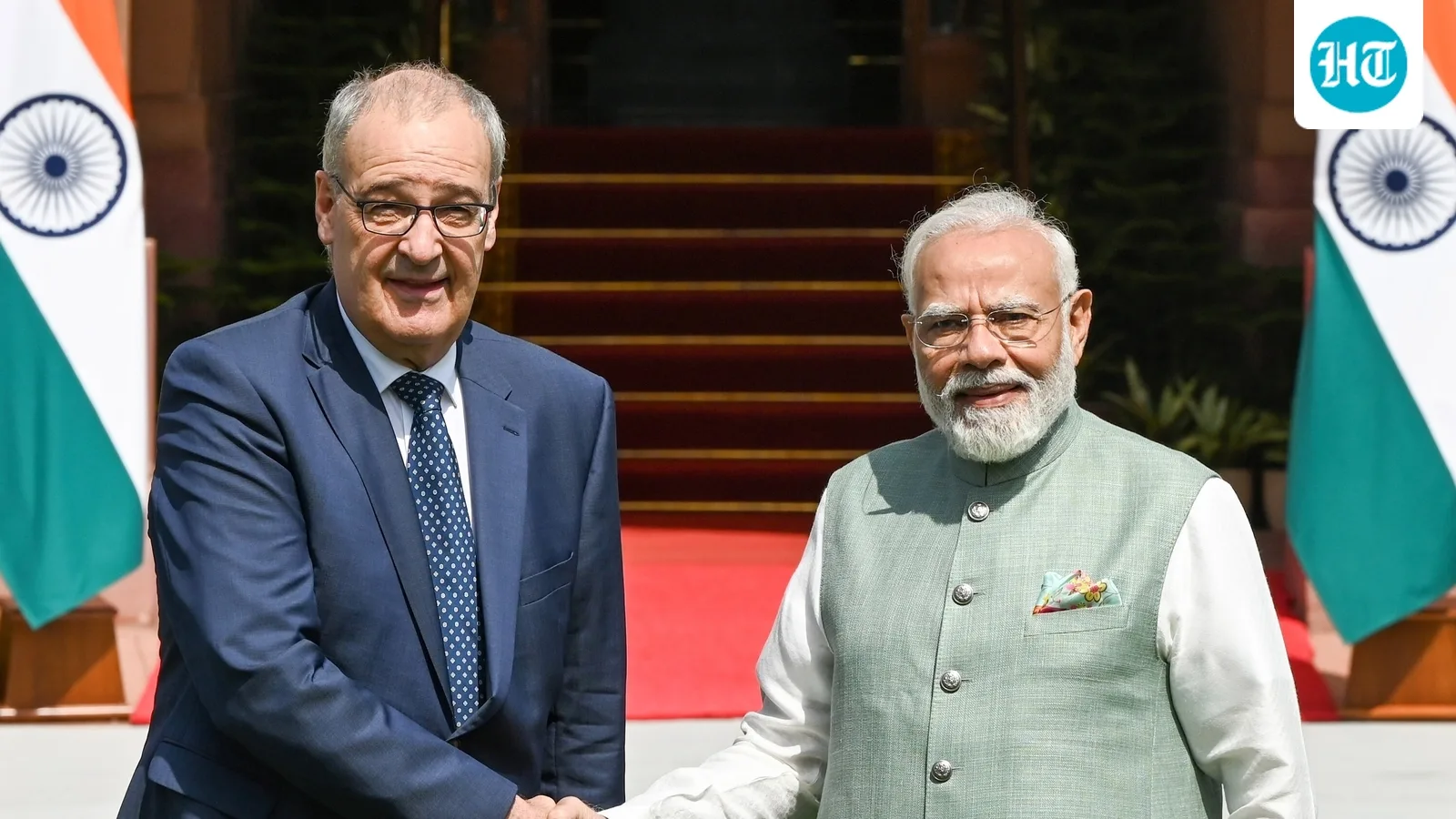
Agreements include mobility partnerships and technology transfer.
Focus on expanding Indian exports and attracting Swiss investments.
Discussions also covered international issues like Ukraine and West Asia.
On Monday, India and Switzerland formalized five agreements during a meeting between Prime Minister Narendra Modi and Swiss President Guy Parmelin in New Delhi. The agreements primarily focus on enhancing cooperation in migration, mobility, trade, and technology transfer, marking a significant step in bilateral relations.
The discussions come on the first anniversary of the Trade and Economic Partnership Agreement (TEPA) between India and the European Free Trade Association (EFTA), which includes Switzerland. Modi emphasized that the TEPA is a groundbreaking initiative aimed at fostering investment and job creation, projecting $100 billion in investments and one million jobs in India over the next 15 years.
Among the signed agreements, a memorandum of understanding (MoU) on migration and mobility will facilitate professional exchanges and provide multiple-entry visas for up to five years. Additionally, a second agreement will allow for the exchange of young professionals, enhancing their skills and language proficiency, with an initial cap of 300 participants annually per country.
The implications of these agreements are substantial for both nations. Modi highlighted the potential for increased Indian exports in sectors such as agriculture, pharmaceuticals, and textiles, while also inviting Swiss companies to invest in India’s infrastructure and technology sectors. Parmelin noted that the partnership would provide Switzerland with access to a rapidly growing market, particularly in high-value goods.
Looking ahead, both leaders expressed a commitment to further discussions on investment protection and intellectual property rights to bolster economic ties. They also addressed broader international concerns, including the conflicts in Ukraine and West Asia, underlining the importance of dialogue and diplomacy in achieving global stability.