HAL Delivers Initial HTT-40 Trainers to IAF Amid Training Delays
The Indian Air Force receives its first three HTT-40 trainer aircraft, but full training operations may take up to two years to commence.
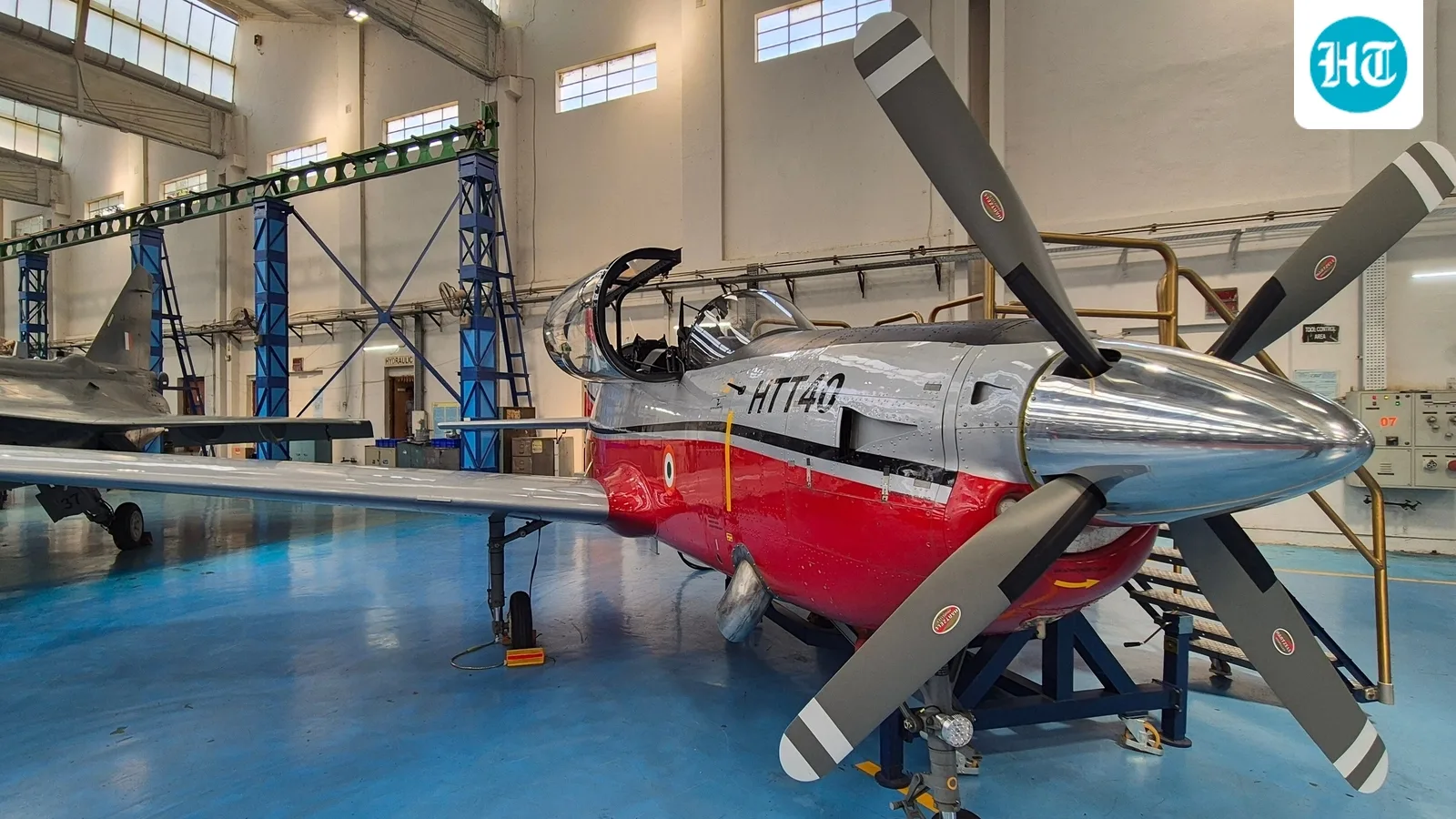
HAL has delivered the first three HTT-40 basic trainers to the IAF.
The IAF plans to build a fleet of 25-30 aircraft before commencing full training.
The HTT-40 trainers are equipped with advanced features and are part of a larger order of 70 aircraft.
Hindustan Aeronautics Limited (HAL) has officially handed over the first three HTT-40 basic trainer aircraft to the Indian Air Force (IAF) on September 18 in Bengaluru. This delivery marks a significant step in India's indigenous aircraft manufacturing program. However, full-scale training operations are expected to take up to two years as the IAF prepares to establish a sufficient number of trained instructors and additional aircraft.
The IAF's order for 70 HTT-40 aircraft, valued at ₹6,838 crore, was placed three years ago to enhance pilot training capabilities. The initial deployment of these trainers will occur at the Flying Instructors’ School in Tambaram, near Chennai, where instructors will be trained to teach rookie pilots. Officials indicated that the IAF aims to have a fleet of 25-30 HTT-40s operational before commencing training at the Air Force Academy near Hyderabad.
The HTT-40 trainers are powered by Honeywell's TPE331-12B turboprop engines, which faced delivery delays due to supply chain issues. Under a contract worth $100 million, Honeywell is set to supply 88 engines, with HAL manufacturing the remaining units under a technology transfer agreement. Once engine supplies stabilize, HAL anticipates producing up to 20 HTT-40s annually at its facilities in Bengaluru and Nashik.
The HTT-40 features a modern cockpit, advanced avionics, and safety enhancements such as zero-zero ejection seats. Currently, the aircraft has 56% local content, which is expected to increase to over 60% as further indigenization occurs. This trainer will serve as a critical stepping stone for pilots, allowing them to develop essential flying skills before advancing to more complex aircraft.
Currently, rookie pilots undergo initial training using Swiss-origin Pilatus PC-7 MkII trainers. After completing this stage, they are divided into fighter, transport, and helicopter streams. Those selected for the fighter stream will progress through additional training stages on various aircraft, including advanced jet trainers, before flying supersonic fighter jets. The introduction of the HTT-40 is anticipated to enhance the overall training framework for the IAF, contributing to a more robust pilot training pipeline.