Global Climate Alert: 'Super-Duper El Niño' Expected to Peak
Meteorologists warn of unprecedented global warming as 'Super-Duper El Niño' intensifies, with severe implications for weather patterns worldwide.
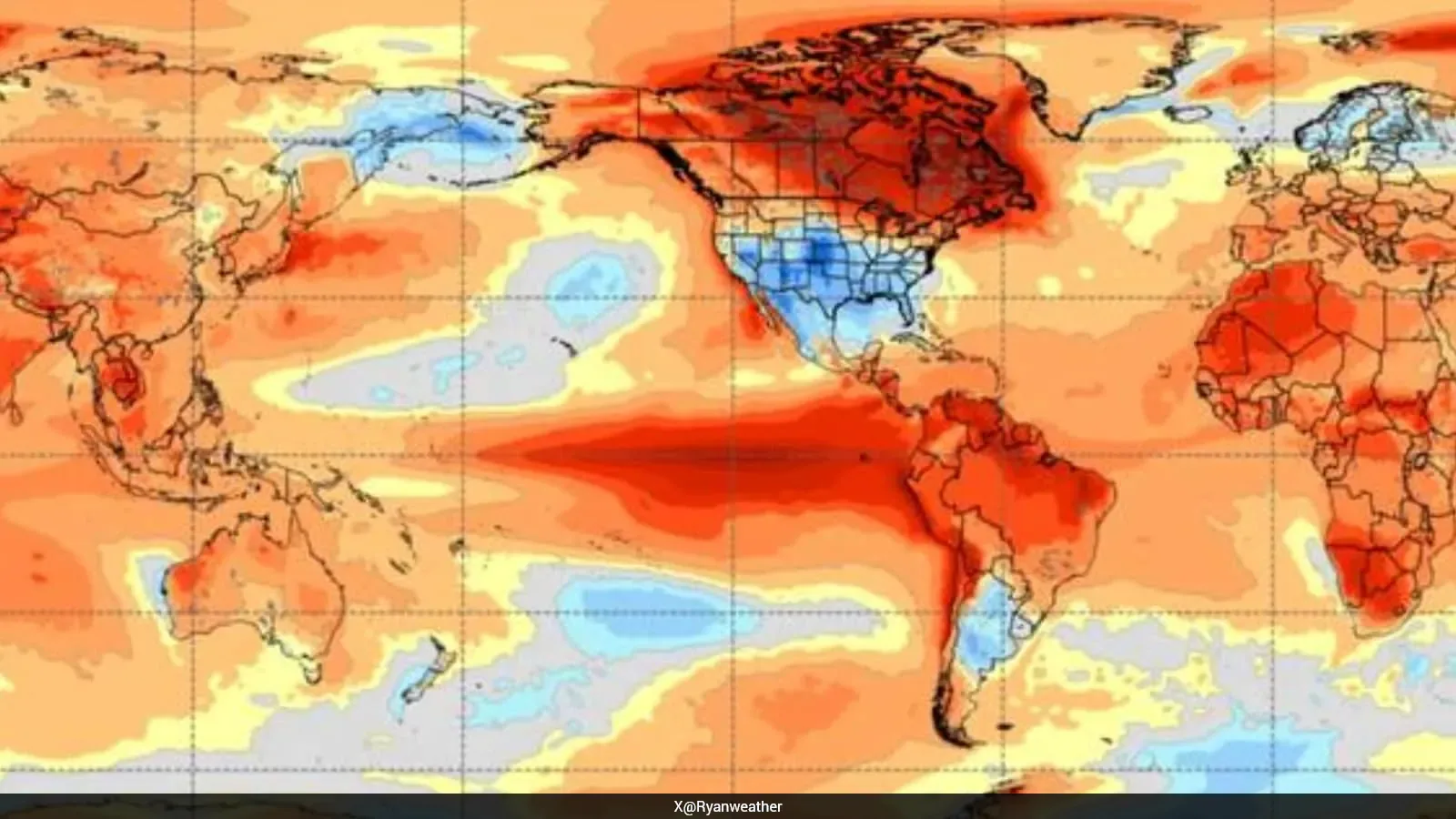
The World Meteorological Organization predicts record sea surface temperatures due to El Niño.
Experts warn of potential global excess deaths linked to this climate phenomenon.
El Niño is expected to persist at maximum intensity until February 2027.
Weather experts globally are raising alarms about the intensifying El Niño phenomenon, which is now entering unprecedented levels. The United Nations has indicated that this year's El Niño could be one of the strongest events observed since 1950, with the World Meteorological Organization (WMO) stating that it will exacerbate the effects of human-induced climate change. As the Pacific Ocean releases significant amounts of trapped heat, vast areas of the Earth are expected to experience unusually warm conditions.
Meteorologist Ryan Maue shared a climate map illustrating that the planet is nearly entirely marked in red, indicating extreme heat. He noted that El Niño is operating at 'maximum power' during winter, affecting global temperatures, except for the United States. This assessment aligns with the WMO's prediction that the phenomenon will continue through February 2027.
Further analysis by climate scientist Zeke Hausfather revealed that the anomalies in the Nino3.4 region have reached 3.4 degrees Celsius above normal, surpassing any previous El Niño records. Leon Simons, another weather expert, referred to this event as a 'super-duper El Niño,' highlighting the need for updated forecasting models to accommodate the extreme conditions expected.
The WMO's forecast indicates a high probability of above-average sea surface temperatures in various regions during the last months of 2026. In particular, temperatures in the central and eastern tropical Pacific are projected to reach a staggering 3.7 degrees Celsius (6.7 degrees Fahrenheit) above normal from October to December. This warm phase of the El Niño-Southern Oscillation cycle is known for causing significant disruptions in global weather patterns, leading to droughts in some areas while causing heavy rainfall in others.
Researchers from the University of Chicago's Climate Impact Lab have predicted that this year's 'super-El Niño' could result in as many as 451,000 excess deaths globally from June through February 2027. As the world braces for these changes, the implications for agriculture, water resources, and public health are profound, necessitating urgent attention and action from governments and organizations worldwide.