Francis Halzen Receives 2026 Physics Nobel for Neutrino Discoveries
The Nobel Prize in Physics for 2026 has been awarded to Francis Halzen for his groundbreaking work on high-energy neutrinos.
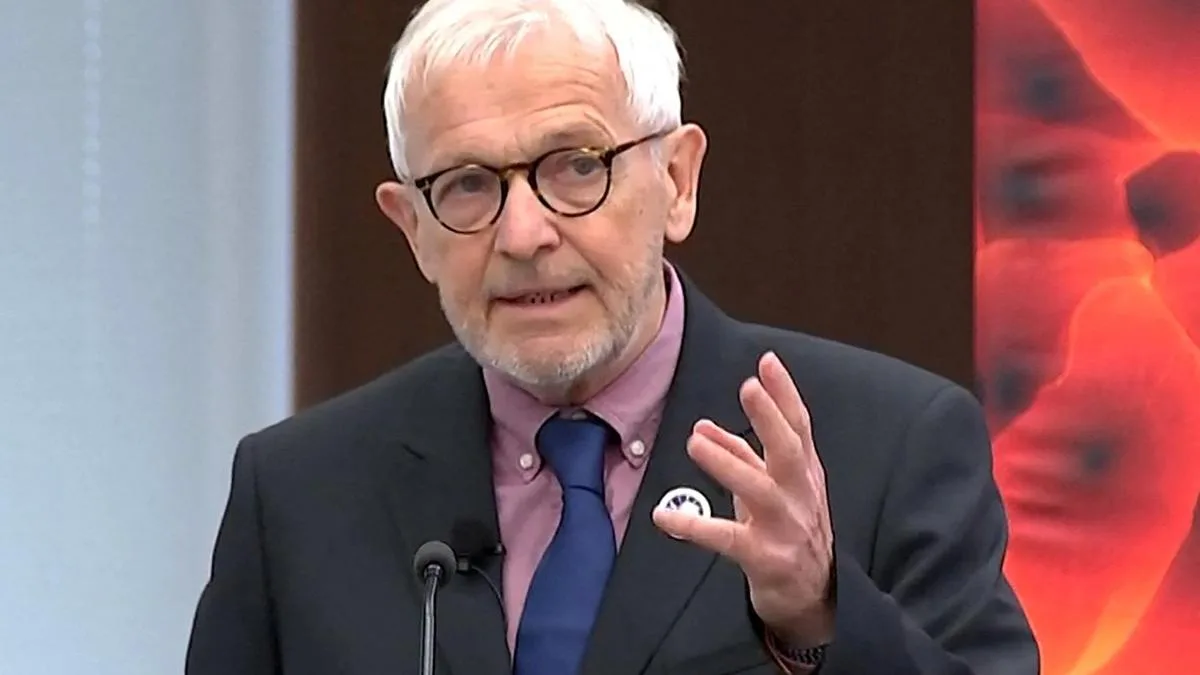
Francis Halzen recognized for contributions to IceCube Neutrino Observatory.
High-energy neutrinos provide insights into cosmic phenomena.
Nobel Prize ceremony scheduled for December 10, 2026.
The Royal Swedish Academy of Sciences has awarded the 2026 Nobel Prize in Physics to Francis Halzen for his significant contributions to the IceCube Neutrino Observatory and the discovery of high-energy neutrinos originating from astrophysical sources. This prestigious recognition highlights Halzen's pivotal role in advancing our understanding of these elusive particles.
The IceCube Neutrino Observatory, a groundbreaking project conceptualized by Halzen, is located in Antarctica and spans an impressive cubic kilometer of ice. Completed in 2011, the facility is designed to detect neutrinos that travel from the far reaches of the universe. Researchers have successfully identified high-energy neutrinos, marking a significant milestone in the exploration of cosmic events that generate these particles.
Halzen's innovative approach to astronomy involves utilizing glacial ice to capture neutrinos, which are notoriously difficult to detect. His efforts have opened new avenues for research, allowing scientists to explore the extreme environments where high-energy neutrinos are produced. The ongoing data collection at IceCube is expected to yield groundbreaking insights into previously unknown cosmic phenomena.
The implications of Halzen's work extend beyond the realm of physics; they promise to enhance our understanding of the universe and its fundamental processes. As researchers continue to analyze the data from IceCube, they anticipate uncovering new sources of neutrinos and gaining deeper insights into the nature of cosmic events.
Looking ahead, the Nobel Prize ceremony will take place on December 10, 2026, coinciding with the anniversary of Alfred Nobel's death. Halzen, who is currently a professor at the University of Wisconsin–Madison, expressed his gratitude upon receiving the news of his award. The Nobel Prize, which includes a cash award of 12 million Swedish kronor (approximately $1.2 million), recognizes individuals who have made significant contributions to humanity.