Cyclone Arnab's Extended Landfall in Andhra Pradesh
Cyclone Arnab's unusual path along the Andhra Pradesh coast has raised questions about its landfall process.
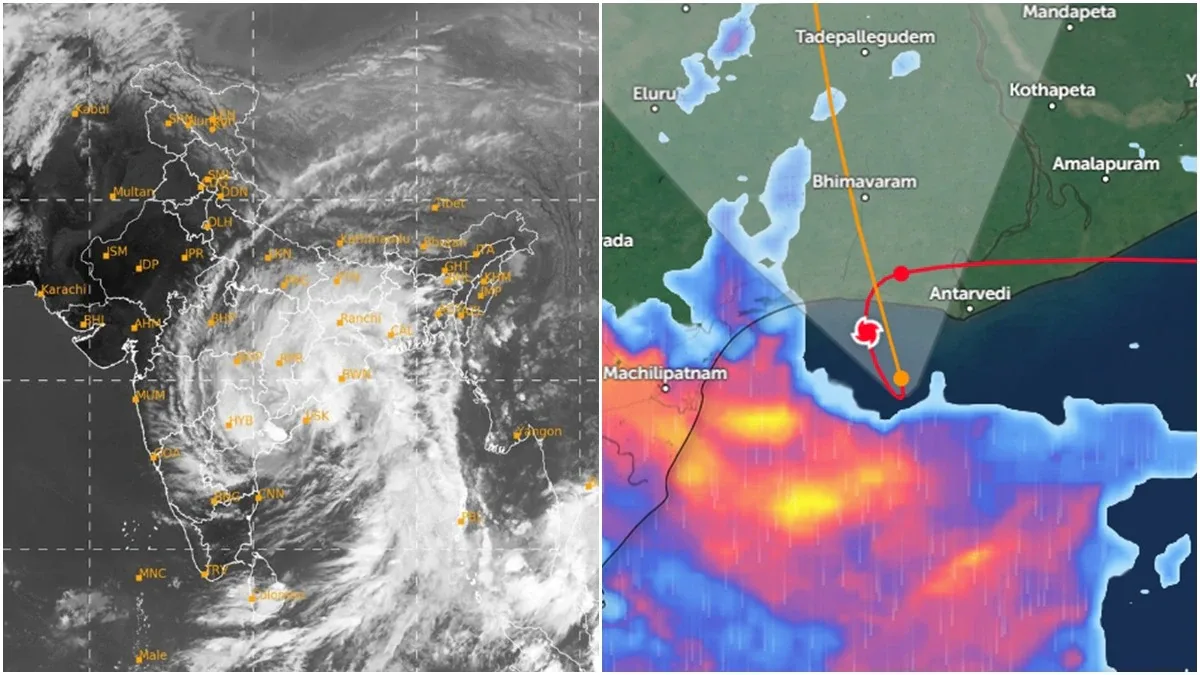
Cyclone Arnab made landfall in Andhra Pradesh on October 28, 2026.
The storm exhibited a prolonged landfall process, lasting from 2 AM to 8 AM IST.
IMD clarified that the cyclone's unusual path was due to its slow movement near the coast.
On October 28, 2026, Cyclone Arnab made landfall along the Andhra Pradesh coast, creating confusion among meteorologists and residents alike due to its unusual trajectory. The cyclone's center appeared to linger near the shoreline, leading to speculation that it had made two landfalls within a short period. However, the India Meteorological Department (IMD) confirmed that there was only one prolonged landfall event.
As Cyclone Arnab approached the coast, its center remained close to the shoreline while its cloud and rain bands began interacting with land. This phenomenon caused radar images to show an apparent bending of the cyclone’s path, which could mislead observers into thinking that the storm had shifted direction or returned to the sea. The IMD emphasized that such movements should be interpreted in the context of the cyclone's overall behavior rather than as evidence of multiple landfalls.
The IMD reported that Cyclone Arnab crossed the Andhra Pradesh and Yanam coasts between approximately 2 AM and 8 AM IST, with sustained winds ranging from 125 to 135 km/h and gusts reaching up to 150 km/h. The storm's center passed near key locations, including Narsapur and Kakinada. By 8 AM, the cyclone's central region had completely moved inland, marking the end of the landfall process.
The prolonged duration of the landfall can be attributed to the cyclone's slow movement along the coast. This slow progression resulted in extended exposure for coastal areas to strong winds and heavy rainfall, with the northern rain bands already reaching inland while the center remained near the coast. By 8:30 AM, the IMD downgraded Arnab to a severe cyclonic storm as it continued its path inland.
In conclusion, the unusual trajectory of Cyclone Arnab was a result of its slow movement rather than a sign of returning to open waters. The IMD's clarification helps to dispel confusion regarding the cyclone's path and emphasizes the importance of understanding the dynamics of cyclones during landfall events.