Bangladesh and Pakistan Formalize Five-Year Trade Agreement
A new MoU between Bangladesh and Pakistan aims to enhance trade in essential commodities over the next five years.
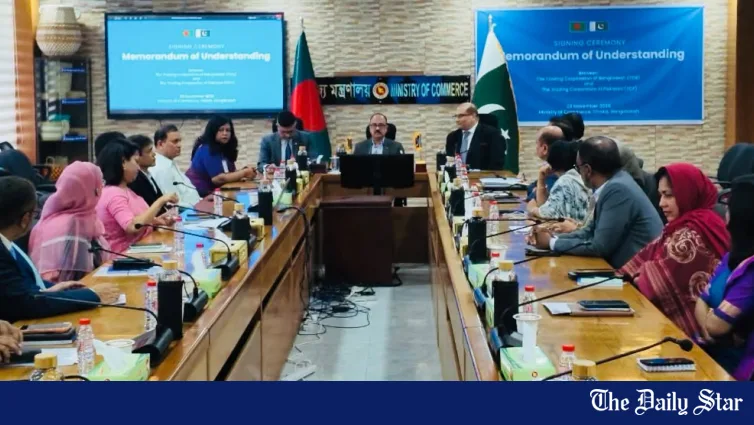
Bangladesh and Pakistan signed a five-year MoU for trading essential goods.
The agreement covers a wide range of agricultural products including rice, wheat, and sugar.
Both countries aim to strengthen food security and diversify import sources.
In a significant development for regional trade, Bangladesh and Pakistan have entered into a five-year memorandum of understanding (MoU) to facilitate the exchange of essential commodities. The agreement, signed today, aims to bolster supplies and ensure food security while diversifying import sources for both nations.
The MoU was formalized between the Trading Corporation of Bangladesh (TCB) and the Trading Corporation of Pakistan (TCP) during a ceremony held at the Secretariat. Brigadier General Mohammad Foyshol Azad, chairman of TCB, and Imran Haider, Pakistan’s high commissioner to Dhaka, represented their respective organizations in signing the agreement.
Under the terms of the MoU, both countries will be able to import and export a variety of essential goods, including rice, wheat, sugar, edible oils, and pulses. The agreement also encompasses other agricultural products such as sesame, potatoes, onions, red lentils, chickpeas, tea, pineapples, jackfruit, dates, and fertilizers. This broad scope is intended to meet the specific needs of both nations.
Commerce Secretary Sharf Uddin Ahmed Choudhury emphasized that this MoU would establish a direct and structured commercial relationship between the state-owned trading entities of Bangladesh and Pakistan. He noted that it would safeguard the economic interests of both countries and open new avenues for cooperation in trade and agriculture.
The Pakistani high commissioner highlighted that Pakistan possesses surplus stocks of various agricultural products, including basmati rice and spices, and is prepared to meet Bangladesh’s demands. Additionally, he mentioned recent improvements in bilateral cooperation in trade, education, and communication, including the removal of anti-dumping duties on certain imports from Bangladesh. The first shipment of Bangladeshi pineapples was successfully delivered to Karachi last October, marking a positive step in trade relations.