Supreme Court Upholds Maharashtra's Reservation Rotation Policy
On November 16, 2026, the Supreme Court dismissed a challenge to Maharashtra's rules on SC/ST seat rotation in local elections.
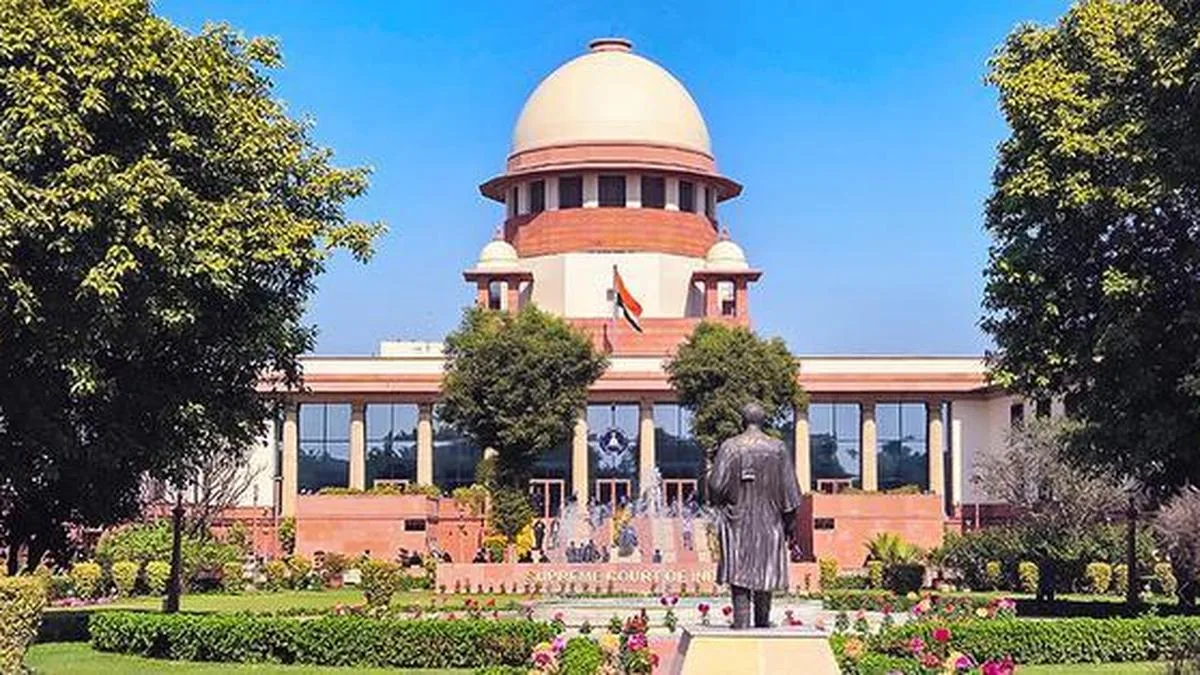
The Supreme Court ruled against a plea challenging Maharashtra's rotation policy for reserved seats.
The court emphasized that no candidate has a guaranteed right to reserved constituencies.
Petitioner allowed to seek reconsideration of the rules from the Maharashtra government.
On November 16, 2026, the Supreme Court of India declined to entertain a plea that contested the Maharashtra government's rotation policy for reserved seats for Scheduled Castes (SC) and Scheduled Tribes (ST) in local body elections. The bench, consisting of Justices Joymalya Bagchi and V. Mohana, dismissed the appeal filed by Sau. Rupali Indrabhushan Sonde, which challenged the September 19, 2025, ruling of the Nagpur Bench of the Bombay High Court. The court stated that no voter or candidate possesses a vested right to have a constituency designated as reserved for SCs or STs.
The legal challenge arose from the Maharashtra government's 2025 rules, which stipulate that the general elections following the implementation of these rules would be regarded as the first for the purpose of rotating reserved seats. The High Court had previously dismissed similar petitions, asserting that the petitioners failed to demonstrate that the introduction of Rule XII was arbitrary or unconstitutional. This rule specifies that the first election after the rules' commencement is considered the initial election for seat rotation.
During the proceedings, senior advocate Vipin Sanghi, representing Sonde, highlighted concerns regarding the potential disruption of the existing reservation rotation system. The plea argued that the new rule could adversely impact candidates contesting from reserved constituencies and violated constitutional provisions. However, the Maharashtra government defended the rules, stating they were designed to comply with Section 12 of the Maharashtra Zilla Parishads and Panchayat Samitis Act, 1961, particularly following amendments that allowed for the division of districts into electoral divisions with the State Election Commission's approval.
The government pointed out that this was the first instance of changing electoral constituency boundaries under the revised framework, which could alter the geographical composition, population distribution, and reservation status of constituencies. The High Court acknowledged the importance of respecting the principle of rotation but noted that the current case involved a new delimitation exercise, distinguishing it from previous judgments cited by the petitioners.
Moving forward, while the Supreme Court upheld the rotation policy, it permitted the petitioner to submit a representation to the Maharashtra government for a review of the rules governing SC/ST seat reservations. This development may lead to further discussions on the implications of the rotation policy and its impact on local governance in Maharashtra.