Supreme Court Rules Unlicensed Moneylenders' Loans Unenforceable in Maharashtra
The Supreme Court clarifies that loans from unlicensed moneylenders against promissory notes are not legally enforceable in Maharashtra.
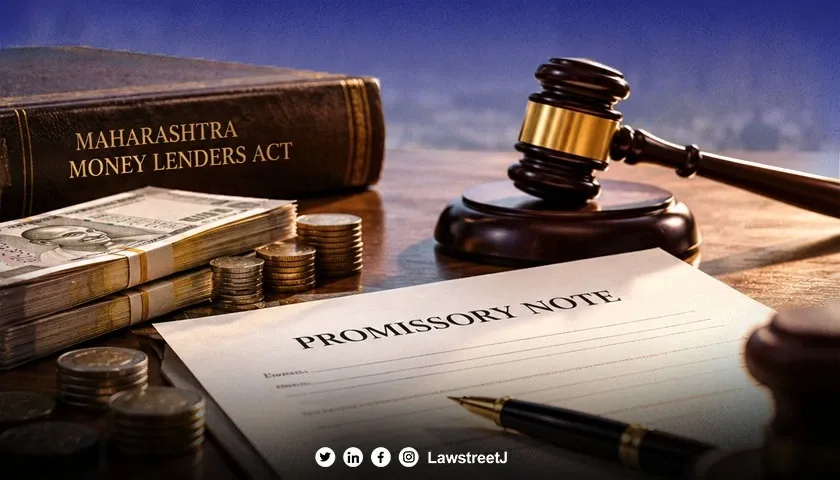
The Supreme Court upheld that unlicensed moneylenders cannot enforce debts secured by promissory notes in Maharashtra.
The ruling stems from a clarification request related to the Mansi Finance case, emphasizing the need for a license to lend.
Section 4 of the Maharashtra Money-Lending Act prohibits unlicensed lending, making such loans unenforceable.
In a significant ruling, the Supreme Court of India has determined that loans provided by unlicensed moneylenders against promissory notes are not legally enforceable within Maharashtra. This decision was made during the hearing of Miscellaneous Application No. 3002 of 2026, associated with the case of M/s Mansi Finance (Chennai) Ltd. vs. M. Lalitha. The Court, led by Justice Prashant Kumar Mishra and Justice N.V. Anjaria, declined to clarify the applicability of its earlier judgment from May 26, 2026, across India but reaffirmed the unlicensed lending prohibition in the state.
The background of this ruling stems from a previous case where loans were extended against promissory notes, but the repayment cheques were dishonored. The High Court had dismissed the complaint due to insufficient foundational claims regarding vicarious liability. The Supreme Court's earlier judgment had allowed the appeal in part and reinstated proceedings against three of the four accused, but it did not address the broader implications for unlicensed lending across India.
In the recent proceedings, Vyomesh Mahipatray Shah sought clarification on whether the Mansi Finance judgment applied to Section 138 of the Negotiable Instruments Act concerning unlicensed moneylenders. The Court noted that the Maharashtra Money-Lending (Regulation) Act, 2014, explicitly prohibits lending against promissory notes without a license, contrasting with the Tamil Nadu Money-lenders Act, which allows such loans under certain conditions. The Court emphasized that any lending activity must be licensed to be considered legally enforceable.
The implications of this ruling are profound for both borrowers and lenders in Maharashtra. It reinforces the legal framework governing money lending and protects consumers from predatory practices by unlicensed lenders. The Court's decision mandates that any lender must present a valid license when pursuing recovery in cases of dishonored cheques or loan defaults, thereby aiming to curb illegal lending practices.
Looking ahead, the Supreme Court's ruling sets a precedent for future cases involving unlicensed moneylenders in Maharashtra. It underscores the necessity for compliance with state regulations and serves as a warning to those engaging in unlicensed lending activities. As the legal landscape continues to evolve, stakeholders in the financial sector will need to remain vigilant and informed about these developments.