Severe Drought in Maharashtra's Beed District Affects Farmers
Beed district faces its worst drought in a decade, impacting farmers and local economies as water sources dry up.
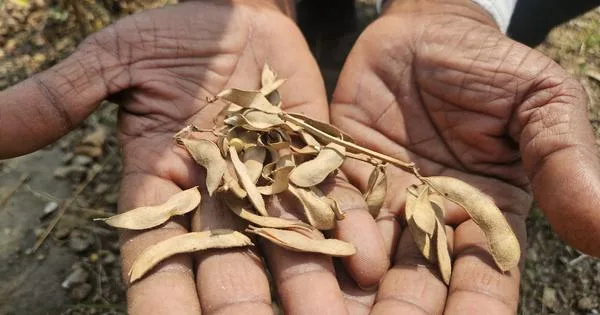
Over 300 tehsils in Maharashtra declared drought-hit due to an 18% rainfall deficit.
Farmers report significant crop failures, leading to rising fodder prices and economic distress.
Suicides among farmers have increased, with 153 reported in Beed this year due to financial pressures.
Beed district in Maharashtra is grappling with its most severe drought in ten years, as over two-thirds of the state faces similar conditions. With an alarming 37% deficit in monsoon rainfall, local farmers are struggling to cope with the dire situation. Awasrao Powal, a 90-year-old resident of Chumbali village, reflects on the current crisis, stating that this year's drought is worse than any he has experienced before. "There is no money, and there is no work," he lamented, highlighting the desperation felt by many in the region.
The drought has devastated agricultural yields across Beed, which encompasses 8.7 lakh hectares of kharif cultivation. Farmers like Mustafa Khan have reported drastic reductions in their cotton crops, with yields dropping from 70-80 pods to fewer than ten due to insufficient rainfall. This decline not only threatens their livelihoods but also impacts the broader agricultural supply chain, affecting cattle breeders and sugar factories. The situation is exacerbated by losses from last year's unseasonal rains, pushing many farming households to the brink of despair.
In response to the crisis, the Maharashtra government announced the establishment of free cattle sheds with fodder and water. However, farmers like Khan express skepticism about the timely implementation of these measures. The local cattle market is flooded with animals, yet prices have plummeted, leaving many farmers unable to sell their livestock. Concurrently, grain traders report a significant drop in supply, with prices for commodities like soybean surging from Rs 5,200 to Rs 6,100 per quintal, further straining local economies.
The drought's impact extends to sugarcane production, with farmers reporting stunted growth due to insufficient water. Samadhan Narote, a farmer in Morphali village, noted that his sugarcane, which should reach heights of 22 feet, is only six feet tall. The decline in sugarcane yields threatens the operational viability of local sugar factories, which may face reduced processing seasons and subsequent job losses for laborers dependent on the industry.
As the situation worsens, the emotional toll on farmers is becoming increasingly evident. Reports indicate that 153 farmers in Beed have taken their own lives this year due to mounting debts and crop failures. With many farmers unable to repay loans, the community is gripped by fear and uncertainty as winter approaches. Local activist Amar Habib warns that by January, water supplies may be critically low, exacerbating the already dire conditions for farmers and their families.