Maharashtra Sugar Production Hits 28.25 Lakh Tonnes by November 24, 2026
Maharashtra's sugar output nearly doubles compared to last season, reaching 28.25 lakh tonnes by late November.
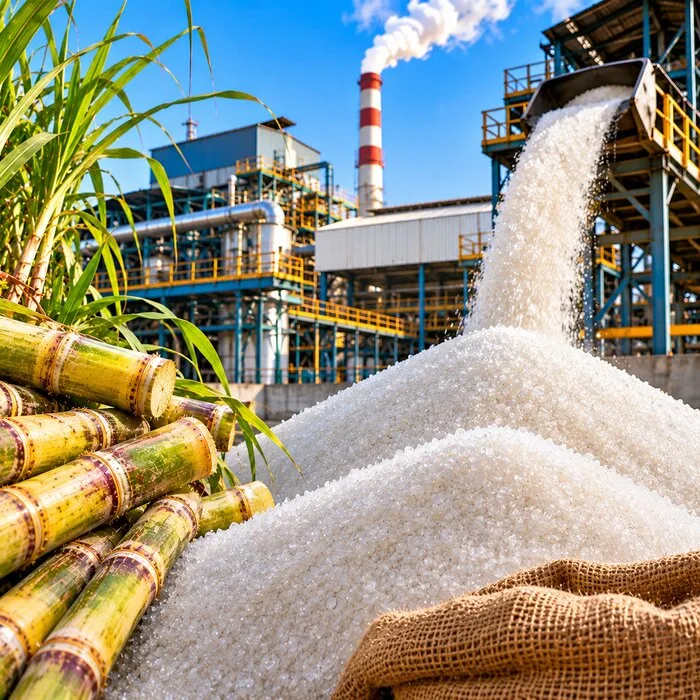
Sugar production in Maharashtra is up 97% from last season.
191 sugar mills are currently operational, with a daily crushing capacity of over 10 lakh tonnes.
Pune division leads in production, while Kolhapur has the highest sugar recovery rate.
As of November 24, 2026, Maharashtra's sugar mills have produced an impressive 28.25 lakh tonnes (LMT) of sugar during the 2026-27 season. This figure represents a significant increase, nearly doubling the output from the same date in the previous season, according to the latest report from the state Sugar Commissionerate.
The report indicates that mills across the state have crushed 314.09 LMT of sugarcane, achieving an average net sugar recovery rate of 8.99%. A total of 191 mills are currently operational, comprising 92 cooperative and 99 private factories, which collectively have a daily crushing capacity of 10,43,700 tonnes. This surge in production is a remarkable turnaround compared to last season, where only 184 mills produced 14.36 LMT of sugar from 189.96 LMT of cane, with a lower recovery rate of 7.56%.
The Pune division has emerged as the leading region in sugar production, with 31 mills contributing to a total of 8.01 LMT of sugar from 82.13 LMT of cane, reflecting a recovery rate of 9.76%. Meanwhile, the Kolhapur division boasts the highest recovery rate in the state at 10.08%, with 38 mills producing 5.38 LMT of sugar from 53.35 LMT of cane. Other divisions, such as Solapur and Nanded, also reported substantial production figures, although with varying recovery rates.
The implications of this production increase are significant for the local economy and the sugar industry in Maharashtra. With a robust output, the state is poised to strengthen its position in the national sugar market, potentially impacting prices and availability. The increase in sugarcane crushing also suggests improved agricultural productivity, which could benefit farmers and related sectors.
Looking ahead, stakeholders in the sugar industry will be monitoring production trends closely as the season progresses. The continued operation of mills and the potential for further increases in sugar recovery rates could lead to even higher production figures by the end of the season. Upcoming reports will provide further insights into the performance of the sugar industry in Maharashtra.