Maharashtra's Lok Sabha Seats Could Rise to 72 by 2026
As the Centre proposes a significant increase in Lok Sabha seats, Maharashtra's representation, particularly for Vidarbha, remains a critical concern.
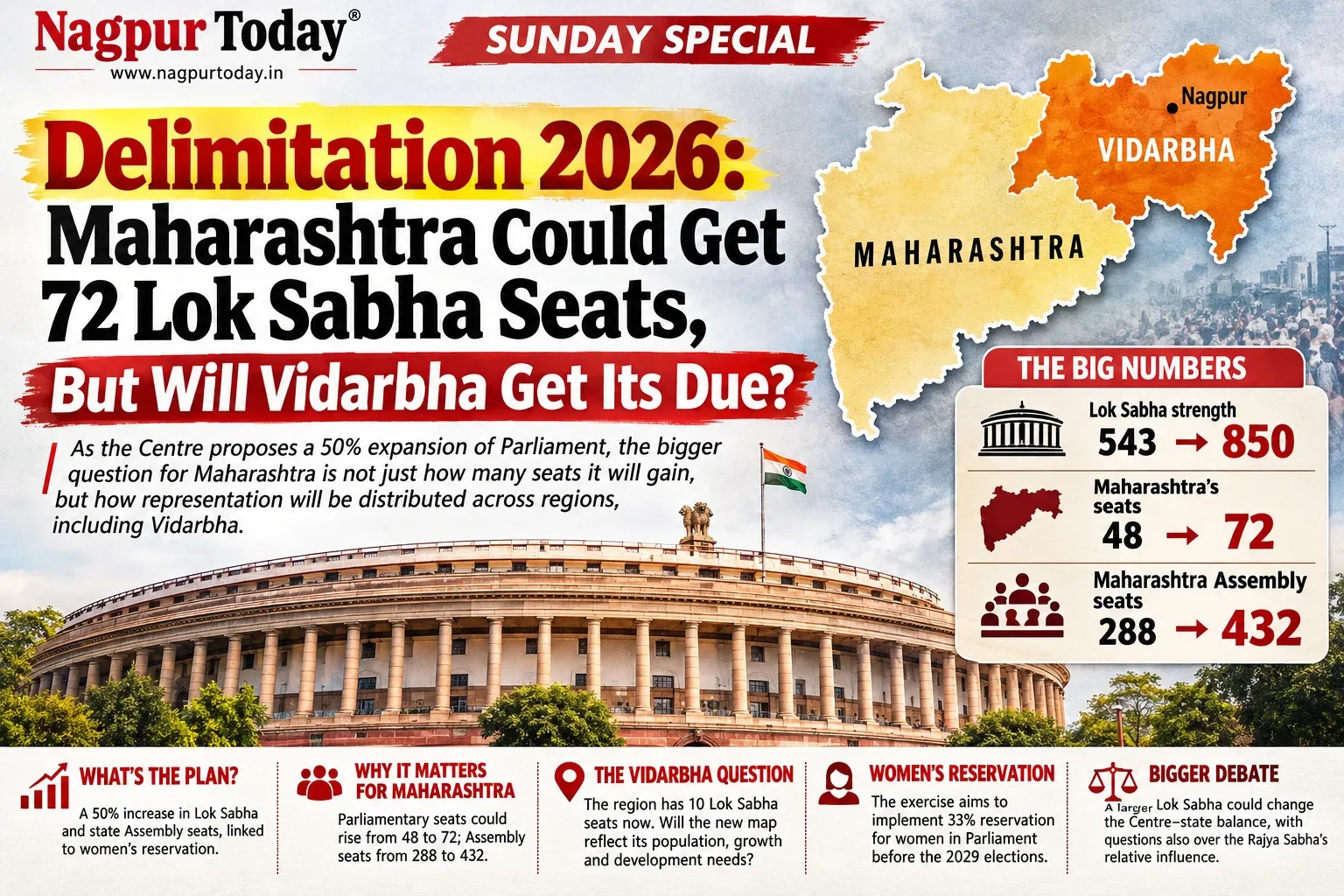
Maharashtra's Lok Sabha representation may increase from 48 to 72 seats.
The delimitation process will determine how these new seats are allocated across regions, especially Vidarbha.
The implementation of women's reservation in Parliament is linked to the upcoming delimitation exercise.
The Indian political landscape is poised for a transformative shift as the Union Cabinet has approved a constitutional amendment aimed at expanding the Lok Sabha's strength from 550 to 850 members. This proposal includes a uniform 50% increase in parliamentary seats for all states and Union Territories, which will be discussed in a special session of Parliament starting November 30. For Maharashtra, this could mean an increase in Lok Sabha seats from 48 to 72, raising questions about how this expansion will affect regional representation, particularly in Vidarbha.
Currently, Vidarbha comprises 10 Lok Sabha constituencies across its 11 districts, including Nagpur and surrounding areas. While the overall number of seats may rise, the crucial aspect lies in how these seats will be distributed. The delimitation exercise is vital as it will redraw constituency boundaries based on population distribution and demographic changes. Urban areas like Nagpur have seen significant growth, while rural parts of Vidarbha face ongoing challenges in infrastructure and agriculture. The effectiveness of this exercise will depend on whether it accurately reflects these realities.
Concerns have also been raised regarding the delimitation process, particularly among southern states worried about population-based seat redistribution. The revised proposal aims to ensure that every state receives a 50% increase in seats while maintaining their relative share of parliamentary representation until the first Census after 2051 is conducted. This approach seeks to balance the representation of states with varying population growth rates.
The proposed delimitation will utilize the most recent Census data available at the time of implementation, which may still rely on the 2011 Census if no newer data is published. This raises questions about whether outdated demographic data can adequately represent the current population dynamics, especially in rapidly growing urban centers like Nagpur.
The upcoming delimitation exercise is also closely tied to the implementation of the Women's Reservation Act, which mandates 33% representation for women in legislative bodies. The Centre aims to operationalize this before the 2029 elections, making the expansion of the Lok Sabha and state assemblies crucial for achieving this goal. As the proposals await legislative approval, the real implications for Vidarbha's political representation will become clearer once the Delimitation Commission finalizes its constituency recommendations.