Maharashtra's Disabled Face Employment Challenges Amid Policy Gaps
Despite legal provisions, individuals with disabilities in Maharashtra struggle to secure jobs and benefits, revealing systemic issues.
Only 18% of registered persons with disabilities in Maharashtra found employment under MGNREGA in 2024-25.
The new VB-G RAM G Act, effective July 2026, aims to improve job guarantees for persons with disabilities.
Corruption and lack of awareness hinder access to UDID cards and associated benefits for many individuals.
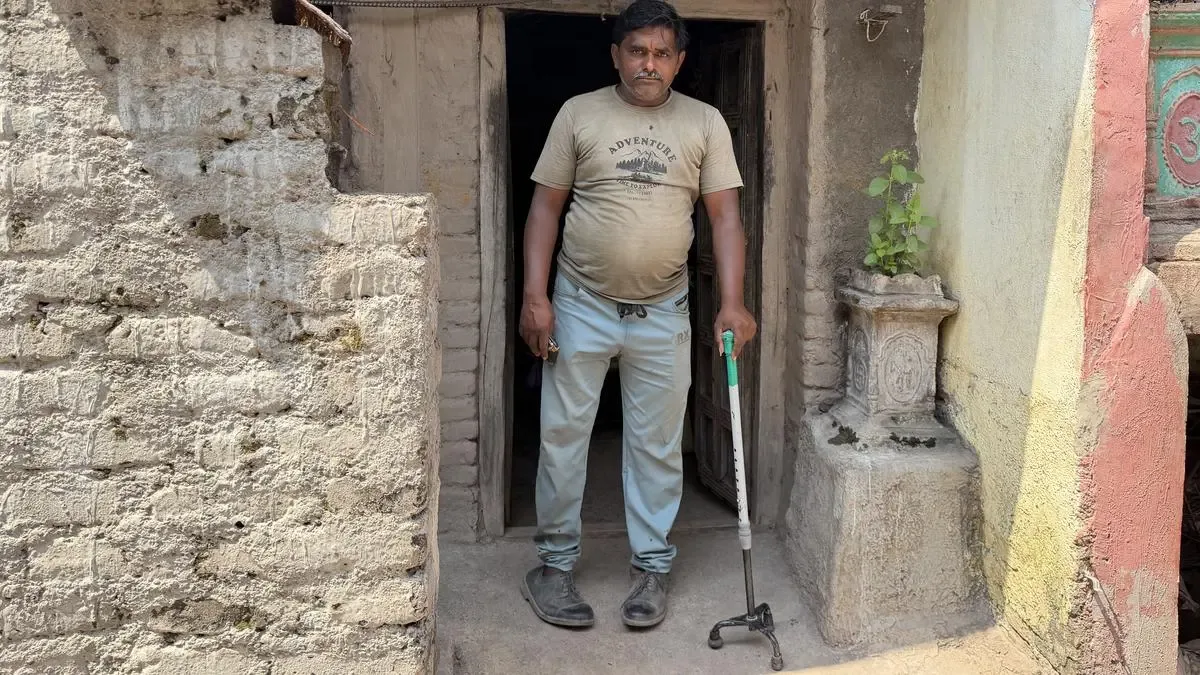
In Maharashtra, individuals with disabilities continue to face significant barriers to employment and social benefits, as highlighted by the experiences of Gopal Ramkrishna Sarvade, a 32-year-old resident of Khirdi village. Despite his locomotor disability, Gopal manages to herd cattle for a meager monthly income of Rs. 5,000. However, he struggles during the rainy season, relying on his wife’s earnings and a disability pension of Rs. 2,500, which he finds insufficient to support his family of four.
The challenges faced by Gopal are not isolated. The Mahatma Gandhi National Rural Employment Guarantee Act (MGNREGA) mandates that local governments provide work to persons with disabilities (PwDs) when requested. However, Gopal’s attempts to secure employment under this scheme have been thwarted by a lack of available opportunities, as confirmed by the village employment assistant. This disconnect highlights a broader issue where many PwDs are unaware of their rights and the employment options available to them.
Data from the Right to Information (RTI) Act reveals that only 18% of registered PwDs in Maharashtra were employed under MGNREGA in 2024-25, with those who did find work averaging just 31 days of employment, far below the guaranteed 100 days. The situation is even more dire in Gopal's district, where only 30.7% of registered PwDs were employed, and the average workdays dropped significantly in subsequent years.
The introduction of the Viksit Bharat—Guarantee for Rozgar and Ajeevika Mission (Gramin) Act, 2025, aims to enhance job security for PwDs by increasing the work guarantee from 100 to 125 days and introducing a special Gramin Rozgar Guarantee Card. However, many PwDs remain unaware of these changes, and no work has been generated under the new framework since its implementation.
Looking ahead, the Maharashtra government faces pressure to address these systemic issues, including the need for better awareness campaigns about the rights and benefits available to PwDs. Activists emphasize the importance of ensuring that local governments comply with employment mandates and that individuals receive the necessary support to access benefits, including UDID cards and subsidies. Without these changes, the prospects for PwDs in Maharashtra remain bleak.