Maharashtra Receives Additional 500,000 Green Mussel Seeds
CMFRI boosts local fisheries by supplying hatchery-produced green mussel seeds to fisher-folk and tribal communities.
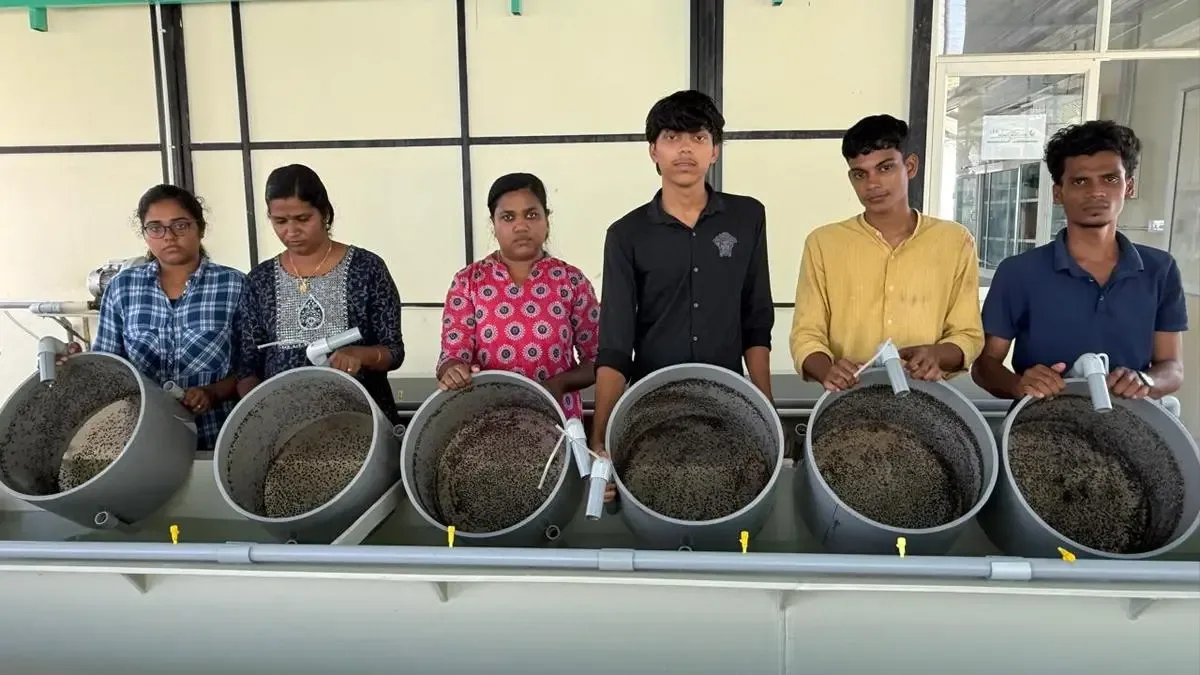
CMFRI has supplied five lakh green mussel seeds, totaling one million in six months.
The initiative aims to promote sustainable bivalve farming along Maharashtra's coast.
Training for local officials on mussel and oyster farming techniques has been provided.
The ICAR-Central Marine Fisheries Research Institute (CMFRI) has recently delivered an additional five lakh hatchery-produced green mussel seeds to fisher-folk and tribal communities in Maharashtra, bringing the total supply to one million over the past six months. This initiative is part of a broader effort to enhance livelihood opportunities through sustainable marine fisheries practices along the state’s coastline.
The green mussel seeds, which range from 2 to 4 mm in size, were cultivated at CMFRI’s bivalve hatchery located at the Vizhinjam Regional Centre, as part of the Pradhan Mantri Matsya Sampada Yojana (PMMSY). Alongside this, one lakh oyster seeds produced at the institute's Madras Regional Station were also sent to Maharashtra to encourage oyster farming, thereby diversifying the income sources for local communities.
CMFRI Director Grinson George emphasized that this combined initiative is designed to support fisher-folk and tribal communities by promoting science-based coastal aquaculture practices. A scientific team led by Principal Scientist M.K. Anil has been instrumental in training 30 officials from Maharashtra’s Mangrove Cell in nursery rearing and farming techniques for both mussels and oysters, ensuring that local farmers are well-equipped to engage in these sustainable practices.
The project is coordinated by the Mangrove and Marine Biodiversity Conservation Foundation in Maharashtra, which is facilitating farmer participation and linking seed supply with technical guidance for effective farming activities. The initiative is supported by the Union Department of Fisheries, highlighting the government's commitment to enhancing coastal livelihoods.
George noted that bivalve farming presents a low-investment and low-operational-cost technology that can significantly bolster coastal livelihoods while promoting ecosystem health. Once established in appropriate locations, mussels and oysters require minimal external inputs, provided that water quality and environmental conditions are favorable. With proper site selection and monitoring, bivalve farming can emerge as a sustainable livelihood option, particularly for communities residing in coastal and mangrove areas.