Maharashtra Minister Ashish Shelar Conducts Bhoomipujan for Traffic Signal
Ashish Shelar's bhoomipujan for a traffic signal in Vandre West raises questions about the politicization of basic civic amenities.
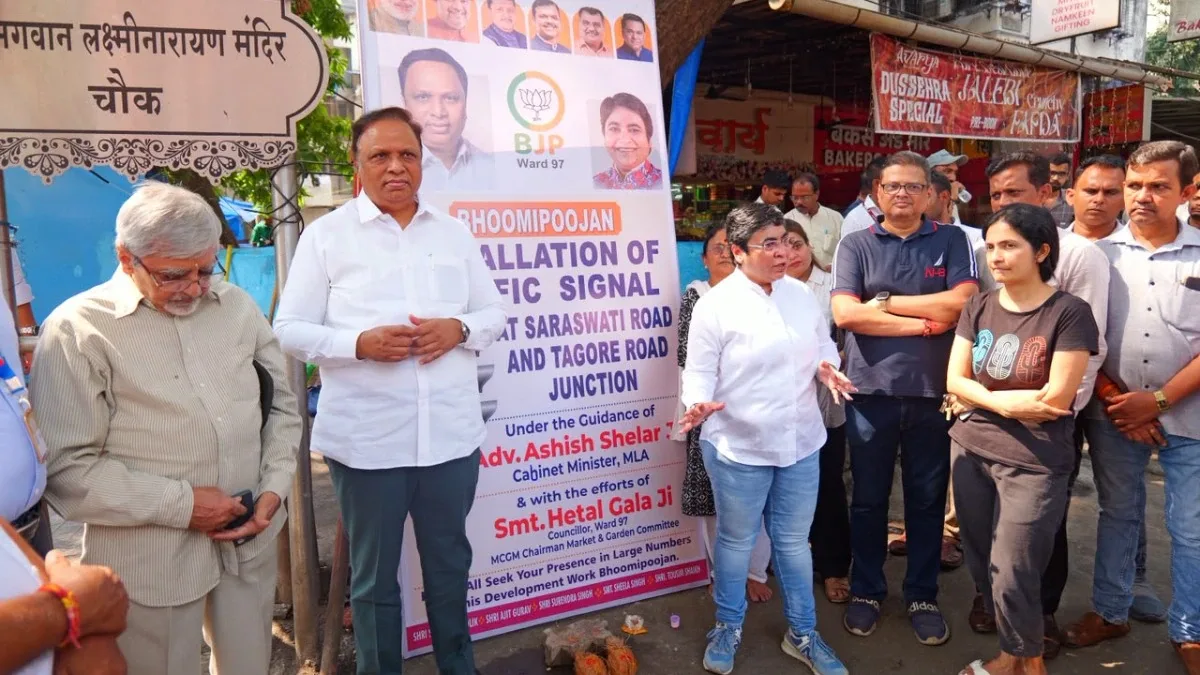
Maharashtra Minister Ashish Shelar held a bhoomipujan for a traffic signal in Vandre West.
The event highlights a trend of politicians associating their names with basic infrastructure projects.
Public amenities like traffic signals are increasingly becoming platforms for political visibility.
In a notable event, Maharashtra's Minister of Cultural Affairs, Ashish Shelar, conducted a bhoomipujan for a traffic signal located at the intersection of Saraswati Road and Tagore Road in Vandre West. This ceremony, attended by local corporator Hetal Gala and other party members, has sparked discussions about the appropriateness of such events for basic civic infrastructure.
The practice of politicians holding ceremonies for routine public amenities is not new in Mumbai. While it is common for elected officials to advocate for improved traffic management, the question arises whether a simple traffic signal warrants a ceremonial inauguration. This trend is part of a broader pattern where even basic facilities, such as public toilets, have been subjected to similar ceremonies, often accompanied by political branding.
Shelar's announcement on social media has drawn attention to the scale of the project, which many consider trivial compared to larger civic initiatives. Traffic signals are essential for road safety and traffic flow, yet their significance is often overshadowed by the political theatrics surrounding their installation. This raises concerns about the priorities of local governance and the genuine needs of the community.
The implications of this trend extend beyond mere inconvenience. Residents in Mumbai frequently express frustration over persistent civic issues, including inadequate infrastructure and traffic congestion. The focus on political visibility through the inauguration of basic amenities detracts from addressing these pressing concerns. A traffic signal should primarily be evaluated on its effectiveness in enhancing safety and traffic management, rather than the political figures associated with its installation.
Looking ahead, it remains to be seen how this trend will evolve. As citizens continue to demand accountability from their elected representatives, the expectation is that public projects will prioritize community needs over political branding. Future developments in civic infrastructure should ideally focus on functionality and public benefit, rather than serving as platforms for political identity.