Maharashtra Government Forms Inquiry Panel Following MPSC Protests
MPSC aspirants conclude their 10-day protest as the Maharashtra government establishes a committee to investigate recruitment irregularities.
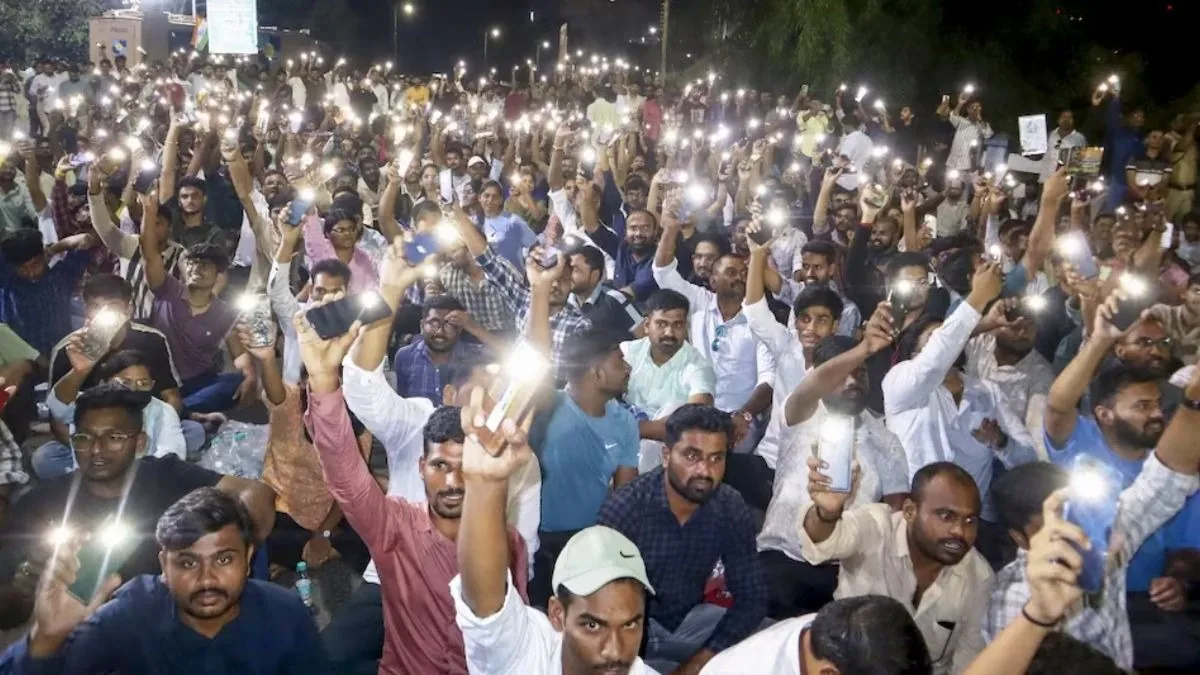
Protesters ended their demonstration after the government agreed to form an inquiry panel.
MPSC chairman Vivek Bhimanwar has taken a leave of absence pending the investigation.
The committee will address various demands, including recruitment for 70,000 posts over three years.
Maharashtra Public Service Commission (MPSC) aspirants concluded their 10-day protest late Sunday night after the state government announced the formation of an inquiry committee to investigate alleged recruitment irregularities and paper leaks. The decision came after a meeting between a government delegation led by Minister Shivendra Raje Bhosale and the protesters, who had been demanding accountability and reform within the commission.
The inquiry panel will be chaired by former judge Dilip Bhosale, with senior IAS officer Tukaram Mundhe serving as secretary. Other members include IPS officer Laxmi Gautam, former IAS officer Ganesh Patil, and retired judge PD Naik. The formation of this committee was a key demand of the protesters, who had also called for the removal of MPSC chairman Vivek Bhimanwar. Following the announcement, Bhimanwar declared he would take a leave of absence until the inquiry is completed.
Vivekanad Patil, a representative of the aspirants, confirmed that the protest would be suspended for now, as the government had agreed to most of their demands. The protesters had gathered at SM Joshi Bridge in Pune, where they expressed their dissatisfaction with the commission's handling of recruitment processes. NCP (SP) MLA Rohit Pawar, who joined the protest, suggested that Bhimanwar should be kept away from his position during the inquiry to avoid any conflict of interest.
The government has also committed to addressing additional demands from the protesters, including the withdrawal of cases against some representatives, recruitment for 70,000 positions over the next three years, and an increase in the number of seats for the upcoming Group C examination. Pawar emphasized the importance of the committee's independence and expressed hope that it would be allowed to operate without interference.
With the protest now called off, the focus shifts to the newly formed committee and the implications of its findings. The government’s response to the protesters’ demands may set a precedent for how similar issues are handled in the future. The aspirants remain vigilant, as nearly 25 lakh students are affected by the outcomes of the MPSC processes. The next steps will be closely monitored as the inquiry progresses and further developments unfold.