Land Acquisition for Ajanta Ghat Section on NH-753F Begins
The Central government has commenced the land acquisition process for a crucial four-lane expansion of the Ajanta Ghat section in Maharashtra.
26.9388 hectares of land will be acquired for the NH-753F expansion.
The project aims to alleviate traffic congestion for tourists and local commuters.
The upgraded highway will enhance connectivity between Jalgaon and Dighi Port.
The Central government has officially initiated the land acquisition process for the Ajanta Ghat section of National Highway 753F in Maharashtra, covering an area of 26.9388 hectares. This development is a significant milestone in efforts to enhance transportation infrastructure along one of the state's busiest routes, which is vital for both local and international traffic.
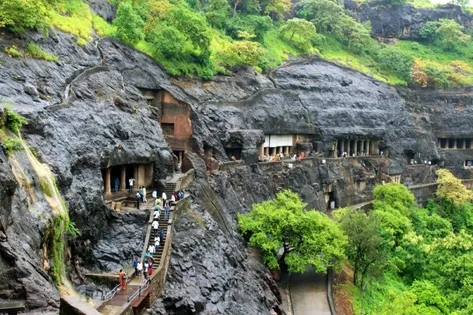
This initiative is part of a larger project aimed at upgrading the highway that connects Aurangabad to Jalgaon, traversing through the UNESCO World Heritage-listed Ajanta Caves. The four-kilometre stretch through the Ajanta Ghat area is particularly challenging due to its mountainous terrain, which has historically contributed to frequent traffic jams, impacting both tourists visiting the ancient sites and daily commuters.
The NH-753F is a critical 539-kilometre highway that links Jalgaon in the north to Dighi Port in the south, passing through significant urban centers such as Aurangabad, Ahmednagar, and Pune. The Ministry of Road Transport and Highways has issued notifications under the National Highways Act, 1956, to facilitate the necessary upgrades along various sections of this important route.
The engineering challenges posed by the Ajanta Ghat section are notable, as the terrain within the Satmala and Ajanta hill ranges requires careful planning and execution. Previous notifications regarding land acquisition for different segments of NH-753F have followed established procedures to ensure transparency and compliance with legal requirements.
Once the construction is completed, the upgraded ghat section is anticipated to significantly reduce travel times and improve safety for the thousands of vehicles that traverse this historic route daily. This project not only aims to enhance accessibility to one of India’s key archaeological sites but also supports the broader economic development of the region.