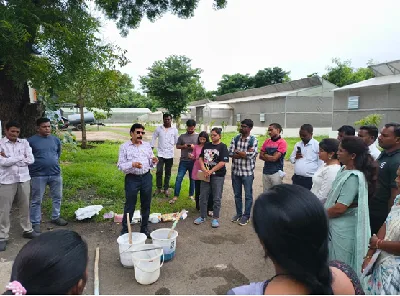
Nagpur Division Introduces Bio-Fencing to Mitigate Man-Animal Conflict
A pioneering bio-fencing initiative in Parseoni aims to reduce human-wildlife interactions and protect local agriculture.
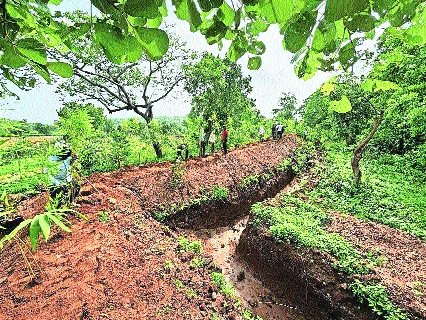
The bio-fencing project spans five villages in Parseoni, Maharashtra.
Constructed from thorny bamboo, it offers a cost-effective alternative to traditional fencing.
Local support has grown as the project shows positive results in reducing wildlife incursions.
In a groundbreaking effort to address the escalating man-animal conflict in Maharashtra, the Nagpur Forest Division has launched a bio-fencing initiative in Parseoni taluka. This innovative approach aims to create a biological barrier that prevents wild animals from encroaching on human settlements while also restricting human access to sensitive forest areas. The project, which is the first of its kind in the state, is currently being implemented over a 5-kilometer stretch encompassing five villages: Dolamine, Gugshi, Pali, Maori, and Umri, all of which have been significantly affected by wildlife encounters.
Traditional fencing methods, such as chain-link and solar fencing, have proven to be costly and require ongoing maintenance, making them impractical for extensive use in conflict-prone areas. Dr. Vinita Vyas, Deputy Conservator of Forest for the Nagpur Territorial Division, highlighted the limitations of these methods, noting that they can inadvertently lead to electrocution incidents as poachers often tamper with the installations. The new bio-fencing technique aims to mitigate these risks while providing a sustainable solution to the problem.
The bio-fencing utilizes thorny bamboo species, specifically Bambusa bambos, which is readily available in the local forests. The design includes trenches on either side of the bamboo barrier, enhancing its effectiveness by making it difficult for wild animals to breach the fence. Additionally, these trenches serve a dual purpose by collecting rainwater, which can be beneficial for wildlife and contribute to the local water table.
Initially, the project faced resistance from residents of Dolamine and Gugshi, who were concerned about losing access to a road leading to a nearby temple. However, as the bio-fencing began to show tangible results—such as a decrease in wildlife incursions and reduced crop damage from animals like wild boars and spotted deer—community support has grown. Range Forest Officer Rahul Shinde reported that the presence of wild animals in these villages has significantly diminished, leading to a more harmonious coexistence.
The Parseoni region is home to a small population of tigers, with seven resident individuals noted, including sub-adults. The Nagpur Forest Division is actively enhancing wildlife monitoring efforts in the area, particularly as the tiger population has seen a notable increase. With the implementation of bio-fencing, officials are optimistic that this initiative will effectively reduce man-animal conflicts, which have been on the rise in recent years.