ICAR-CCRI Launches Citrus Production Training for Master Trainers
A three-day training program on sustainable citrus production technologies was held in Nagpur for master trainers in Madhya Pradesh.
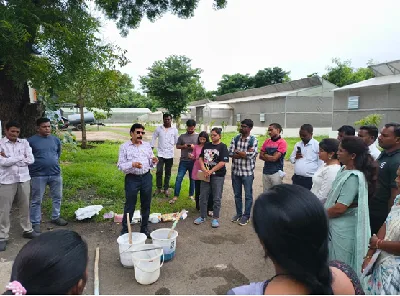
The training program took place from August 5 to 7, 2026.
30 master trainers from NGOs and local farming organizations participated.
The initiative aims to promote sustainable agriculture in the Satpuda-Pench corridor.
The ICAR-Central Citrus Research Institute (ICAR-CCRI) in Nagpur recently conducted a comprehensive three-day training program titled "Training Programme for Master Trainers on Sustainable Citrus Production Technologies for Satpuda Pench Corridor of Madhya Pradesh (Phase -1)". This event took place from August 5 to 7, 2026, at the ICAR-CCRI campus, marking a significant advancement in sustainable agricultural practices in the region.
This initiative, organized in partnership with WWF-India, follows a Memorandum of Understanding (MoU) signed on February 16, 2026, which aims to enhance sustainable citriculture while engaging local forest fringe communities. The program was inaugurated by Dr. Dilip Ghosh, Director of ICAR-CCRI, who emphasized the critical role of regenerative agriculture and citrus farming in the forest fringe areas of Madhya Pradesh.
The training was meticulously crafted and delivered by scientists from ICAR-CCRI, who also launched a Training Manual on “Sustainable Citrus Production Technologies for Satpuda Pench Corridor of Madhya Pradesh.” This manual was distributed to all participants, providing them with essential resources. Over the three days, the master trainers received in-depth technical knowledge and nature-based solutions tailored for citrus cultivation in ecologically sensitive areas.
The Satpuda-Pench corridor is recognized for its rich biodiversity and serves as a crucial habitat for wildlife. Local farming communities in the Chhindwara and Pandhurna districts rely heavily on citrus cultivation for their livelihoods. The training program aimed to align agricultural practices with environmental conservation, covering topics such as sustainable orchard management, soil and water conservation, biofertilizers, and government support schemes for regenerative agriculture.
Practical demonstrations were a key component of the training, including orchard layout preparation, planting techniques, rootstock identification, and more. With the completion of Phase-1, the 30 master trainers are now equipped to implement these practices at the grassroots level, significantly impacting the local agricultural landscape.