Nagpur District Implements Fodder Action Plan Amid Drought Concerns
In response to potential fodder shortages, Nagpur district initiates a comprehensive action plan to secure livestock resources.
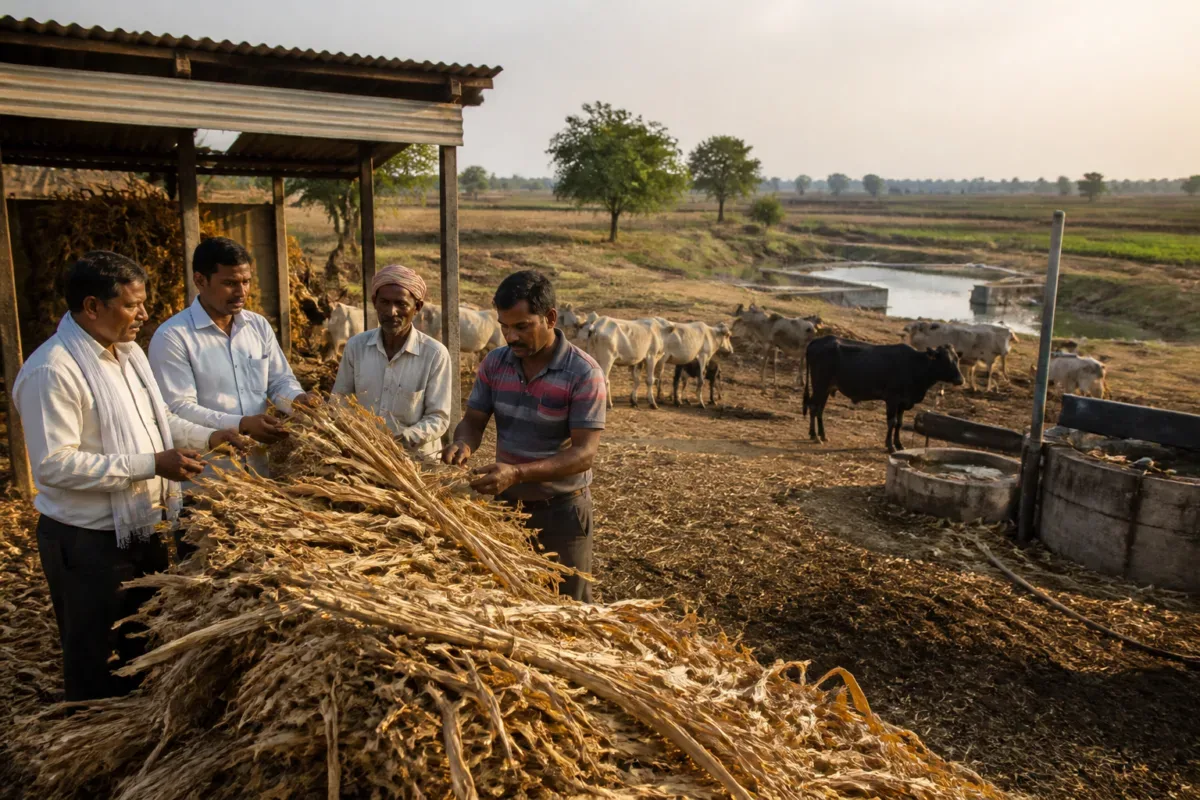
Nagpur has sufficient fodder for 260-270 days.
Village-level planning includes mapping livestock and expanding fodder cultivation.
Emergency storage facilities for fodder are being established.
The Nagpur district administration has initiated a proactive action plan to address potential fodder shortages as drought-like conditions loom. District collector Kumar Ashirwad has emphasized the need for village-level strategies to ensure livestock are adequately fed. Currently, the district has enough fodder to sustain its livestock for approximately 260 to 270 days, but officials are taking preventive measures to mitigate any risks associated with worsening weather conditions.
During a review meeting held at the collectorate, Ashirwad directed officials to assess livestock populations and identify villages that may be vulnerable to fodder shortages. This initiative aims to ensure continuous access to fodder and water for livestock owners while also establishing long-term solutions to minimize the risk of scarcity. Tehsildars have been tasked with locating suitable land for fodder cultivation, including fallow plots and grazing grounds.
The administration is also focusing on enhancing financial support for fodder seed procurement. Proposals from farmer groups and women's self-help organizations will be considered for funding through the District Planning Committee, alongside existing individual beneficiary schemes. Furthermore, taluka agriculture officers will work to identify farmers willing to cultivate fodder on available land, thereby increasing local production.
In addition to mapping livestock populations and current fodder stocks, the district plans to gather data on areas that may face shortages. This proactive approach aims to identify potential gaps before they escalate into emergencies, rather than relying solely on broad district estimates. The administration is also prioritizing the identification of warehouses and other storage facilities to preserve both dry and green fodder, ensuring that emergency procurement can occur if local supplies dwindle.
As part of the comprehensive strategy, officials have been instructed to coordinate with representatives from 173 institutions across the district to enhance fodder availability and seed distribution. The collector has also mandated the development of village-specific water scarcity plans, prioritizing repairs to check dams and borewells. The administration's overarching goal is to ensure that adequate fodder and water resources are in place to support livestock owners throughout Nagpur district as they prepare for the possibility of intensified drought conditions.