Maharashtra Minister Bawankule Addresses Nagpur's Water Crisis and Agricultural Issues
Revenue Minister Chandrashekhar Bawankule discusses key initiatives to tackle Nagpur's water scarcity and agricultural land concerns.
Government plans ₹1,400 crore project for Nagpur's water supply over 50 years.
Large landowners must cultivate barren agricultural land within 3-5 years.
Microfinance loan recovery practices will be halted for eight months.
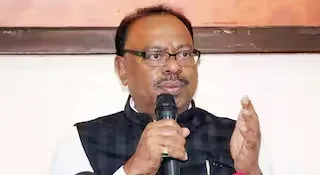
Maharashtra's Revenue Minister, Chandrashekhar Bawankule, has recently addressed pressing issues affecting Nagpur, including the ongoing water crisis, agricultural land usage, and farmers' protests. During a media briefing, he emphasized the government's commitment to ensuring that agricultural land remains productive and that groundwater levels are restored. Bawankule reassured farmers that the government does not intend to seize their land but will enforce regulations on large landowners who leave their properties uncultivated.
The minister highlighted the alarming decline in groundwater levels in Nagpur and Amravati, attributing it to excessive borewell drilling by local orange and sweet lime growers. To combat this, the government has initiated plans to construct over 5,000 water conservation structures and 3,000 recharge shafts. Bawankule expressed optimism that these measures would help improve groundwater levels over the next five years, focusing on retaining rainwater within villages and agricultural fields.
In a significant development, Bawankule announced a comprehensive ₹1,400 crore plan aimed at securing Nagpur's water supply for the next 50 years. This initiative includes the construction of the Kamthi-Kolar Barrage on the Kanhan River, with an estimated cost of ₹800 crore, alongside an additional ₹400 crore for water distribution in peri-urban areas. The minister stated that the details of this project would be finalized during the upcoming Winter Session of the Maharashtra Legislature.
Bawankule also addressed the issue of agricultural land left barren, invoking the Bombay Tenancy and Agricultural Lands Act, which allows government intervention when land remains uncultivated for three consecutive years. He clarified that this measure targets large landowners who possess significant tracts of land and not small farmers. The government aims to ensure that these lands are brought under cultivation within a specified timeframe.
Looking ahead, Bawankule indicated that the government is open to discussions regarding farmers' issues, particularly in light of NCP leader Rohit Pawar's planned tractor march. He invited Pawar to engage in dialogue through official channels rather than protests. Additionally, the minister assured that the Mukhyamantri Majhi Ladki Bahin Yojana would continue despite financial pressures, and he announced an eight-month moratorium on aggressive microfinance loan recoveries to alleviate farmers' burdens.