Nagpur High Court Grants 7-Day Parole for Wedding
A life convict is allowed parole for his wedding, emphasizing prisoners' rights to personal milestones.
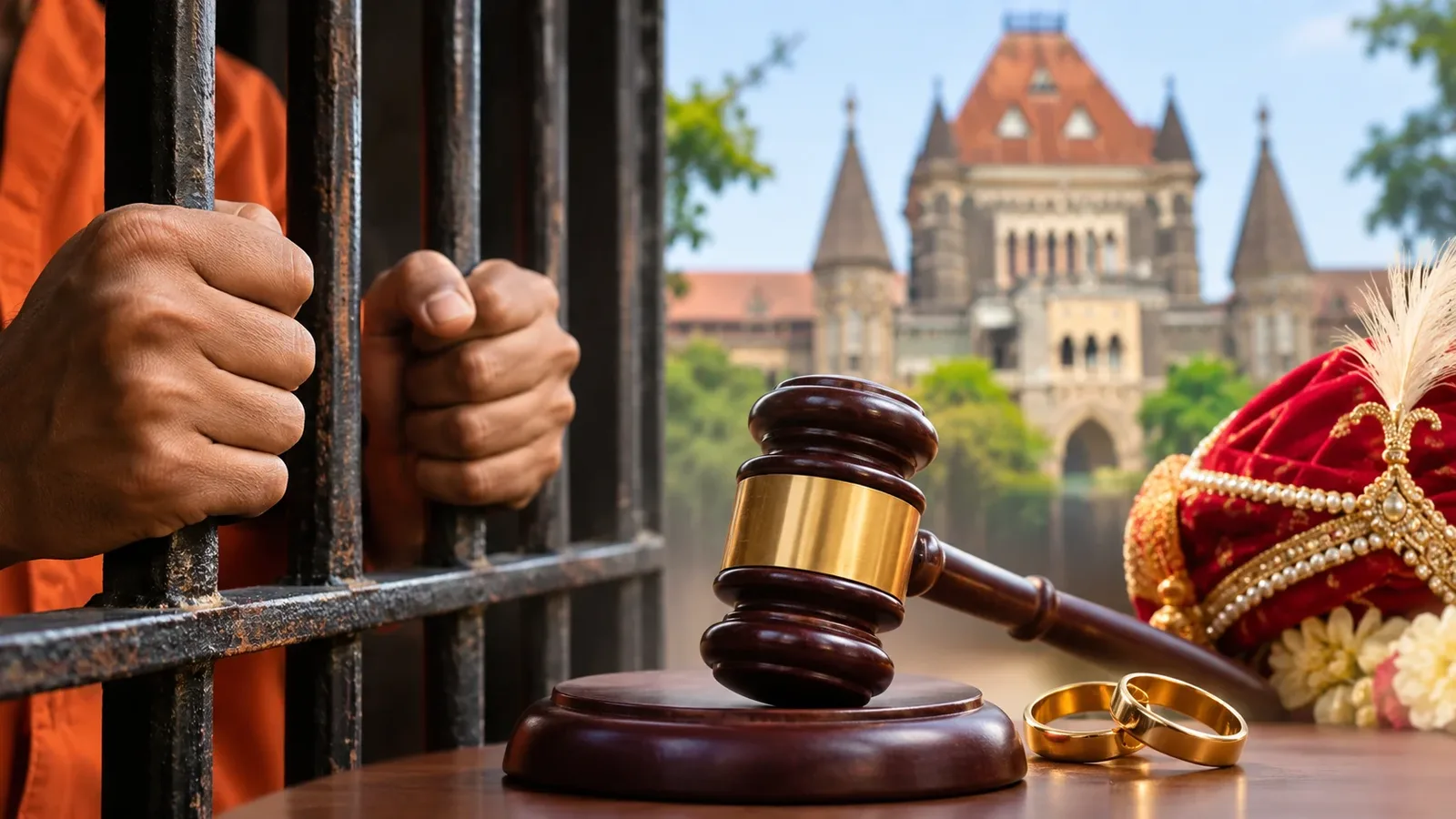
Nagpur Bench of Bombay High Court rules prisoners can receive parole for their own weddings.
Kunal Jaiswal, serving life sentence, granted seven days of parole despite prior rejections.
Court emphasizes that personal milestones should not be denied due to prison rules.
In a landmark decision, the Nagpur Bench of the Bombay High Court has ruled that a prisoner cannot be denied parole for his own wedding, even if prison regulations do not explicitly allow it. The court granted a seven-day parole to Kunal alias Golu Anil Jaiswal, a life convict, enabling him to attend his marriage scheduled for December 4, 2026, in Nagpur.
Jaiswal, currently incarcerated at the Morshi Open Prison in Amravati district, had his initial request for parole denied by the Deputy Inspector General of Prisons on July 7, 2026. The rejection was based on the argument that the Maharashtra Prisons (Furlough and Parole) Rules, 2024, do not specifically include provisions for a prisoner’s own marriage. Despite a police inquiry confirming the wedding arrangements, his application was turned down.
During the court proceedings, the State Government contended that the existing rules only allow parole for the marriages of a prisoner’s children or siblings. They also argued that Jaiswal was ineligible for parole since he had previously been granted it within the last year. However, the division bench, consisting of Justice Urmila Joshi-Phalke and Justice Raj D. Wakode, dismissed these claims, asserting that the provisions related to marriage extend to the prisoner’s own wedding.
The court's ruling highlights the importance of allowing prisoners to partake in significant life events. It noted that the stipulation requiring a prisoner to serve one year before being eligible for parole is a separate issue and should not be used to deny such requests. This decision aligns with previous judicial findings that have deemed the one-year condition unconstitutional under Articles 14 and 21.
As a result of the court's ruling, Jaiswal has been granted seven days of parole, with specific conditions attached. He is required to report daily to the Narkhed Police Station during the parole period, except on his wedding day, and must return to the Morshi Open Prison by the eighth day. This decision reinforces the notion that incarceration does not strip away a prisoner’s rights to celebrate important personal and family occasions, provided legal conditions are met.