Itwari Junction Marks 118 Years with Heritage Exhibition
Nagpur's first railway station celebrates its foundation day with a nostalgic showcase of railway history.
Itwari Junction commemorates 118 years since its establishment.
The event featured a documentary on the Bengal Nagpur Railway's inception.
Models and artifacts from the early railway era were displayed to evoke nostalgia.
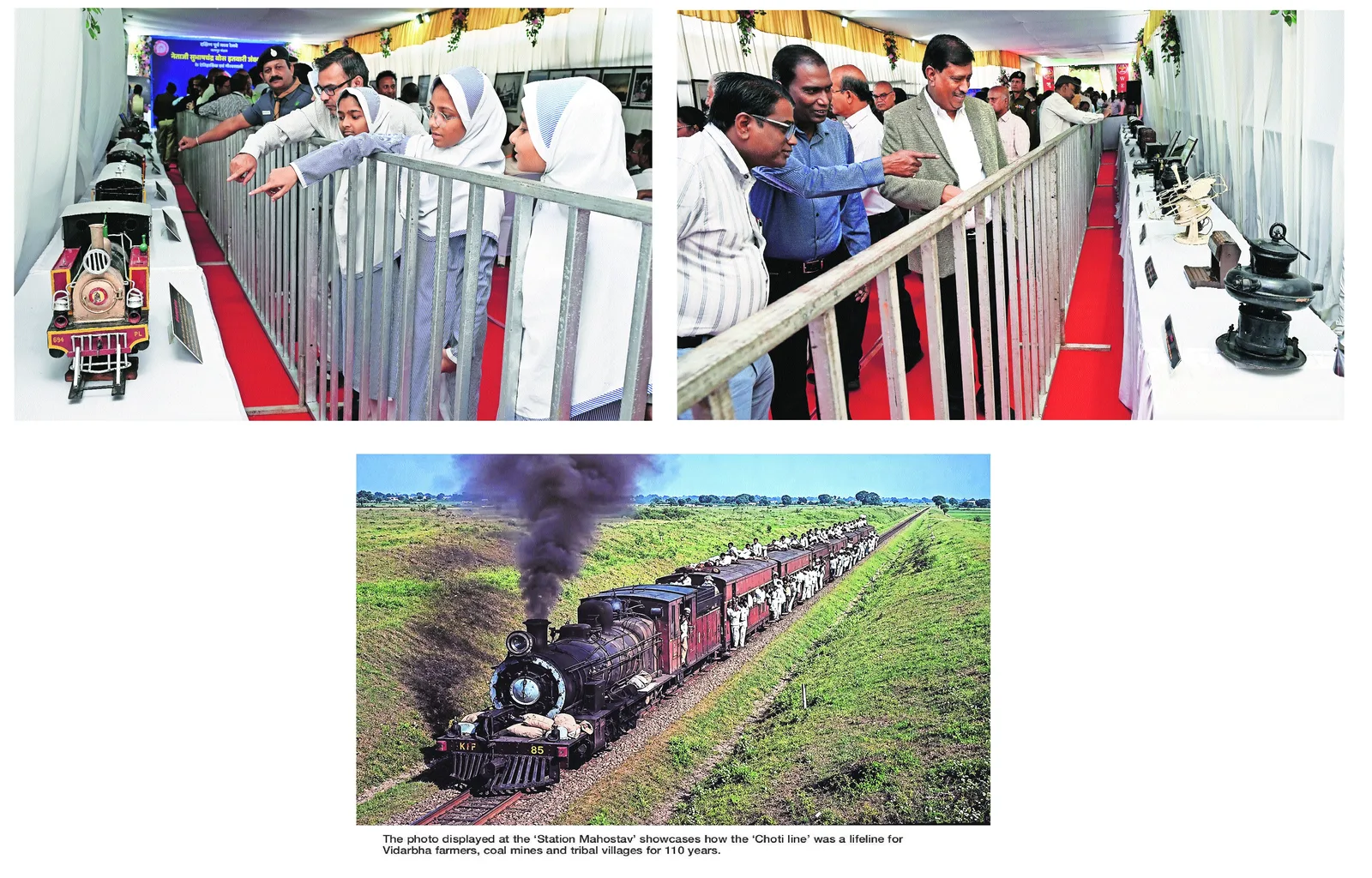
On Wednesday, Itwari Junction in Nagpur celebrated its 118th foundation day with a vibrant Station Mahotsav, bringing the rich history of Indian Railways to life. The event, held on platform No. 1, featured a variety of exhibits, including a 59-ton steam locomotive model scaled down to 1:20, and interactive displays that transported visitors back to the early days of railway travel.
The South East Central Railway (SECR) organized the event to honor the legacy of the Bengal Nagpur Railway, which initiated the Nagpur-Nagbhid Narrow Gauge service on November 9, 1908. A documentary was screened to highlight the beginnings of railway services in Central India, complemented by models and artifacts that recreated the historical atmosphere of the time.
The narrow gauge line, which once connected the tribal regions of East Maharashtra, ceased operations on November 24, 2019, prior to gauge conversion. On January 16, 2023, Itwari Station was officially renamed in honor of Netaji Subhash Chandra Bose, following a resolution passed by the Maharashtra Cabinet in August 2022. This renaming reflects the station's historical significance and its connection to India's freedom struggle.
The Station Mahotsav also featured the exhibition titled 'Itwari Station Ki Purani Smritiyan,' inaugurated by key railway officials, including DRM Deepak Kumar Gupta. The event included a Tiranga Yatra led by Scouts and Guides, along with a street play that celebrated the pride of Indian Railways. Retired railway employees and vendors were honored on stage, emphasizing the station's long-standing heritage.
DRM Gupta expressed the importance of such events, stating that they allow the younger generation to appreciate the historical journey of the railways. The exhibition showcased various historical artifacts, including a model of the ZP Narrow Gauge locomotive from 1955, a 38-passenger GS coach from 1952, and a dining van converted for the Darjeeling Himalayan Railway. Other items included emergency Morse equipment, magneto telephones, and several heritage frames depicting significant moments in railway history.