US Considers Releasing 32 Million Genetically Modified Mosquitoes
Following a successful trial in Australia, the US is exploring the release of millions of modified mosquitoes to combat disease transmission.
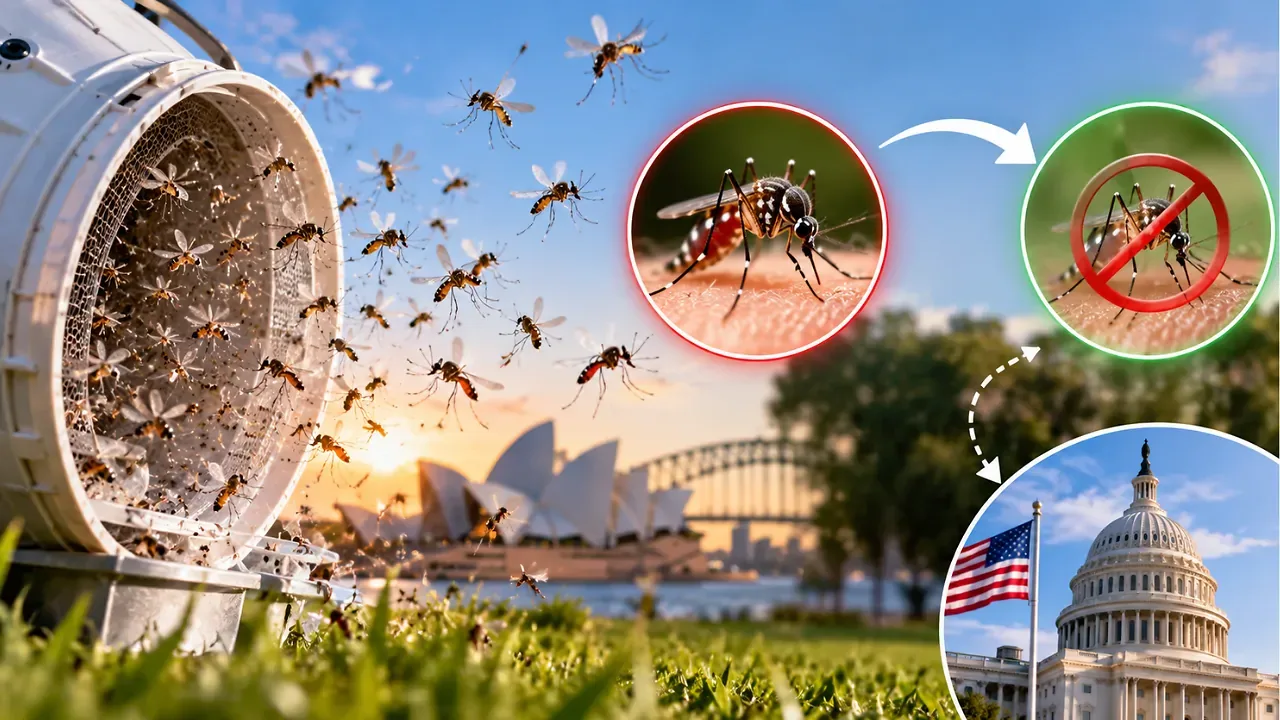
In 2018, a trial in Australia saw a 95% reduction in mosquito populations after releasing 3 million modified males.
Alphabet's Debug program aims to replicate this success in the US, with plans for releases in California, Florida, and New Jersey.
The approach targets Aedes aegypti mosquitoes, which transmit diseases like dengue and Zika, using a method that prevents viable offspring.
In a groundbreaking initiative, Alphabet's Debug program has proposed the release of up to 32 million genetically modified male mosquitoes in the United States. This follows a successful trial conducted in Australia, where the local mosquito population plummeted by approximately 95% after the release of three million specially bred males. The trials are aimed at addressing the ongoing public health threats posed by mosquito-borne diseases such as dengue, Zika, and West Nile virus.
The Debug project specifically targets the Aedes aegypti species, notorious for transmitting several serious diseases. The method involves releasing male mosquitoes that carry a bacterium called Wolbachia. When these males mate with wild females, the resulting embryos do not develop, leading to a gradual decline in the local mosquito population. This innovative strategy seeks to reduce reliance on chemical insecticides while effectively controlling mosquito populations.
The Australian field trials began in 2015, culminating in the release of three million male mosquitoes over a 20-week period in 2018. Researchers observed a significant decline in mosquito numbers within four weeks, with one town reporting a 95% reduction in Aedes aegypti mosquitoes after just one year. The findings, published in 2021, highlighted the potential of this method to manage mosquito populations sustainably.
In the United States, the Debug program has submitted applications for experimental releases in California, Florida, and New Jersey, with the Environmental Protection Agency (EPA) evaluating these proposals. An executive order issued in September 2026 has further emphasized the need for non-chemical methods to control invasive mosquito populations. The proposed trials aim to determine the effectiveness of the released males in mating with wild populations and suppressing their numbers.
While the Australian results are promising, experts caution that success in the US is not guaranteed. Factors such as local mosquito behavior, environmental conditions, and the presence of competing mosquito species could influence outcomes. Moreover, ensuring that only male mosquitoes are released is crucial, as females are responsible for biting and disease transmission. The Australian project utilized advanced technology to achieve this separation, a critical step for the success of similar initiatives in the US.