Tamil Nadu Meets National AIDS Control Goals for 2026-27
Tamil Nadu has successfully achieved the ambitious 95-95-95 targets of the National AIDS Control Programme for the 2026-27 period.
95% of people living with HIV in Tamil Nadu are aware of their status.
The state has reduced HIV prevalence from 0.40% in 2010 to 0.19% in 2023.
Enhanced financial assistance for children affected by HIV/AIDS has been introduced.
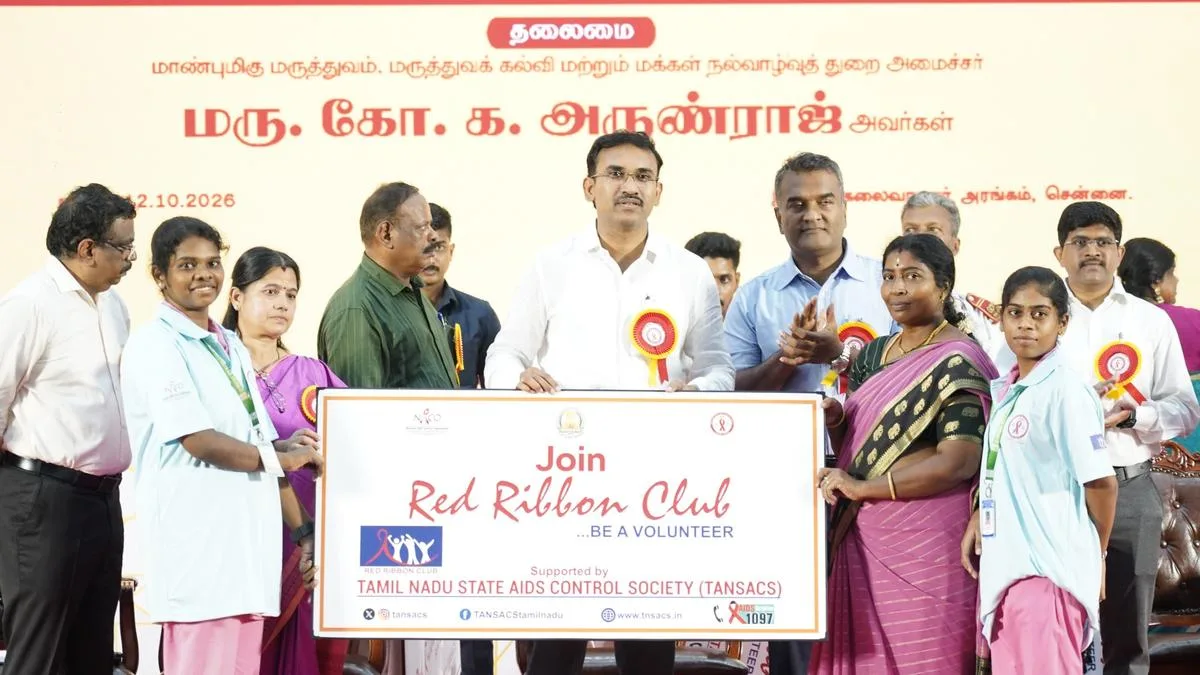
Tamil Nadu has reached the targets set by the National AIDS Control Programme-Phase V (NACP-V) for the 2026-27 period, as announced by Health Minister K.G. Arunraj. The targets include ensuring that 95% of individuals living with HIV are aware of their status, 95% of those diagnosed are receiving antiretroviral therapy (ART), and 95% of those undergoing treatment achieve viral suppression. This milestone was achieved in September 2026, marking a significant advancement in the state's public health efforts.
The state has made considerable progress in reducing the prevalence of HIV/AIDS, which has halved from 0.40% in 2010 to 0.19% in 2023. This decline is attributed to extensive awareness campaigns led by the state government and various non-governmental organizations (NGOs). Minister Arunraj emphasized the goal of achieving an HIV/AIDS-free Tamil Nadu by 2030, highlighting the ongoing efforts to raise awareness and provide treatment.
Currently, Tamil Nadu has 1,63,151 individuals receiving treatment for HIV. The state operates 311 integrated counselling and testing centres (ICTCs) funded by the National AIDS Control Organisation, along with 403 ICTCs supported by the National Health Mission. Additionally, there are 2,656 testing facilities available at primary health centres and government hospitals, ensuring widespread access to testing and treatment services.
Free HIV testing and treatment services are available at 58 government health facilities and 28 private medical colleges. A total of 104 NGOs are actively working to promote behavioral changes among high-risk groups, including sex workers and drug users. The state is also prioritizing the elimination of mother-to-child transmission of HIV, syphilis, and hepatitis B by providing prophylactic ART doses to newborns from HIV-positive mothers.
To support children affected by HIV/AIDS, the Tamil Nadu government has increased monthly financial assistance, with ₹3,000 for orphans and varying amounts for children with one or both parents affected. An additional ₹1.21 crore has been allocated for this initiative, which will commence in November. The state is also focusing on education and awareness, with Red Ribbon Clubs established in 2,329 colleges and life skills training for students in 9,830 schools, aiming to equip the younger generation with knowledge about HIV/AIDS prevention.