Pancreatic Cancer Symptoms Often Misdiagnosed in India
Common symptoms like acidity and gas may mask pancreatic cancer, leading to late diagnoses.
Many patients are misdiagnosed with acidity before pancreatic cancer is identified.
Early symptoms include painless jaundice, unexplained weight loss, and new diabetes.
A new drug, daraxonrasib, shows promise in extending survival rates for patients.
Pancreatic cancer often presents with symptoms that appear benign, such as acidity and gas, leading to significant delays in diagnosis. Dr. Amit Javed, a leading expert in gastrointestinal surgery at Fortis Memorial Research Institute, emphasizes that many patients consult specialists only after months of ineffective treatment for what they believe is simple acidity. By this time, the cancer may have progressed, making surgical intervention impossible for nearly 80% of patients.
The Indian Council of Medical Research (ICMR) has highlighted the challenges associated with pancreatic cancer, labeling it as aggressive with a poor prognosis. The ICMR Consensus Document for Management of Pancreatic Cancer notes that radical surgery remains the only curative option. Unfortunately, the vague nature of early symptoms often leads to misdiagnosis, with patients receiving treatment for unrelated gastrointestinal issues.
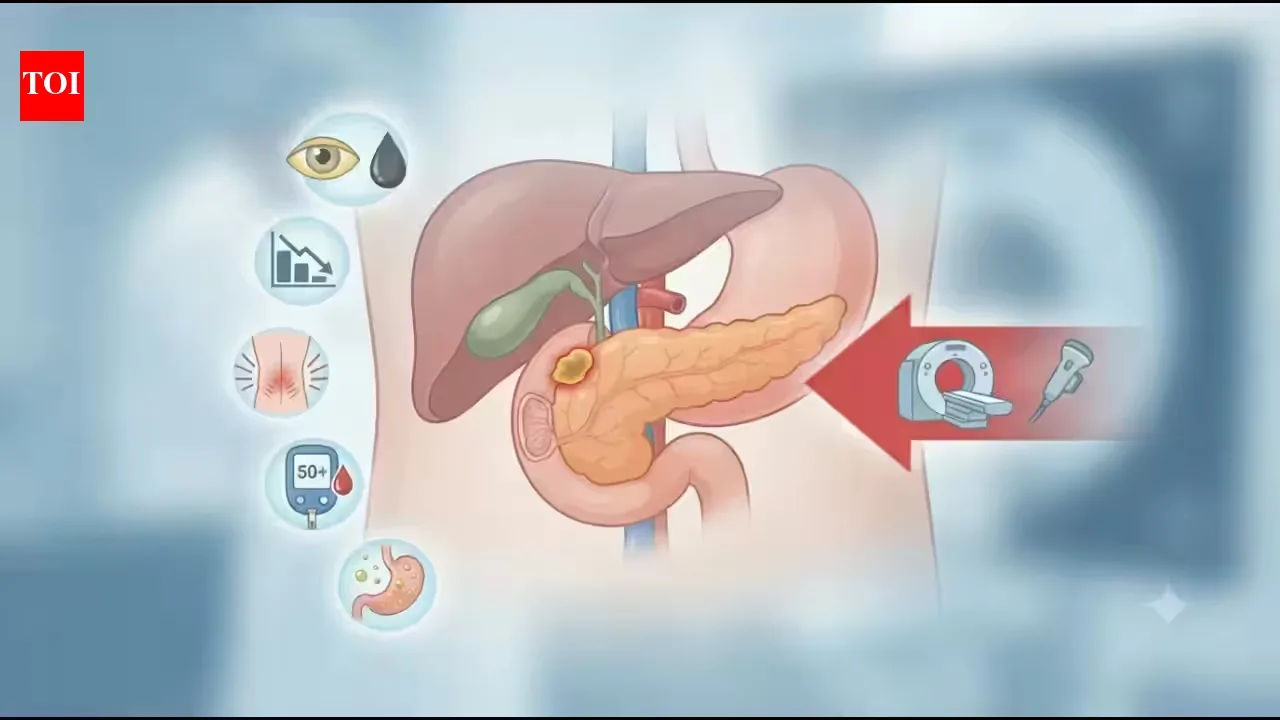
Dr. Javed identifies several critical symptoms that warrant immediate specialist evaluation. These include painless jaundice, which manifests as yellowing of the skin and eyes, unexplained weight loss, and a dull pain in the upper abdomen that may radiate to the back. Additionally, new-onset diabetes in individuals over 50 without a family history should raise red flags. Patients with a history of smoking or chronic pancreatitis, as well as those with a family history of pancreatic or breast cancers, should be particularly vigilant.
The diagnostic process is crucial, with a specific sequence of tests recommended to confirm pancreatic cancer. Initial imaging should involve a pancreas-protocol contrast CT, followed by endoscopic ultrasound and biopsy for definitive diagnosis. Genetic testing is also becoming essential, as it can guide treatment options and inform family members about inherited risks. The identification of specific mutations can open doors to clinical trials for new therapies.
Recent advancements in treatment offer hope for patients. A phase 3 clinical trial has shown that the drug daraxonrasib significantly improves survival rates, nearly doubling median survival compared to traditional chemotherapy. While it has received FDA approval, it is not yet available in India. Experts caution that while these advancements are promising, patients must remain vigilant and proactive in seeking appropriate evaluations for symptoms that could indicate pancreatic cancer.