New Insights on z-VAD-FMK's Role in Macrophage Necroptosis
Recent research reveals that z-VAD-FMK induces necroptosis in macrophages during mycobacterial infections through a unique mechanism.
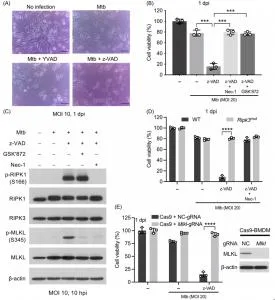
z-VAD-FMK triggers necroptosis in macrophages infected with Mycobacterium tuberculosis and related bacteria.
This process operates independently of the traditional caspase-8 pathway.
Findings suggest potential therapeutic avenues for tuberculosis treatment by targeting necroptosis.
A recent study has uncovered that the pan-caspase inhibitor z-VAD-FMK can induce necroptosis in macrophages infected with Mycobacterium tuberculosis (Mtb) and other related bacteria. Conducted by researchers at Southern University of Science and Technology, this research highlights a non-canonical mechanism that operates outside the conventional understanding of caspase-8 inhibition. The findings were published on October 26, 2026, and suggest that inhibiting macrophage death could be a valuable adjunctive treatment for tuberculosis.
Historically, the death of Mtb-infected macrophages has been linked to increased tissue damage and the spread of infection. The study indicates that z-VAD-FMK, typically used in cell-death research, activates necroptosis through the RIPK1-RIPK3-MLKL signaling pathway, along with TLR2-TNF-α and type I interferon signaling. Notably, the research team found that even when caspase-8 was knocked down in mouse models, necroptosis still occurred, indicating that the mechanism is independent of this pathway.
The research also demonstrated that the necroptosis triggered by z-VAD-FMK was not limited to Mtb but extended to other bacteria such as Mycobacterium kansasii and Rhodococcus equi. This broadens the understanding of how necroptosis can be a pathogenic factor in various bacterial infections. In vivo experiments showed that MLKL deficiency in Sp140-deficient mice led to reduced bacterial load and improved pulmonary health after high-dose infections, suggesting a significant role for necroptosis in disease progression.
The implications of this research are significant for public health, particularly in the context of tuberculosis, which remains a major global health challenge. Understanding the mechanisms behind necroptosis could lead to new therapeutic strategies aimed at enhancing the immune response against Mtb and potentially reducing the severity of the disease.
Looking ahead, further investigations are necessary to identify the precise targets of z-VAD-FMK and to explore its therapeutic potential in tuberculosis treatment. The insights gained from this study may pave the way for innovative host-directed therapies that could improve outcomes for TB patients.