JNU Researchers Target Human Protein to Combat Malaria and Kala-Azar
Scientists at Jawaharlal Nehru University have discovered that eliminating a specific human protein can significantly weaken malaria and kala-azar parasites in laboratory settings.
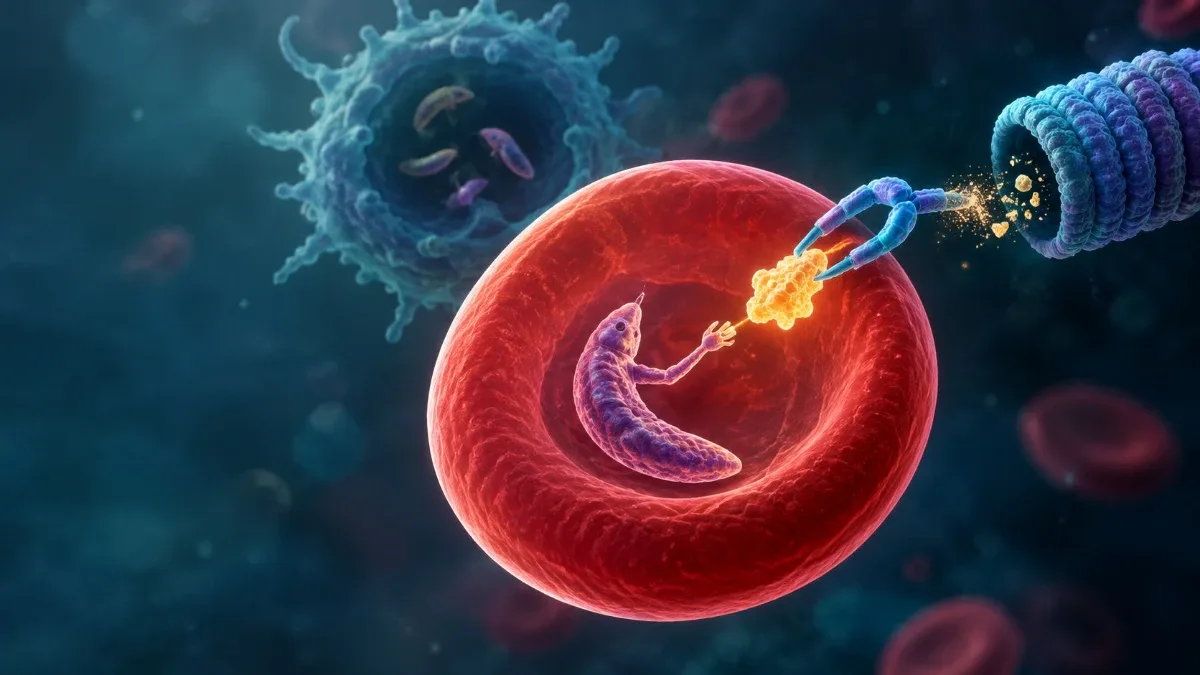
JNU scientists identified p38-MAPK as a crucial protein for malaria and kala-azar survival.
Removing this protein from human cells led to a dramatic reduction in parasite levels.
The research opens up new possibilities for host-directed therapies against these diseases.
Researchers at Jawaharlal Nehru University (JNU) have made a significant breakthrough in the fight against malaria and kala-azar by successfully eliminating a human protein known as p38-MAPK in laboratory experiments. This innovative approach resulted in the weakening of both parasites, which are responsible for these diseases, indicating a potential shift in treatment strategies. The findings were published on June 11 in the journal Communications Biology, marking a pivotal moment in the ongoing battle against these stubborn infections.
Historically, malaria has posed a substantial public health challenge, with the World Health Organization reporting over 610,000 deaths and 282 million cases globally in 2024. The malaria parasite, Plasmodium, has developed resistance to several treatments, including chloroquine, prompting researchers to explore alternative therapeutic avenues. The JNU team, led by Professors Shailja Singh and Anand Ranganathan, sought to investigate whether removing a critical human protein could disrupt the parasites' survival mechanisms, rather than simply targeting the parasites themselves.
The study revealed that p38-MAPK serves as a vital messenger within human cells, facilitating the survival of both malaria and kala-azar parasites. When this protein was removed from cultured human cells, the parasites struggled to thrive. Notably, the researchers found that merely inhibiting the protein did not yield the same results, suggesting that complete removal is necessary for effective parasite suppression. This discovery underscores the importance of understanding the host-parasite relationship and how manipulating host factors can lead to new treatment strategies.
The implications of this research extend beyond laboratory findings. With malaria and kala-azar affecting millions, particularly in regions like India, the potential for a host-directed therapy could revolutionize treatment approaches. By targeting human proteins that the parasites depend on, researchers may be able to develop therapies that are less prone to resistance compared to traditional methods that directly attack the parasites.
Looking ahead, the path to clinical application remains long and complex. While the current findings are promising, they are still in the early stages of research, with no animal trials or clinical studies conducted yet. The team emphasizes the need for further investigation into the safety and efficacy of targeting p38-MAPK before considering human trials. As they continue their work, the hope is to pave the way for innovative treatments that could significantly reduce the burden of malaria and kala-azar worldwide.