Innovative Nanoplatform Targets Drug-Resistant Bacteria with Ultrasound
A new ultrasound-responsive nanoparticle effectively combats multidrug-resistant bacteria and enhances wound healing.
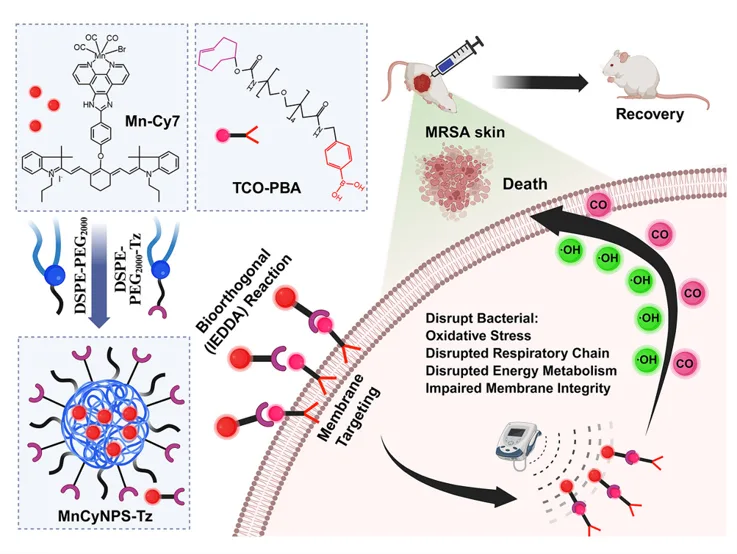
Researchers developed a nanoparticle that uses ultrasound to kill drug-resistant bacteria.
The platform shows significant effectiveness against various bacteria, including MRSA.
In animal models, it promotes rapid wound healing and reduces bacterial survival to nearly 1%.
A groundbreaking study has introduced a novel nanoparticle designed to target and eliminate multidrug-resistant (MDR) bacteria using ultrasound technology. This innovative approach not only aims to eradicate these resilient pathogens but also accelerates the healing process of wounds. The research was conducted by a team from South China Agricultural University and Shenzhen Technology University, highlighting the urgent need for alternative therapies as conventional antibiotics become less effective against MDR infections.
The newly developed nanoplatform, referred to as MnCyNPs-Tz, employs a bioorthogonal reaction-mediated mechanism that is responsive to ultrasound. This system encapsulates a multifunctional tricarbonyl Mn(I)-cyanine complex within specially designed micelles. To enhance targeting, bacteria are pre-labeled with a compound that binds to specific glycans on their cell walls, allowing for precise localization of the nanoparticles once activated by ultrasound.
Upon exposure to ultrasound, the Mn-Cy7 component of the nanoparticle generates hydroxyl radicals and releases carbon monoxide, both of which play crucial roles in disrupting bacterial membranes and biofilms. Laboratory tests demonstrated that this targeted approach significantly reduces survival rates of various bacteria, including methicillin-resistant Staphylococcus aureus (MRSA), with survival rates dropping to as low as 0.76% for S. aureus and 1.54% for MRSA. These findings underscore the platform's potential effectiveness in combating serious infections.
The implications of this research extend beyond just bacterial clearance. In murine models infected with MRSA, the nanoparticle treatment led to approximately 99.1% wound closure within ten days, while also promoting angiogenesis and the polarization of M2 macrophages, which are vital for tissue repair. This dual action of fighting infection and enhancing healing presents a promising strategy for managing MDR infections in clinical settings.
Looking ahead, this innovative nanoplatform represents a significant advancement in the fight against drug-resistant infections. Future studies will focus on optimizing the delivery system and evaluating its efficacy in larger animal models and clinical trials, paving the way for potential applications in human medicine.