Ebola Cases Exceed 10,000 as Containment Efforts Ramp Up
Health authorities in the Democratic Republic of the Congo intensify measures to control the Ebola outbreak, now the largest in the country's history.
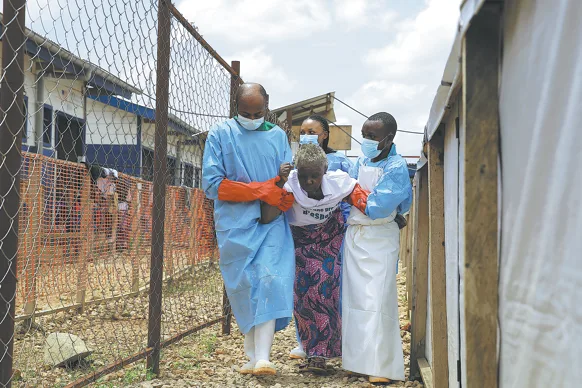
Confirmed Ebola cases in DR Congo have surpassed 10,000, with nearly 5,000 deaths.
A clinical trial for a vaccine against the Bundibugyo strain has commenced in eastern DR Congo.
Children are particularly vulnerable, with a high fatality rate and many orphaned due to the outbreak.
Health officials in the Democratic Republic of the Congo (DRC) are escalating their efforts to manage a severe Ebola outbreak, which has now seen confirmed cases exceed 10,000. As of the latest government report, the total stands at 10,060 cases, with a staggering 4,887 fatalities. This outbreak is noted as the largest and deadliest in the history of the DRC, and it ranks as the second-largest globally, following the West Africa epidemic from 2014 to 2016.
The Africa Centres for Disease Control and Prevention has highlighted that over 80% of new Ebola cases are emerging among individuals not previously identified as contacts, indicating significant gaps in surveillance and challenges in tracing the virus's transmission routes. In response, health authorities are launching a clinical trial aimed at developing a vaccine specifically for the Bundibugyo virus, the strain responsible for the current outbreak.
The Tumaini trial, which began in Bunia, Ituri Province, aims to evaluate the safety and efficacy of potential vaccines. The first vaccinations were administered on Friday, with a focus on individuals who have had contact with confirmed cases. Chikwe Ihekweazu, executive director of the WHO's Health Emergencies Programme, emphasized the trial's importance in determining the protective capabilities of candidate vaccines against the Bundibugyo virus. The first candidate under evaluation is Ervebo, which is currently approved for the Zaire Ebola virus, though its effectiveness against Bundibugyo remains unproven.
The outbreak poses a particularly grave risk to children, with 2,705 confirmed cases reported among those aged 17 and younger, including 1,345 children under five. The case fatality rate for this age group is alarmingly high at 72%. Additionally, more than 1,900 children have been orphaned or separated from their caregivers due to the outbreak. Greg Ramm, country director for Save the Children in the DRC, noted that children face risks beyond infection, including family separation and disrupted access to essential services.
The ongoing outbreak has raised alarms across the region, prompting neighboring countries to enhance their monitoring and preparedness measures. Uganda's Health Minister announced that individuals returning from the DRC will be required to undergo a 21-day quarantine at their own expense. Nigeria has also increased airport screenings following the identification of an Ebola case in a traveler from Uganda. As the situation develops, maintaining rigorous control measures and community engagement will be crucial in combating the outbreak and preventing future epidemics.