AI-Generated Viruses Show Promise Against Antibiotic Resistance
Researchers harness AI to create new viral genomes that could combat antibiotic-resistant bacteria.
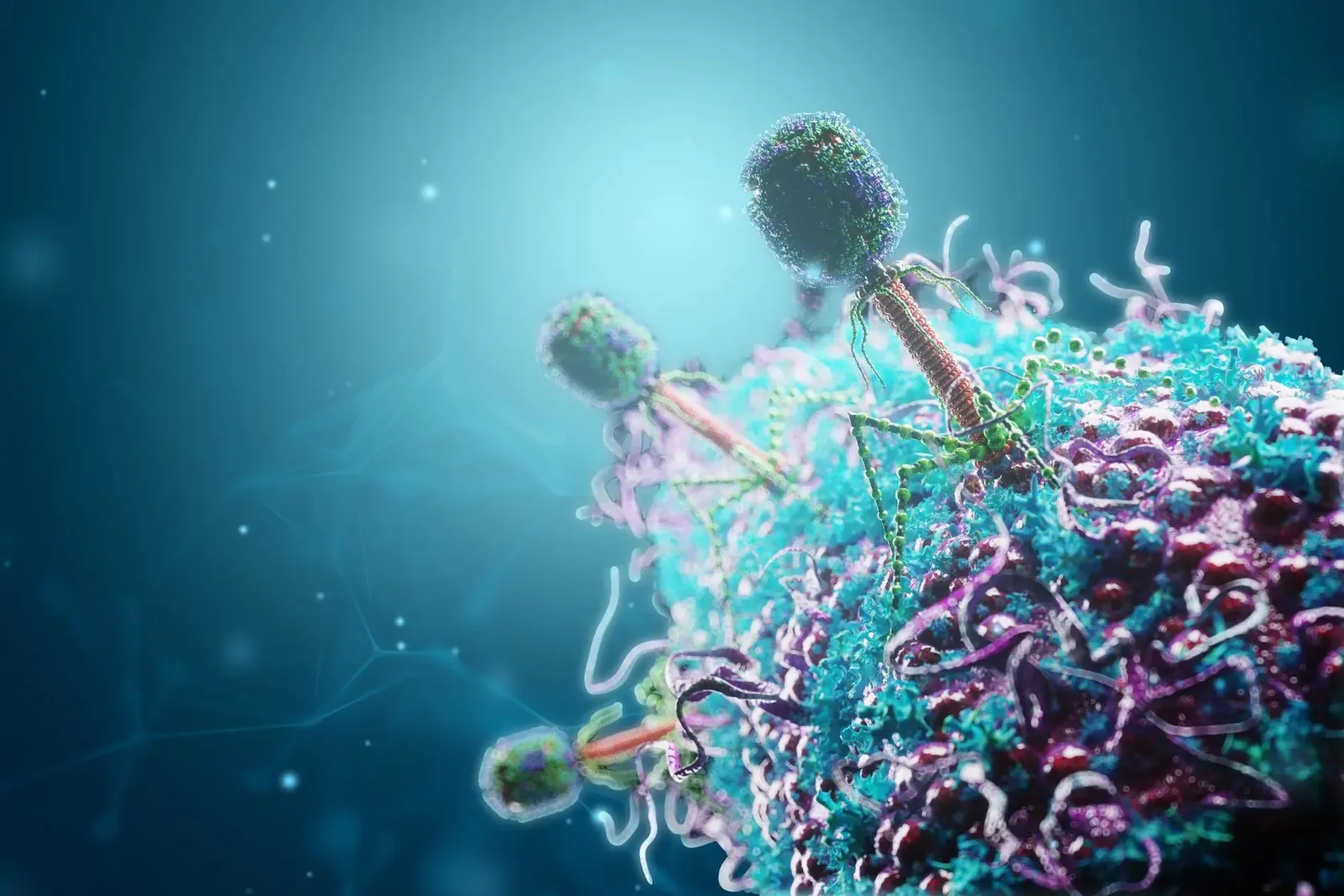
In 2023, 1 in 6 bacterial infections globally was antibiotic-resistant.
AI successfully designed new bacteriophages that can target resistant E. coli strains.
The research raises safety concerns about the future of AI in genome design.
In a groundbreaking study, researchers have utilized artificial intelligence to create new viral genomes aimed at combating antibiotic-resistant bacteria. According to the World Health Organization, antibiotic resistance is a significant global health threat, with one in six lab-confirmed bacterial infections resistant to treatment in 2023. This alarming statistic has prompted scientists to explore innovative solutions, leading to the integration of AI in the design of bacteriophages, viruses that specifically target bacteria.
The research team employed advanced genomic language models, Evo 1 and Evo 2, to analyze and generate viral genomes. These models function similarly to generative AI that constructs sentences, but instead, they manipulate the four nucleotides that compose DNA. The foundational experiment was based on the bacteriophage ΦX174, which has been studied for nearly a century and infects specific strains of Escherichia coli. The AI generated thousands of potential genomes, from which 285 were synthesized in the lab to assess their functionality.
Out of the synthesized genomes, 16 were successful in producing bacteriophages capable of multiplying and effectively targeting their bacterial hosts. Notably, these engineered viruses exhibited significant variations from known natural viruses, including numerous mutations and differences in length. Some of these modifications had never been observed in previously sequenced viruses, highlighting the innovative potential of AI in virology.
The implications of this research are profound, as combining multiple AI-generated phages demonstrated enhanced effectiveness against antibiotic-resistant E. coli strains. In trials, the viral cocktail successfully attacked the bacteria after just a few rounds of infection, outperforming natural phage counterparts. This suggests that AI-designed viruses could serve as a new weapon in the fight against superbugs, potentially leading to faster treatment development.
However, the researchers emphasized the importance of safety in their experiments, ensuring that Evo 2 did not learn about viruses that infect animal or plant cells. All experiments were conducted in controlled environments to mitigate risks. This study raises critical questions about the future of AI in genome design, particularly concerning the potential creation of more complex genomes. While the technology holds promise for advancing medical treatments, robust safety regulations will be essential to prevent unintended consequences.