US Proposes 25% Tariffs on Indian Goods Amid Manufacturing Scrutiny
The US is questioning India's manufacturing initiatives while imposing tariffs, raising concerns about trade relations.
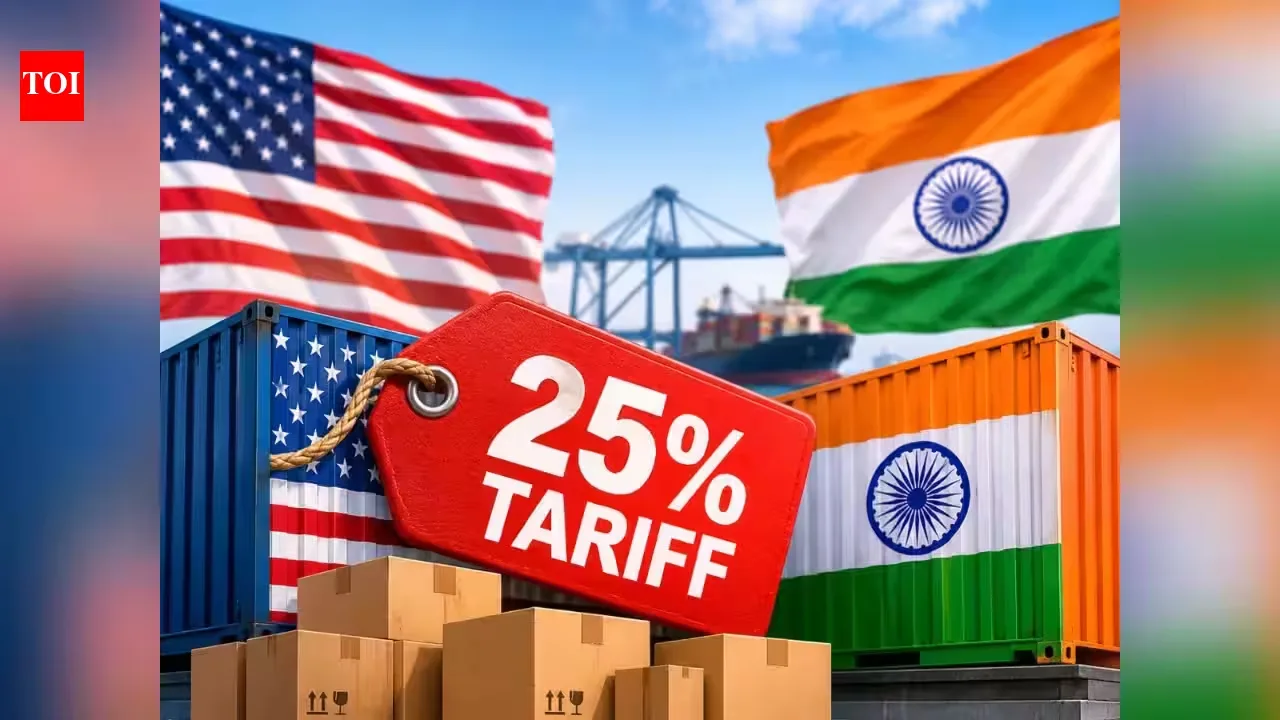
The US has proposed tariffs of up to 25% on Indian goods, citing excess manufacturing capacity.
India's government asserts it has no structural excess capacity in any sector.
Approximately 50-52% of India's exports to the US could be impacted by these tariffs.
The United States has announced plans to impose tariffs of up to 25% on goods imported from India, a move that has raised significant concerns regarding the future of trade relations between the two nations. This decision follows remarks from Ajay Srivastava, founder of the Global Trade Research Initiative (GTRI), who indicated that the US is scrutinizing India's manufacturing support initiatives, including the Production Linked Incentive (PLI) scheme and the Make in India program.
The proposed tariffs are part of a broader investigation by the Office of the United States Trade Representative (USTR), which has been examining alleged unfair trade practices involving 16 trading partners, including major economies like China and the European Union. Srivastava noted that the US's actions are not isolated to India, as they are targeting multiple economies with high tariffs, suggesting a pattern of protectionism aimed at safeguarding American manufacturing interests.
In his comments to ANI, Srivastava emphasized that the US is criticizing India's manufacturing policies because they enhance domestic production capabilities, potentially reducing demand for American products. He argued that the US's claims of excess manufacturing capacity are merely a pretext for negotiating trade agreements that disproportionately benefit the US. He urged the Indian government to utilize the consultation period, which extends until January, to present its case against the proposed tariffs.
The Indian government has firmly rejected the notion of having structural excess capacity, with the Ministry of Commerce and Industry stating that it has engaged constructively with the USTR throughout the investigation process. The ministry reiterated that trade-related concerns should be addressed within the framework of ongoing negotiations for a Bilateral Trade Agreement (BTA) between India and the US.
The implications of the proposed tariffs could be significant, with estimates suggesting that about 50-52% of India's exports to the US, particularly in labor-intensive sectors such as textiles and garments, may be affected. However, certain products, including diesel and generic medicines, are expected to continue entering the US tariff-free. As the situation develops, both nations will need to navigate these trade challenges carefully to maintain a productive economic relationship.