Supreme Court Mandates New Food Labeling Standards on Sugars and Fats
The Supreme Court has ordered stricter food labeling regulations focusing on total sugars and saturated fats.
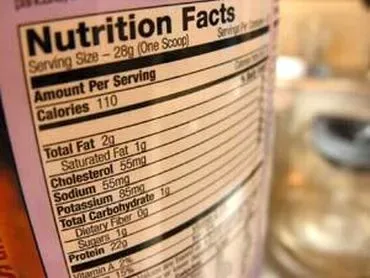
The Supreme Court has directed food labels to emphasize total sugars and saturated fats.
Each nutrient of concern must be represented separately in hexagons on food packaging.
The Food Safety and Standards Authority of India is tasked with implementing these new labeling standards.
On Thursday, the Supreme Court of India issued a directive mandating that food packaging must highlight 'total sugars' and 'saturated fat' as key nutrients of concern, alongside 'salt'. This decision aims to enhance consumer awareness and promote healthier dietary choices through clearer labeling practices.
The ruling came from a bench comprising Justices J B Pardiwala and K Vinod Chandran, who emphasized the importance of front-of-package nutrition labeling (FoPNL). This labeling system is designed to provide consumers with essential nutritional information at a glance, thereby aiding them in making informed food choices when shopping.
The court's order specifically instructs the Food Safety and Standards Authority of India (FSSAI) to ensure that each nutrient of concern is represented in a distinct hexagon on food packages. Each hexagon must include the terms 'High Fat', 'High Sugar', or 'High Salt', accompanied by appropriate pictograms to visually communicate the nutritional content effectively.
This ruling marks a significant shift in food labeling standards, as it aligns with the FSSAI's earlier consensus regarding dietary guidelines. By focusing on total sugars and saturated fats instead of added sugars and added fats, the court aims to provide consumers with more relevant information that reflects the actual nutritional quality of food products.
Moving forward, the FSSAI is responsible for implementing these new labeling requirements, which are expected to take effect soon. This initiative is anticipated to have a considerable impact on public health, as clearer labeling can lead to better consumer choices and potentially reduce health risks associated with high sugar and fat consumption.