US Military Action on Qeshm Island Triggers Oil Price Surge
Oil prices see a significant rise following US strikes on Iran's Qeshm Island, raising concerns over escalating tensions in the Middle East.
US strikes on Qeshm Island aim to prevent threats to commercial shipping.
Brent crude prices rose to $105.25 per barrel after the military action.
Ongoing diplomatic talks between the US and Iran continue amid rising tensions.
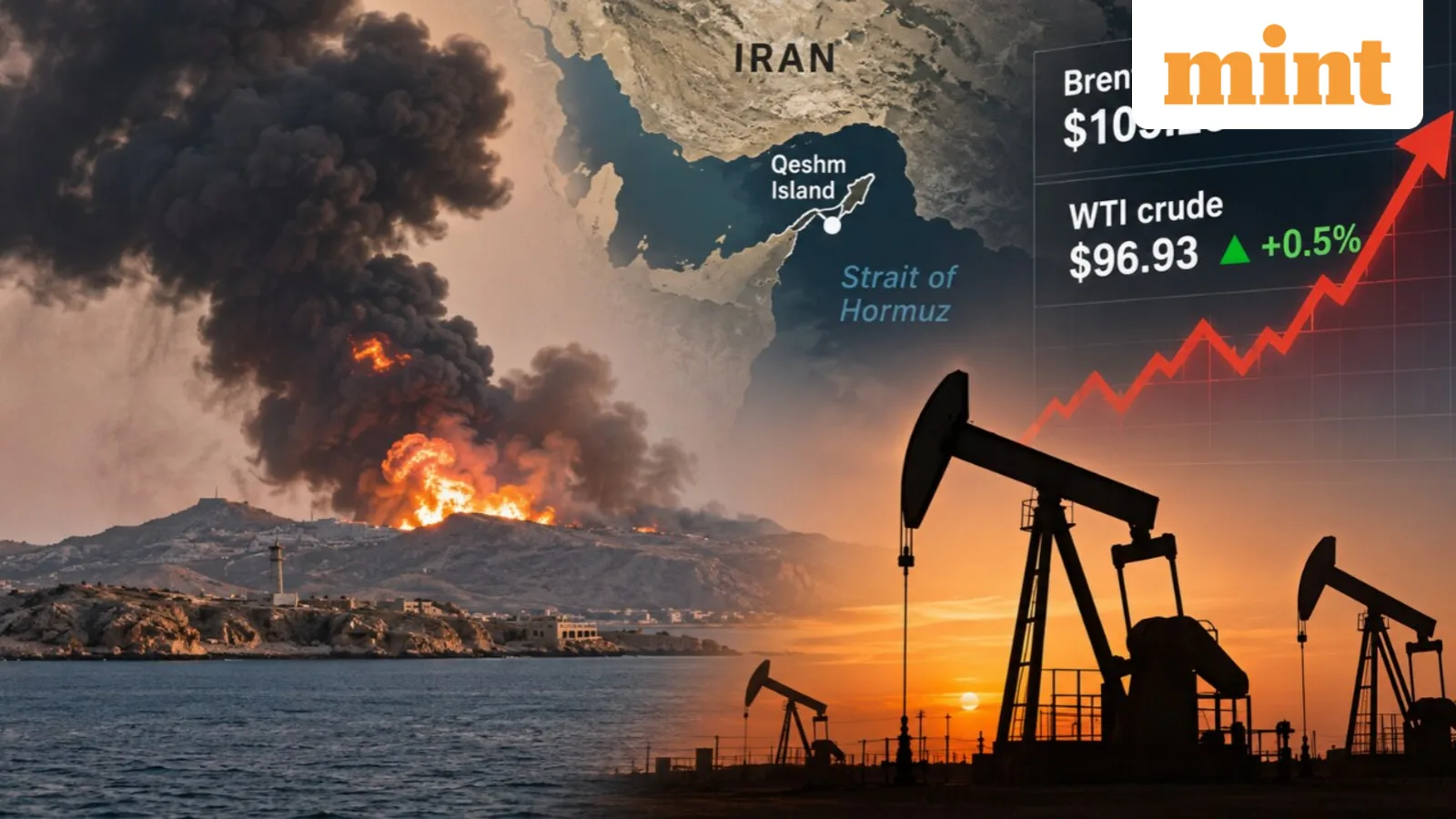
In a significant escalation of tensions, the United States conducted military strikes on Qeshm Island, Iran, on Monday, leading to an immediate increase in oil prices during early Asian trading on Tuesday. Brent crude futures climbed by 48 cents, reaching $105.25 per barrel, while US West Texas Intermediate (WTI) crude saw a similar rise of 47 cents, settling at $96.93 per barrel. This military action has reignited fears of a broader conflict in the region, particularly concerning energy supply disruptions from the Middle East.
The strikes on Qeshm Island, which is strategically located near the Strait of Hormuz, were described by US officials as defensive measures aimed at safeguarding commercial shipping routes. This operation is part of a series of limited strikes that the US has undertaken in recent weeks, which have not been publicly acknowledged by the administration. The intent appears to be to maintain a low profile to avoid signaling a return to extensive military engagement.
Qeshm Island is notable for hosting critical infrastructure, including an underground missile site, a naval base, and a major desalination plant. The US had previously targeted this location during earlier phases of the ongoing conflict that began in late February. The recent military actions have contributed to a risk premium in oil prices, with Brent crude having settled lower at $104.77 per barrel on Monday, following a six-month high at the end of October.
The ongoing conflict in the region has significantly impacted maritime traffic through the Strait of Hormuz, a vital waterway that previously accounted for approximately 20% of the world's crude oil and natural gas supplies. Despite the heightened tensions, US President Donald Trump has downplayed the likelihood of a return to full-scale war with Iran, stating that he is not considering further attacks post-midterm elections. He also indicated that a diplomatic resolution with Tehran remains a possibility.
As diplomatic channels remain open, discussions involving Qatari mediators are ongoing, although no significant breakthroughs have been reported. Iranian officials have warned of potential retaliation if the US continues to escalate military actions. The situation remains fluid, and the international community is closely monitoring developments as the potential for renewed conflict looms.