New FEMA Regulations Require EDF Filing for Service Exporters by October 2026
From October 1, 2026, freelancers and service exporters in India must file an Export Declaration Form (EDF) for overseas earnings.
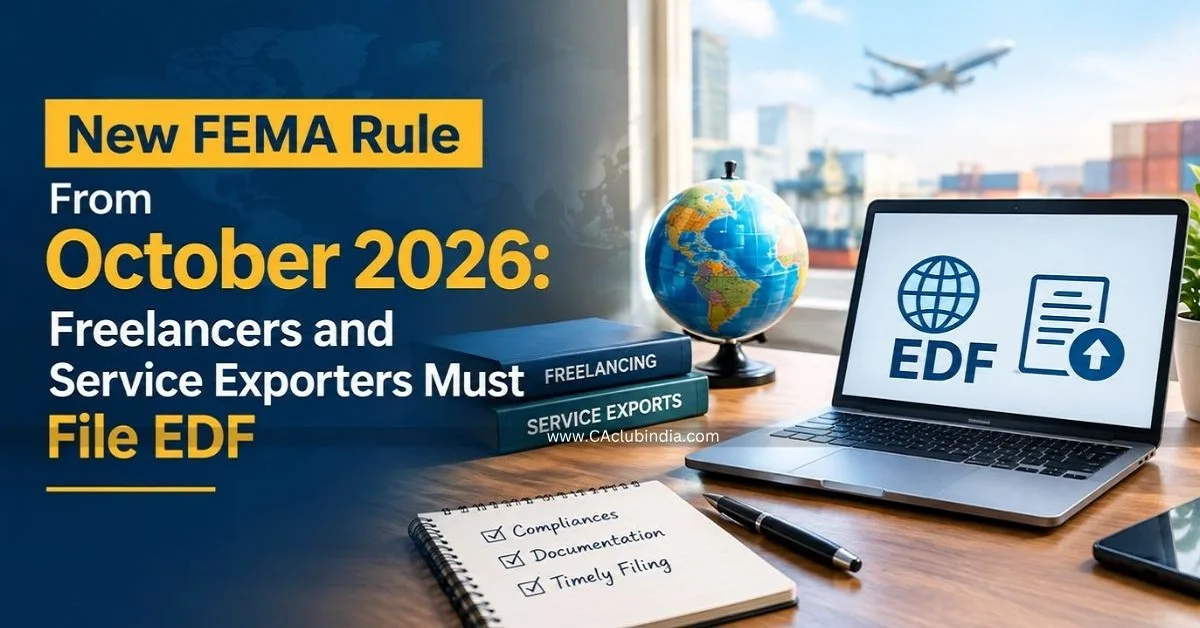
Service exporters, including freelancers, must submit EDFs starting October 2026.
A monthly declaration mechanism allows for consolidated EDF submissions.
The new rules aim to enhance monitoring of service exports and compliance.
Starting October 1, 2026, India will implement new foreign exchange regulations mandating that freelancers and service exporters report their overseas earnings through an Export Declaration Form (EDF). This requirement is part of the Foreign Exchange Management (Export and Import of Goods and Services) Regulations, 2026, as notified by the Reserve Bank of India (RBI). The changes signify a notable shift in compliance for individuals and businesses engaged in providing services to international clients.
Historically, the framework for reporting service exports primarily focused on goods and software. However, the new regulations expand this framework to include a broader range of services, impacting various professionals such as consultants, software developers, designers, and digital agencies. The requirement to file an EDF means that any Indian service provider receiving payments from clients abroad will need to adhere to this new reporting structure, which aims to streamline the monitoring of export transactions.
Under the new rules, service exporters are required to declare the full export value of their services through the EDF to the relevant authorities. Notably, the regulations allow for a monthly declaration, enabling freelancers to submit a single EDF for multiple service exports within a month. This is a significant relief for many, as it alleviates the burden of filing separate EDFs for each payment received from foreign clients. The EDF must be submitted within 30 days following the end of the month in which the service invoice was issued.
The implications of these regulations extend beyond mere compliance; they represent a shift in how India approaches the monitoring of its service export economy. As the landscape of service exports evolves, the new framework aims to incorporate smaller service providers into a structured reporting system, which has traditionally been dominated by larger IT firms. This change could lead to increased scrutiny of smaller transactions, prompting freelancers to maintain meticulous records of their invoices, payments, and bank transactions to ensure compliance.
Looking ahead, freelancers and service exporters are advised to prepare for these changes by establishing a systematic approach to record-keeping and compliance. They should engage with their Authorised Dealer (AD) banks to understand the EDF submission process and ensure they have the necessary documentation ready for reconciliation. As the October 2026 deadline approaches, staying informed and proactive will be crucial for navigating the new regulatory landscape effectively.