Brent Oil Prices Surge to $117 Amidst Market Jitters
Brent crude oil prices reached $117, reflecting heightened market anxiety and potential geopolitical risks.
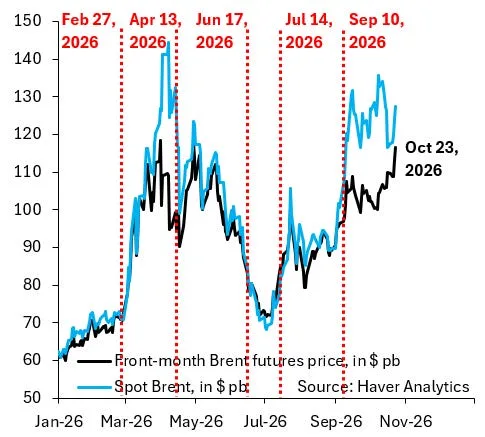
Brent crude oil prices have risen 90% since the start of the year.
Current supply from the Persian Gulf has normalized, contradicting high price levels.
Market analysts suggest a significant risk premium is influencing current oil prices.
Brent crude oil prices have surged to $117, nearing the year's peak of just over $118 reached in March. This increase comes amid ongoing concerns regarding geopolitical tensions and market stability, reminiscent of the panic seen earlier this year when prices spiked dramatically. The recent rise has raised questions about the underlying factors driving these prices, particularly as supply from the Persian Gulf has largely returned to normal levels.
Historically, the oil market has been volatile, with significant fluctuations often tied to geopolitical events. In March, during a podcast discussion, the implications of the Strait of Hormuz's security were highlighted as a key factor in rising prices. However, the current situation differs as the supply chain has stabilized, leading to speculation about whether the high prices are justified by demand or if they reflect a risk premium associated with potential conflicts.
Recent data indicates that Brent prices have increased significantly, with the front-month futures price up 90% from the beginning of the year. In contrast, the spot price has doubled, suggesting that while immediate concerns may be driving prices, the long-term outlook remains uncertain. Analysts note that while demand could be a factor, the evidence does not strongly support a surge in consumption that would justify such high prices.
The implications of these price levels are significant for consumers and the broader economy. High oil prices can lead to increased costs for goods and services, impacting inflation rates and economic growth. As markets react to potential geopolitical risks, the volatility in oil prices could have cascading effects on global markets, particularly in regions heavily reliant on oil imports.
Looking ahead, analysts are closely monitoring the situation for any signs of further escalation in geopolitical tensions that could drive prices higher. While some predict a potential spike to $125 in the event of renewed conflict, many believe that the current risk premium may be excessive, suggesting that prices could stabilize or even decrease if supply remains steady and demand does not increase significantly.