AI Claims Breakthroughs in Riemann Hypothesis and Fluid Dynamics
Researchers assert that AI has aided in solving two long-standing mathematical challenges: the Riemann hypothesis and Navier-Stokes equations.
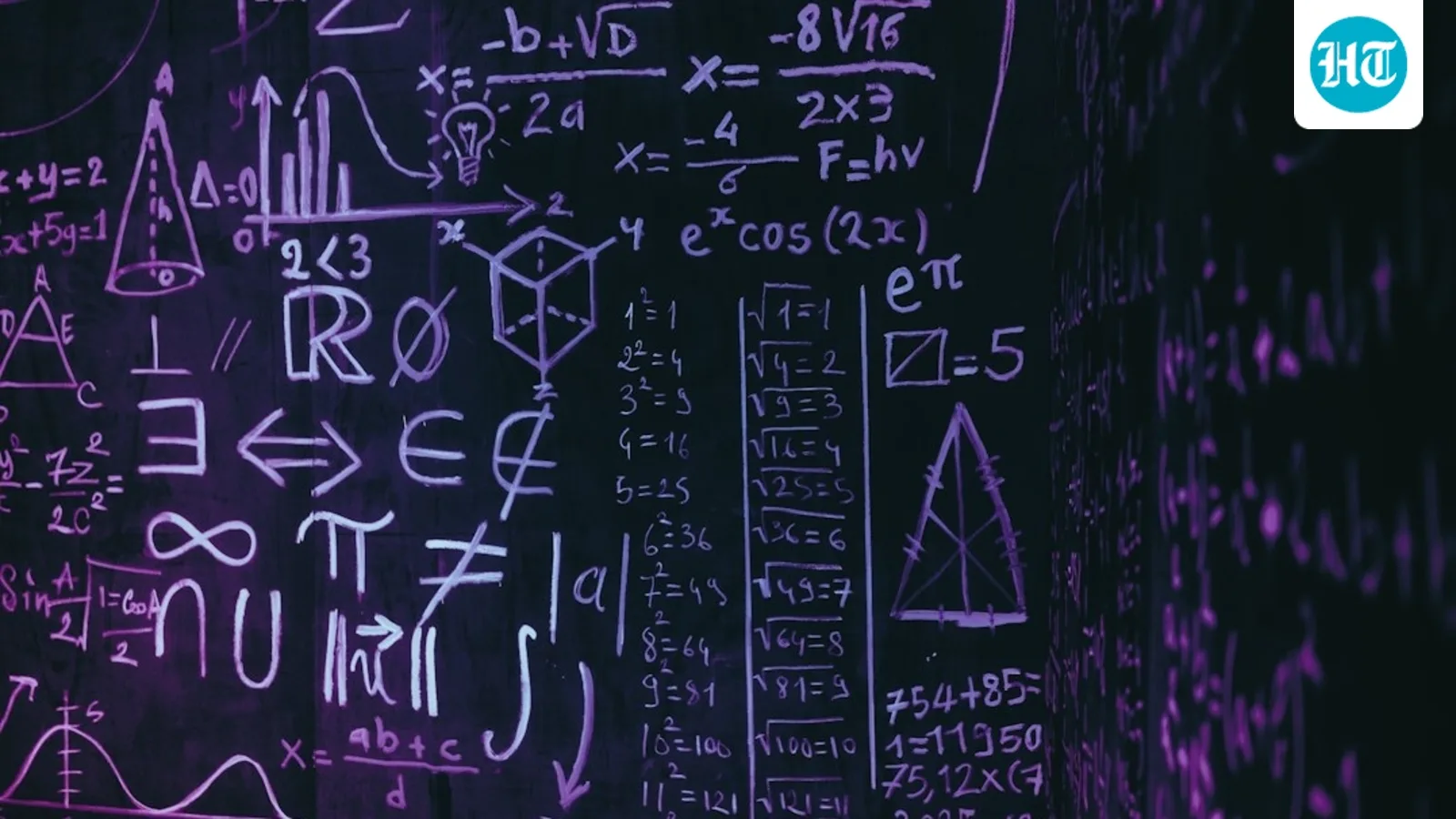
AI has reportedly provided solutions to the Riemann hypothesis and Navier-Stokes equations.
Both problems are part of the Millennium Prize Problems, each offering a $1 million reward for a verified solution.
The Riemann hypothesis has been certified by specialists, while the Navier-Stokes claim awaits external validation.
On November 20, researchers announced that artificial intelligence (AI) has played a crucial role in addressing two significant mathematical problems: the Riemann hypothesis, which pertains to prime numbers, and a pivotal question regarding the Navier-Stokes equations that describe fluid motion. These problems are part of the Millennium Prize Problems established by the Clay Mathematics Institute in 2000, which offers a $1 million reward for solutions to each.
The Riemann hypothesis, proposed by mathematician Bernhard Riemann in 1859, concerns the distribution of prime numbers and is linked to the Riemann zeta function. This function's zeroes are believed to determine how closely the actual count of prime numbers aligns with predictions made by the prime number theorem. While mathematicians have confirmed many zeroes lie on the critical line, the hypothesis remains unproven for all cases. AI has reportedly assisted in generating a proof, which has been verified by specialists in computer-checked mathematics.
In contrast, the Navier-Stokes equations, formulated in the 19th century, describe the behavior of incompressible fluids. The unresolved question focuses on whether solutions that start smooth can remain smooth indefinitely or if they can develop singularities, where fluid velocity becomes infinite. OpenAI has claimed to have produced a proof regarding the potential for blowup under specific conditions, but this claim is still pending external verification.
The implications of these developments are significant for both the mathematical community and the broader scientific landscape. The Riemann hypothesis, if proven true, would solidify many existing mathematical results and theories. Meanwhile, resolving the Navier-Stokes equations could enhance our understanding of fluid dynamics, impacting fields ranging from meteorology to engineering.
Looking ahead, the Clay Mathematics Institute has stated that any proof must be published and accepted by the mathematical community for at least two years before it can be considered for the Millennium Prize. While the Riemann proof has passed a machine check, it awaits thorough human review. The Navier-Stokes claim remains unverified until the necessary data is made available for external scrutiny.