Adani Group Secures 1,750 MW Renewable Power Deal in West Bengal
Adani Group's new power contract in West Bengal raises transparency concerns from the Trinamool Congress.
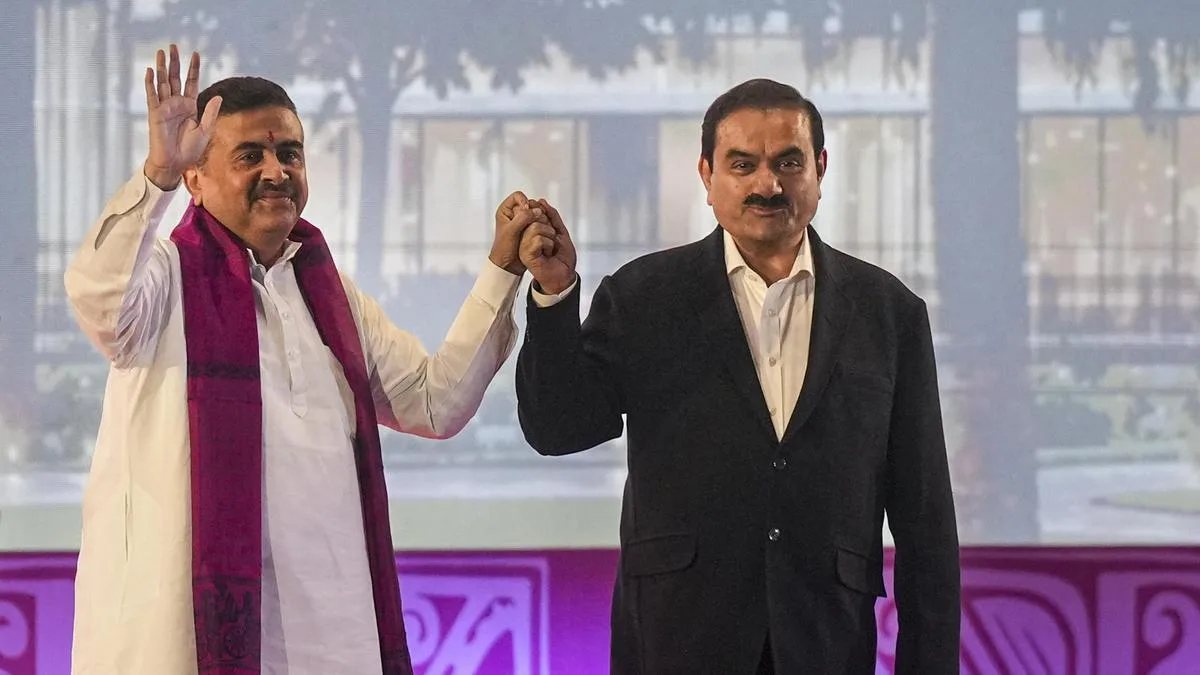
Adani Energy Solutions Ltd. awarded a 25-year contract for 1,750 MW renewable power.
Trinamool Congress demands transparency in long-term power contracts.
Power supply is set to begin in July 2028, with a potential increase to 2,500 MW.
The Adani Group has made a significant entry into West Bengal's energy sector by securing a Letter of Award (LoA) for the supply of 1,750 MW of renewable energy over a 25-year period. This contract, awarded by the West Bengal State Electricity Distribution Company Limited (WBSEDCL), includes a greenshoe option that could expand the total capacity to 2,500 MW. The announcement was made public on November 22, 2026, and is part of a competitive bidding process where Adani's subsidiary, Powerpulse Trading Solutions Ltd. (PTSL), emerged as the successful bidder.
The contract stipulates that power supply will commence on July 1, 2028, for the initial 1,750 MW, followed by an additional 750 MW from April 1, 2029, contingent upon the exercise of the greenshoe option. This development is seen as a pivotal moment for the state's renewable energy landscape, potentially contributing to West Bengal's energy needs while aligning with national sustainability goals.
However, the Mamata Banerjee-led All India Trinamool Congress has raised concerns regarding the transparency of such long-term contracts. In a social media post, the party emphasized that the resources of West Bengal should not favor corporate giants at the expense of ordinary citizens. They highlighted the need for accountability and questioned the preferential treatment given to large corporations like Adani, citing comments from party leader Abhishek Banerjee.
The Trinamool Congress's concerns reflect broader apprehensions about favoritism in government dealings, particularly in light of recent investments by large industrialists in the state. Gautam Adani, Chairman of the Adani Group, had previously announced a substantial investment plan exceeding ₹1 lakh crore in West Bengal by 2035, indicating a strong interest in the region's economic development.
Looking ahead, the implementation of this power contract will be closely monitored, especially as it unfolds in a politically charged environment. The Trinamool Congress is likely to continue advocating for transparency in energy contracts, while the Adani Group aims to solidify its presence in West Bengal's energy sector. Future developments will be crucial in determining the balance between corporate investment and public accountability in the state.