Youth Protests Erupt in Delhi Over Election Commission Irregularities
On October 2, students rallied in Delhi demanding the resignation of Chief Election Commissioner Gyanesh Kumar amid allegations of electoral roll irregularities.
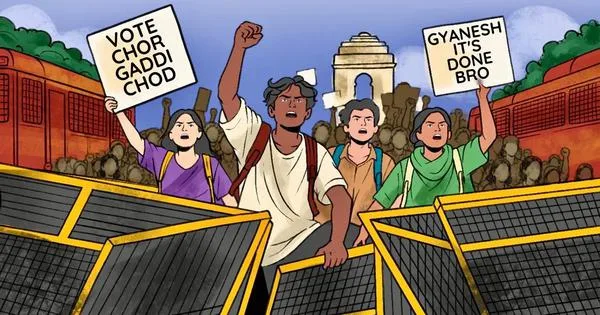
Around 100 students protested in Delhi, calling for the resignation of the Chief Election Commissioner.
Many participants expressed growing frustration with government policies and mismanagement, particularly regarding education and COVID-19.
The protests reflect a broader discontent among youth, with many feeling politically radicalized by recent events.
On October 2, approximately one hundred students from the All India Students’ Association attempted to march to Jantar Mantar in Delhi, demanding the resignation of Chief Election Commissioner Gyanesh Kumar. The protest was fueled by allegations of irregularities in the Special Intensive Revision of the electoral rolls, prompting chants of 'Vote Chor, Gaddi Chhod!' as they approached the site.
As the group neared their destination, Delhi Police intervened, attempting to detain the protestors. Despite police efforts, many students managed to evade capture, chanting provocative slogans as they fled. Among them was Sahil, a 17-year-old sociology student, who described breaking through barricades only to be detained near the third one. He recounted being beaten by police and later released after being driven around for hours.
This protest marked Sahil's second participation in five months, following a previous demonstration against the education minister over issues related to medical college entrance exams. He expressed a growing sense of frustration towards the government, noting that many of his relatives, who are educators, hold apolitical views. Despite his family's likely disapproval, Sahil felt compelled to voice his dissent, particularly after witnessing the government's handling of various crises, including the COVID-19 pandemic and the Citizenship Amendment Act.
The sentiments expressed by Sahil resonate with many young protestors, who have taken to the streets in significant numbers. Interviews with ten students revealed that six had experienced police violence during protests. Common grievances included dissatisfaction with the education system, rising unemployment, and perceived threats to personal freedoms. Vanessa, a political science student, articulated that her motivation stemmed from a broader discontent with the government’s actions over the past decade.
Looking ahead, the youth movement appears poised to continue, as many young people express a commitment to advocating for change. Upcoming protests and gatherings are likely as students seek to address their concerns and push for accountability from their leaders. The growing political consciousness among this generation suggests that their activism may significantly shape the political landscape in the coming years.