Yamuna River Pollution Persists Amid Chhath Puja Celebrations
Despite ongoing political disputes, the Yamuna's water quality remains critically poor during Chhath Puja, with significant pollution levels reported.
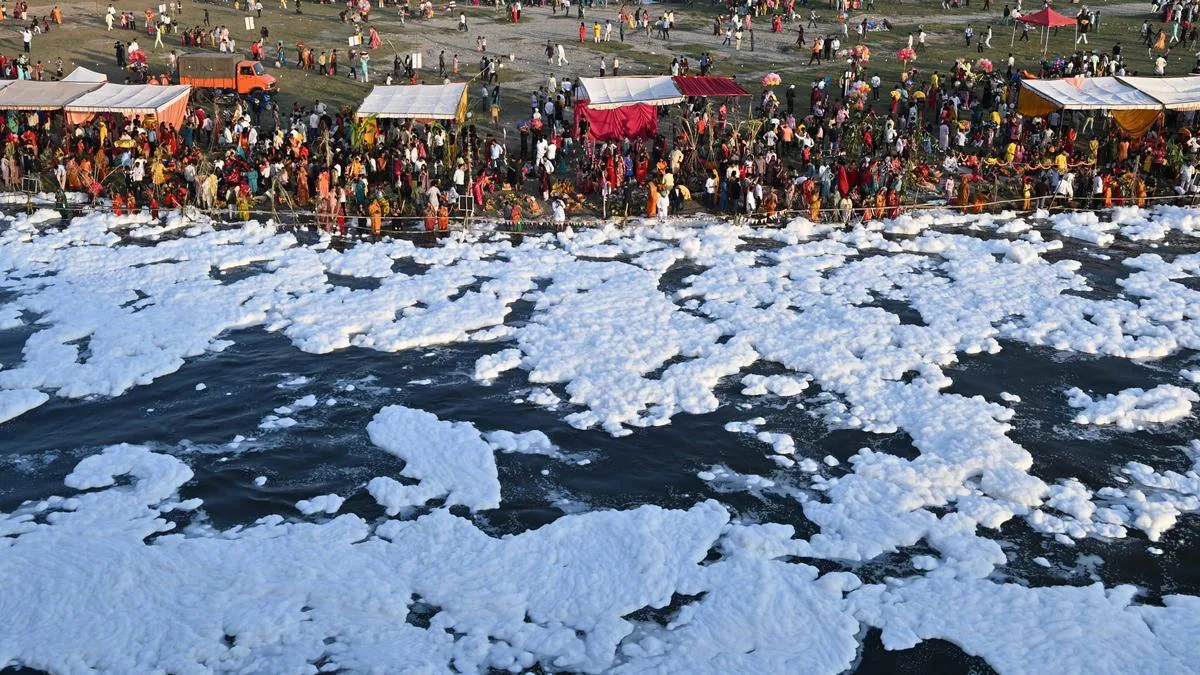
Yamuna's faecal coliform levels were 660 times higher than safe limits in May.
Plans to divert Ganga water to cleanse the Yamuna have yet to show results.
Experts emphasize the need for increased sewage treatment capacity to improve river health.
As Chhath Puja celebrations unfold, the Yamuna River in Delhi continues to face severe pollution issues, with official data revealing alarming water quality metrics. The river's stretch in the capital remains heavily contaminated, particularly before the monsoon season, when pollutants are typically flushed away. In May, faecal coliform levels at Asgarpur were recorded at 660 times the acceptable limit set by the Central Pollution Control Board (CPCB). Although water quality sees some improvement during the monsoon, the Delhi government has not yet released data for October, raising concerns about ongoing pollution.
The Yamuna holds deep religious significance for many devotees, particularly those from Purvanchal, who participate in rituals such as Chhath Puja by immersing themselves in the river. On Sunday evening, numerous worshippers gathered at Kalindi Kunj, standing in knee-deep water despite the presence of toxic froth, a common sight during these festivities. The political landscape surrounding the river's pollution has intensified, especially since the Bharatiya Janata Party (BJP) assumed power in February 2025, with discussions ongoing about a plan to divert water from the Ganga to mitigate pollution.
This diversion plan, part of a broader initiative presented to Prime Minister Narendra Modi in April 2025, aims to channel approximately 500 cusecs of Ganga water into the Yamuna at Wazirabad. However, experts caution that even if the plan is finalized, it may take two to three years for the Ganga water to reach Delhi. A detailed project report has been submitted, but officials have indicated that establishing a timeline for completion remains challenging.
Experts have long asserted that effective river cleaning necessitates both increasing water flow and reducing pollution sources. In response to these challenges, Union Home Minister Amit Shah has directed the Delhi government to nearly double its sewage treatment capacity to 1,500 million gallons per day (MGD) by 2028. This year, contracts were awarded for constructing 29 decentralized sewage treatment plants (DSTPs), which are expected to be operational by January 2028. However, the construction of the necessary sewer network is anticipated to extend until June 2028, with land acquisition issues complicating progress.
Cleaning the Yamuna has been a key promise for the BJP ahead of the 2025 Delhi Assembly elections. As Chhath Puja approaches, political tensions have escalated, with the Aam Aadmi Party (AAP) and BJP exchanging accusations regarding the river's pollution. The BJP has launched a cruise service on a cleaner stretch of the river, while AAP has highlighted ongoing pollution issues, including the discovery of dead fish. The history of missed deadlines and unfulfilled promises regarding the Yamuna's cleanliness continues to cast a shadow over these political exchanges.