US Court Orders Indian Courts to Assist in Serving Summons
A US district court has requested Indian courts to help deliver summons to NSA Ajit Doval and former RAW chief Samant Goel.
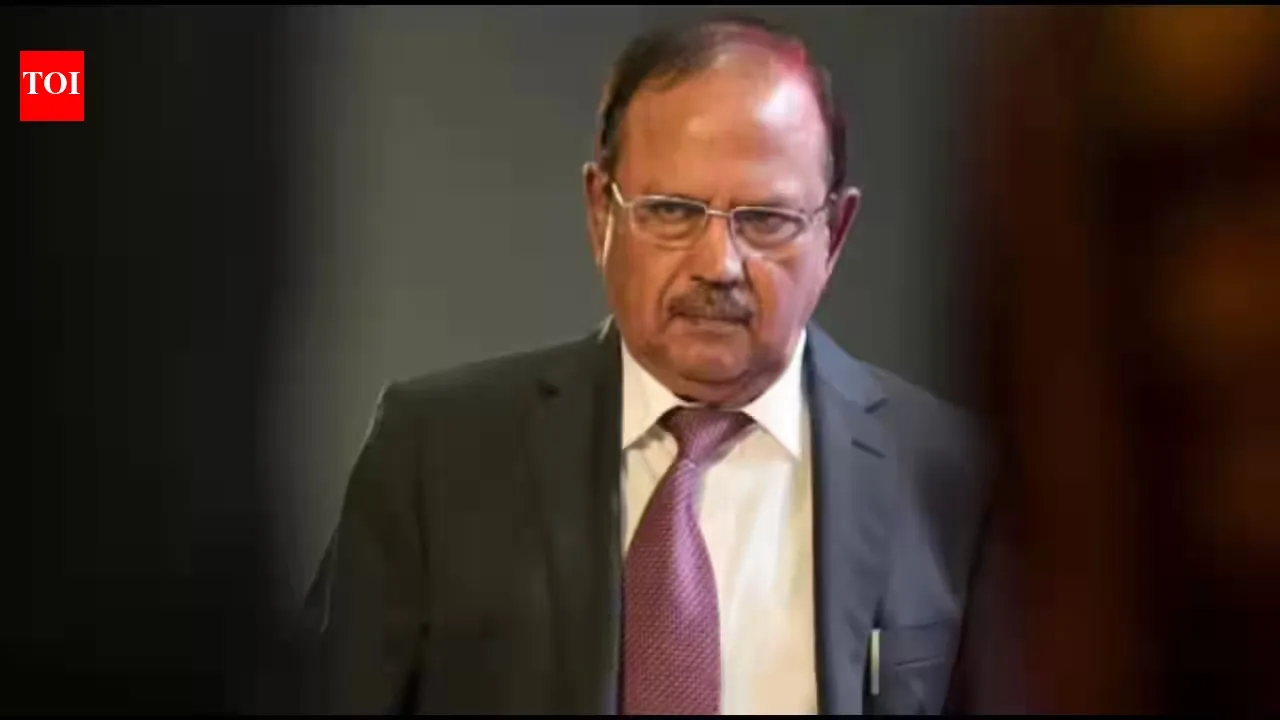
US court seeks assistance from Indian courts for summons delivery.
The summons is not legally binding according to sources.
Previous attempts at service through the Hague Convention were unsuccessful.
A district court in the United States has mandated that Indian courts assist in the delivery of summons to National Security Advisor Ajit Doval and former chief of the Research and Analysis Wing, Samant Goel. This order comes from Judge Katherine Polk Failla of the Southern District of New York, in relation to a civil lawsuit initiated by Gurpatwant Singh Pannun, the founder of the pro-Khalistan organization Sikhs for Justice (SFJ).
The court has instructed the Clerk to send the necessary judicial documents via international mail or courier to three specific district courts in Delhi: Patiala House, Dwarka, and Tis Hazari. While the order emphasizes the need for cooperation from Indian courts, sources have indicated that the summons itself is not binding, suggesting that it is more of a procedural formality than a legal obligation.
The request for assistance follows a previous attempt to serve the summons through India's central authority under the Hague Convention, which was rejected. Consequently, the US court has opted for alternative service methods as outlined in Article 19 of the Hague Convention and India’s Code of Civil Procedure. This procedural step has been characterized by sources as routine, indicating that such requests are not uncommon in international legal proceedings.
Earlier, the US State Department had attempted to deliver the summons through the Indian embassy, clarifying that this action did not imply any stance on the merits of the case. This situation echoes a similar incident from 2013 when former Prime Minister Manmohan Singh was served with a civil summons in a case brought by SFJ, which alleged human rights violations linked to the 1984 riots.
Looking ahead, the implications of this court order may extend beyond the immediate case, potentially affecting diplomatic relations and legal processes between the US and India. The upcoming steps will depend on how the Indian courts respond to this request and whether they will facilitate the service of summons as directed by the US court.