Tata Trusts Challenge Board Resolution in High Court Hearing
Thirteen senior advocates represented various parties in a critical governance dispute involving Tata Trusts and Tata Sons at the Bombay High Court.
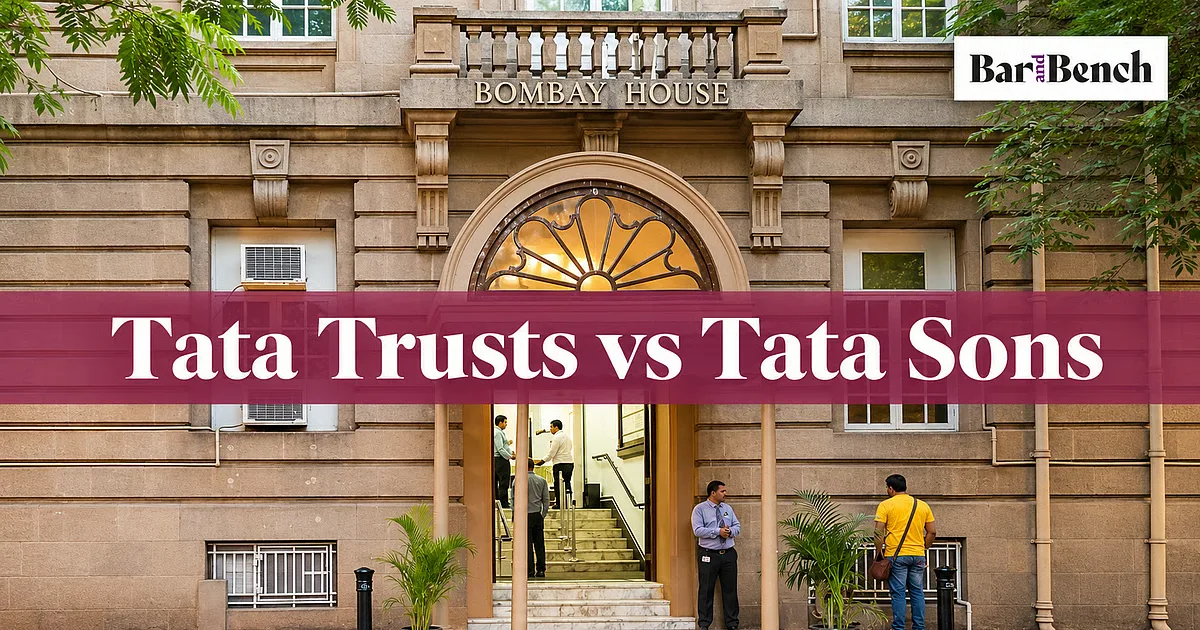
Tata Trusts filed suits against Tata Sons' board resolution to reappoint N Chandrasekaran.
The hearing lasted over three hours, with multiple law firms and senior advocates involved.
Justice Abhay Ahuja declined to stay the upcoming board meeting scheduled for November 30.
On November 27, a significant legal battle unfolded at the Bombay High Court, where thirteen senior advocates presented arguments in a dispute between Tata Trusts and Tata Sons. The case centers around a board resolution passed on September 17, which reappointed N Chandrasekaran as executive chairman of Tata Sons. The Tata Trusts have contested this decision, raising questions regarding the interpretation of specific articles within the company's Articles of Association.
The governance dispute has drawn considerable attention, with both parties presenting their cases for over three hours. The suits filed by Tata Trusts challenge the legitimacy of the board's resolution, claiming it violates Articles 104B and 121. This legal confrontation highlights the ongoing tensions within the Tata Group, a conglomerate with a storied history in Indian business.
During the proceedings, Justice Abhay Ahuja made a pivotal ruling, refusing to grant a stay on Tata Sons' scheduled board meeting on November 30. He clarified that any decisions made during this meeting would be contingent on the outcome of the ongoing petitions, leaving the door open for further legal scrutiny.
The legal representation in this case is extensive, featuring prominent law firms and senior advocates. Cyril Amarchand Mangaldas, DMD Advocates, and AVP Partners are among the firms involved, with notable advocates such as Abhishek Manu Singhvi, Harish Salve, and Mukul Rohatgi leading the arguments. Each firm has assembled a team of legal experts to navigate the complexities of corporate governance and fiduciary duties.
As the case progresses, the implications for the Tata Group and its governance structure remain significant. The outcome could reshape the dynamics between Tata Trusts and Tata Sons, impacting future corporate governance practices. The next steps will unfold as the High Court continues to deliberate on the matter, with keen interest from stakeholders and the public alike.